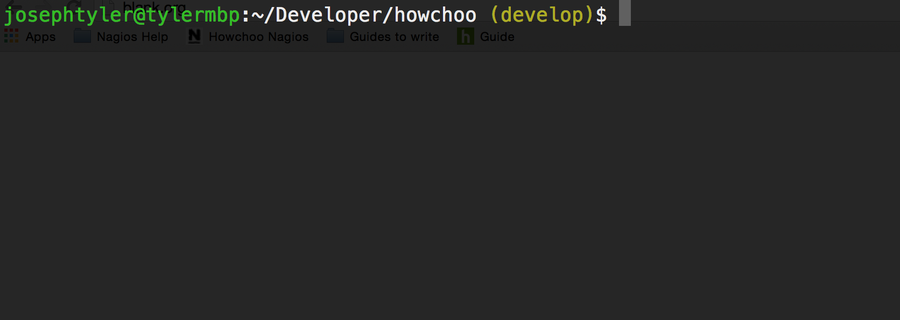
When you’re using git routinely, it’s helpful to know which branch you’re currently on without having to type git status or git branch.
Fortunately, there’s a convenient way to add your current git branch to your command line prompt. For help with remote branches, check out this guide on how to check out a remote branch.
1 – Open your .bashrc to edit
The .bashrc file contains many of your bash settings. You can open the file to edit using your command line text editor of choice. The file should be located in your home directory.
Tab completion, or auto-completion, is essential if you’re using Git on the command line. Tab completion is a nice feature of many shells that allows you to complete a word by hitting tab. In this case, we want to be able to use tab completion for things like branches and tags in git. Fortunately, setting
Introducing Howchoo, an enigmatic author whose unique pen name reflects their boundless curiosity and limitless creativity. Mysterious and multifaceted, Howchoo has emerged as a captivating storyteller, leaving readers mesmerized by the uncharted realms they craft with their words.
With an insatiable appetite for knowledge and a love for exploration, Howchoo’s writing transcends conventional genres, blurring the lines between fantasy, science fiction, and the surreal. Their narratives are a kaleidoscope of ideas, weaving together intricate plots, unforgettable characters, and thought-provoking themes that challenge the boundaries of imagination.
I’m the kind of person who uses both Google and Apple products. All of my calendar data is saved to a few different Google calendars, but I generally use Apple’s Calendar on my Mac and iPhone. Syncing is fairly simple, but it took my quite some time to figure out how to select which calendars to sync. What I mean by that is each Google Calendar has multiple sub-calendars that seem to get included in the sync process even when they are deselected from the Google Calendar interface. This resulted in duplicate calendar events like Birthdays and Holidays. Fortunately, I found a solution hidden deep in the Google Calendar docs.
1 – Log in to your Google account
Make sure you’re logged in to the Google account you want to manage.
If you just need to search and find a single word or multiple words in Google Docs, press ⌘ + F. If you want to find and replace words in your Google Doc, then we’ll show you how to do that too! 1 – Press cmd + F To find a word (or words) in
Introducing Howchoo, an enigmatic author whose unique pen name reflects their boundless curiosity and limitless creativity. Mysterious and multifaceted, Howchoo has emerged as a captivating storyteller, leaving readers mesmerized by the uncharted realms they craft with their words.
With an insatiable appetite for knowledge and a love for exploration, Howchoo’s writing transcends conventional genres, blurring the lines between fantasy, science fiction, and the surreal. Their narratives are a kaleidoscope of ideas, weaving together intricate plots, unforgettable characters, and thought-provoking themes that challenge the boundaries of imagination.
It’s good to know what version of Python you’re running. Sometimes you may need a specific version to support an application. To check which version you currently have, we’ll be using command line.
tl;dr
python --version
or
python3 --version
1 – Check Python version on MacOS
MacOS users can verify their Python version through the Terminal application. To launch Terminal, open Finder, go to Applications, choose Utilities, and select Terminal.
Run the following command to retrieve your current version of Python.
python --version
If you’ve installed Python 3 alongside the system Python, the command is usually python3 and you can check the exact version using:
python3 --version
2 – Check Python version on Windows 10
Windows 10 users will need to use Windows PowerShell to check the Python version. To launch Windows PowerShell, go to the Start Menu and type powershell. Select it from the list of applications.
Type the following command and press Enter to find your current Python version.
python --version
3 – Check Python version on Linux
If you’re using a Linux-based OS, this includes Raspberry Pi users, you can use the Terminal application to check your Python version. To open Terminal, press Ctrl + Alt + T.
Type this command into the Terminal window and press Enter. This will return info containing your current Python version.
python --version
NEXT UP
Secure Your Sensitive Data with Kubernetes Secrets
Kubernetes secrets are objects that store and manage sensitive data inside your Kubernetes cluster. One mistake developers often make is storing sensitive information like database passwords, API credentials, etc in a settings file in their codebase. This is very bad practice (hopefully for obvious reasons). Most developers know this, but still choose the option because it’s easy.
Introducing Howchoo, an enigmatic author whose unique pen name reflects their boundless curiosity and limitless creativity. Mysterious and multifaceted, Howchoo has emerged as a captivating storyteller, leaving readers mesmerized by the uncharted realms they craft with their words.
With an insatiable appetite for knowledge and a love for exploration, Howchoo’s writing transcends conventional genres, blurring the lines between fantasy, science fiction, and the surreal. Their narratives are a kaleidoscope of ideas, weaving together intricate plots, unforgettable characters, and thought-provoking themes that challenge the boundaries of imagination.
If you’re a music enthusiast (or know somebody who is and expects a gift from you), nothing beats a vinyl record clock. I’m a huge fan of simplicity and this clock takes the cake. Note: I chose to purchase a clock movement kit since it was inexpensive and I didn’t have any old clocks lying around to cannibalize parts from.
1 – Choose a record
There’s no point destroying a perfectly good record (let alone one you like), so I recommend choosing one that’s no longer playable. I chose a “Hit Explosion” record that had a pretty big gouge on one side.
2 – Expand the record’s hole
I chose a 1/4″ clock movement kit because most vinyl record holes are approximately 1/4″ in diameter. This size clock kit includes a clock movement that has a 1/4″ spindle. Using your drill and a 5/16″ drill bit, widen the record’s center hole so that the spindle will more easily fit into the record.
3 – Attach the clock movement to the record
Push (or screw) the clock movement’s spindle through the record’s center hole. Using the supplied hardware (normally a nut and washer), secure the clock movement to the record. You can tighten the nut with your fingers — using a wrench is unnecessary and might crack the record.
4 – Paint the clock hands (optional)
Most clock movement kits come with black hands and, since most vinyl records are black, you might want to paint them. I painted my clock hands orange to match the label of the record I’m using. If you don’t feel like breaking out the spray paint, you can order a clock movement with silver or gold hands (though I’ve found the 1/4″ kits to be hard to find in these colors).
🛈 Be sure to use primer spray paint prior to painting your clock hands (which I neglected to do). This will make the color more vibrant Plus, the primer will help to make the paint adhere to the clock hands.
5 – Attach the clock hands
Clock movement kits vary — I recommend checking the instructions that came with your kit to ensure that you don’t break the very fragile tiny hands.
6 – Hang up your clock
The clock movement kit I ordered (which I’ve linked to at the top of this guide) has an integrated hanger. This is super useful and saves a ton of time. Now you just need to hammer a nail into the wall and voila! You’re finished!
When I was first offered a beverage flavored with whiskey simple syrup, I was in a coffee shop in San Jose, California. I wasn’t even really interested in drinking coffee. It was later in the day; I was already feeling a little tired; I figured coffee was the last thing I needed. But when the
Introducing Howchoo, an enigmatic author whose unique pen name reflects their boundless curiosity and limitless creativity. Mysterious and multifaceted, Howchoo has emerged as a captivating storyteller, leaving readers mesmerized by the uncharted realms they craft with their words.
With an insatiable appetite for knowledge and a love for exploration, Howchoo’s writing transcends conventional genres, blurring the lines between fantasy, science fiction, and the surreal. Their narratives are a kaleidoscope of ideas, weaving together intricate plots, unforgettable characters, and thought-provoking themes that challenge the boundaries of imagination.
If you’re a fan of the original Nintendo GameCube, you’re not alone. But sometimes emulating GameCube games just isn’t the same if the controller doesn’t hit right. And by that we mean—you need the original hardware to make the experience. If you want to use the original GameCube controller on a PC, all you need is the right adapter and a few settings to get the classic experience you crave.
In this guide, we’ll not only cover how to connect an original GameCube controller to a PC but also how to get the hardware you need to complete the setup. If you already have a GameCube controller and PC adapter, you can skip to step 3.
If you want to use a GameCube controller on the PC, you’ll need a GameCube controller. Some people might have an old controller from the console’s heyday while others may need to find one online.
You can find similar third-party facsimiles online, like a GameCube controller by Fiotok, as well as used versions of the actual controller. If you want new hardware, you may want to go with a third-party option. If you want an actual GameCube controller, you’ll likely have to settle for a used device.
It’s also worth mentioning that you aren’t limited to the wired edition. The original wireless WaveBird controller will absolutely work. I personally guarantee it—I’ve used mine on the PC for years.
2 – Find a compatible GameCube to PC adapter
In order for your PC to establish a connection to the GameCube controller, you’ll need GameCube controller to PC adapter. You’ll notice the GameCube controller interface is proprietary and your PC does not have a slot for the plug to fit into (if you see one that looks close, don’t even try it—we promise that’s not it).
You will need a GameCube controller to PC adapter. There are a few available online with newer editions offering compatibility with the Nintendo Switch. The older adapters are designed to work with both the Wii U and PC. These are often a little bit cheaper due to their age and are ideal for anyone who intends to mainly connect the controller to a PC rather than a console. If you plan on using the controller with a Switch, you may want to shell out the extra money for the newer version.
3 – Set up the GameCube to PC adapter
1. Plug the adapter into an open USB port on your computer. Drivers will automatically install. 2. Connect the GameCube controller to the adapter by plugging it into one of the ports.
In most cases, the left port is designated as Port 1 while the right port is recognized as Port 2. Keep this in mind when connecting your controller as you may need this information when configuring your controller in an emulator.
4 – Configure the GameCube controller in the OS
You may want to make sure your computer is recognizing the controller before using it in an emulator. Open the controller settings for your operating system and look for the GameCube controller. It will likely be named by the product name for the adapter you’re using. Once you confirm the adapter is recognized as a controller, you can move on to setting it up in an emulator like Dolphin.
5 – Connect the GameCube Controller to Dolphin
At this point, you can configure your controller with any emulator of your choosing. We definitely recommend using Dolphin for your GameCube emulation needs. Check out our guide on how to set up and install Dolphin for details on how to get started.
Once you have Dolphin installed, you can point the controller settings to the GameCube and PC adapter. It should appear under the devices list when configuring your controller settings. If you’re not using Dolphin, the same should generally apply. These adapters convert the GameCube input into what’s recognized by the PC as a USB controller.
Note: If your adapter isn’t working in Dolphin, you may need to install a third-party driver called Zadig. You can read more about resolving this problem on the official Dolphin website.
NEXT UP
RetroPie scrapers: what they are and how to use them
You’ve put so much work into setting up RetroPie or EmulationStation. You load it up with legally obtained ROMs only to find that custom theme you installed—you remember, the one from my RetroPie themes guide—has a big blank spot for box art! The Best RetroPie Themes (And How to Install Them)You deserve some personal flair! RetroPie: Build Your
So many tasks arise during the course of the day while I’m using Slack that I wanted to find an easy way to add things to a to-do list. Now, whenever some task arises in a Slack conversation I’m having, I can just add it to my to-do list and feel confident that I will not forget it.
Why you should make a to-do list in Slack
The first thing you should do is hand-write an apology to every task that you’ve ever forgotten about. The second apology you should make is to the countless notebooks full of hand-written tasks that are never looked at again. Even the sharpest among us tend to forget things sometimes. It’s how our brains work! I operate best when I’m able to organize my tasks in a to-do list based on priority. I also appreciate the ability to set goals and deadlines for myself on certain tasks.
Slack Todo app
If Slack is the remote work tool your organization used, then you should take advantage of it by really utilizing its work-management features. While there is no built-in to-do feature, there is a great, free app called Todo** that integrates with Slack wonderfully.
I should note that there other app options out there in terms of to-do lists for Slack. I have not tested them all. I’m recommending this one because it is the easiest, free app I’ve used.
In Slack:
Click the Add apps button on the bottom-left side of the window.
Search for “Todo”.
Select the app that appears at the top called “Todo”. (See image above.)
You should get redirected to the installation page where you can add “Todo” to your Slack apps.
🛈 This app is free forever for personal use. Should you decide you want the app to integrate across your entire team, then the publisher offers a $15/mo. version.
2 – To-do list options
When you create a to-do list using “Todo” in Slack, you’re given a number of options for the to-do. I’ll walk you through what those options are and what they mean.
Due date (This is the day you want to set as the deadline for your to-do.)
Assignee (If this to-do is for someone else to complete, then select their name here.)
Project (If this to-do is part of a larger project that you need to keep organized, then select the project here.)
Note (Add any additional notes for yourself or assignee.)
Reminders (Decide how often and at what times you want Slack to send you a reminder notification.)
Watchers (Do you want someone to be notified when you complete the task? If so, select their name here.)
That’s it. It’s really simple to set this up, and I tend to use the same settings for each of my to-dos within Slack.
3 – Create a to-do list from a conversation
The real benefit of using an app like Todo to create to-do lists in Slack is being able to make to-dos out of anything that emerges in a conversation. So the next time your boss says, “Hey! Would you mind having this done by Friday?,” you can easily add that as a to-do without having to type anything!
When you want to add a to-do in Slack from a conversation:
Hover over the text you want to save as a to-do.
Click on the three dots on the right side (“More actions).
Scroll down and click Add task todo.
Now, you’ll be given the to-do list options as described in the previous step from which to choose.
Select your options and click Submit.
4 – Create a to-do list you write yourself
While the option to create to-do lists out of a conversation in Slack is great, you might need to make your own to-do list. There are two ways to do that.
Option 1: Write yourself a note
When you begin a conversation with yourself, only you can see the text. What I like to do is put any to-dos as separate messages in those private conversations. Then, when you need to turn them into to-dos, you simply:
Hover over the text you want to save as a to-do.
Click on the three dots on the right side (“More actions).
Scroll down and click Add task todo.
Now, you’ll be given the to-do list options as described in the previous step from which to choose.
Select your options and click Submit.
Option 2: Use /todo or /todo today
From any channel, you can simply type the Slack slash command, /todo [you desired to-do task] to create a general to-do.
If you want to specify the task be done on that day, then use /todo today [your desired to-do task].
5 – Access your to-dos
Once you’ve set yourself some to-dos in Slack, you’ll want to be able to see them of course! There are two ways to view your to-dos in Slack.
To see all your to-dos
If you want to see all of your to-dos that you still have not completed:
Click on the “Todo” app at the bottom-left of the Slack window.
By default, the home screen for the app will show you your to-do list in order by the deadline.
To see to-dos associated with a specific channel
You can also view to-dos you’ve created just in specific channels by:
Going into that specific channel.
Typing /todo list
You’ll be given a list of to-dos associated with that Slack channel.
To see completed to-dos
If you need to see your completed to-dos:
Go into the “Todo” app by clicking it on the bottom-left of the Slack window.
This short guide will teach you how to set up recurring reminders in Slack, sending a notification to you or your team every week, month, 13th, or whatever interval you choose. 1 – Open the channel you’d like to post in Open the channel where you’d like the reminder to occur. You can post reminders
Introducing Howchoo, an enigmatic author whose unique pen name reflects their boundless curiosity and limitless creativity. Mysterious and multifaceted, Howchoo has emerged as a captivating storyteller, leaving readers mesmerized by the uncharted realms they craft with their words.
With an insatiable appetite for knowledge and a love for exploration, Howchoo’s writing transcends conventional genres, blurring the lines between fantasy, science fiction, and the surreal. Their narratives are a kaleidoscope of ideas, weaving together intricate plots, unforgettable characters, and thought-provoking themes that challenge the boundaries of imagination.
If you have several fonts to install, why install each one manually? You can batch install a bunch of fonts at once.
This guide will show you how to install multiple font files at once into Font Book on Mac.
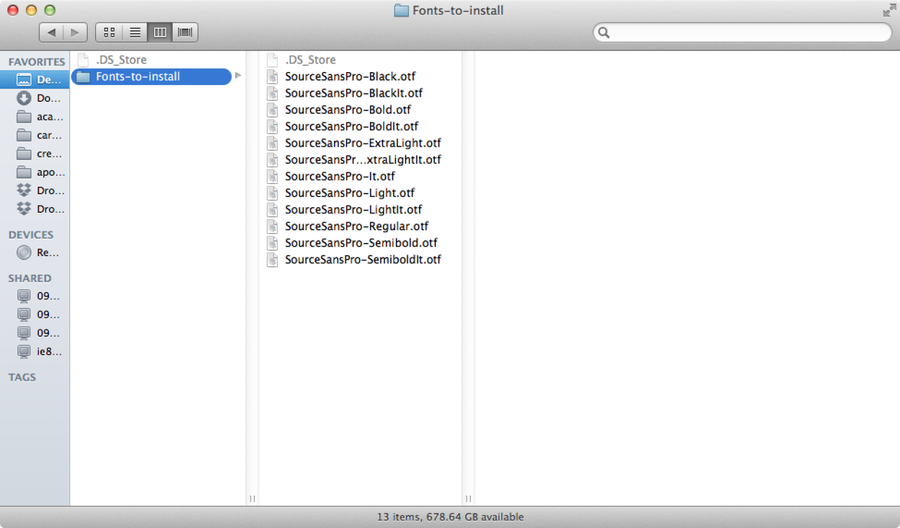
1 – Locate your fonts in Finder
Open a new Finder window and locate the fonts you’d like to install.
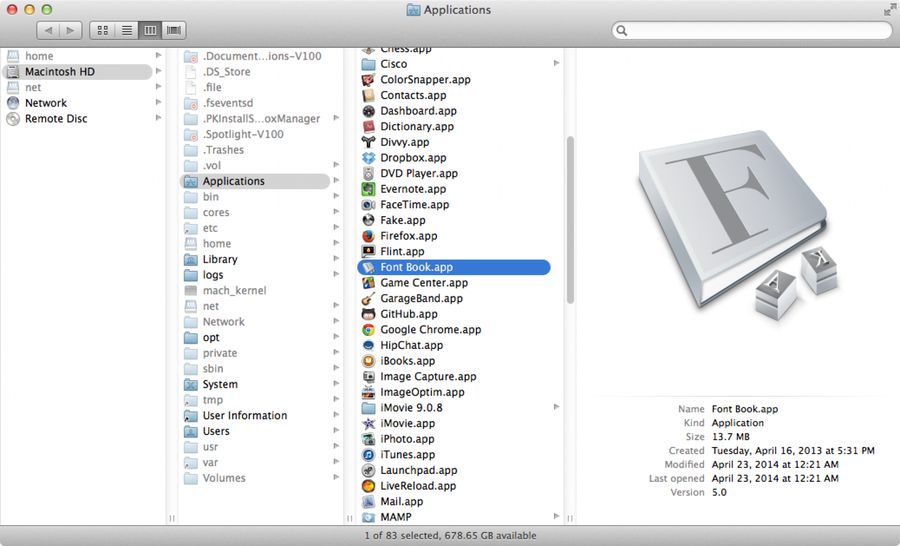
2 – Open Font Book
Navigate to Applications > Font Book (or open it using Spotlight).
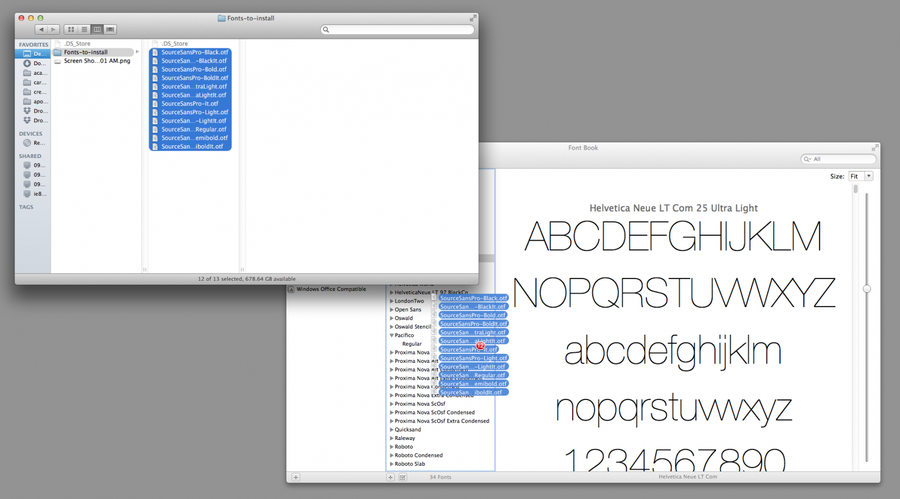
3 – Batch install the fonts
In Finder, highlight all the fonts you’d like to install and drag them into the Font Book window. You’re done!
🛈 Note: if the fonts you’re trying to install are corrupt or weren’t designed properly, you may see an error message. If you’d like to continue with installation anyways, you can check the associated checkbox to continue with installation.
NEXT UP
How to Enable the “Popping” Sound When Adjusting the Volume on Your Mac
Starting with MacOS Sierra and High Sierra, your Mac will no longer play a “pop” sound when you adjust your volume. If you prefer to have this sound when you adjust volume up and down (as I do), this guide will teach you how to reenable it. 1 – Open Sound System Preferences Navigate to System
Introducing Howchoo, an enigmatic author whose unique pen name reflects their boundless curiosity and limitless creativity. Mysterious and multifaceted, Howchoo has emerged as a captivating storyteller, leaving readers mesmerized by the uncharted realms they craft with their words.
With an insatiable appetite for knowledge and a love for exploration, Howchoo’s writing transcends conventional genres, blurring the lines between fantasy, science fiction, and the surreal. Their narratives are a kaleidoscope of ideas, weaving together intricate plots, unforgettable characters, and thought-provoking themes that challenge the boundaries of imagination.
The Python standard library includes a great set of modules, but many projects will require the use of third-party modules. Python modules are grouped into packages, so in order to use external modules, we’ll need to install the appropriate package. That’s where pip comes in.
What is pip?
Python packages are maintained in a central repository call PyPI (Python Package Index). It can be pronounced “pie pee eye” or “pie pie”, but not “pie pee” or “pee pee” or anything like that. Now, you could download packages directly from this repository yourself, but that would be a pain.
Using Homebrew to install python will install the latest Python (Python 3.7 currently), pip, and Setuptools.
brew install python
Option 2: Use easy_install
easy_install is the predecessor to pip, and it comes preinstalled on macOS (along with Python 2). You can use easy_install to install pip for Python 2.
Open the Command Prompt, then navigate to the directory where you downloaded the script.
Now run:
python get-pip.py
3 – Install pip on Linux
The command to install pip on Linux will vary based on the distribution you’re using (and the package manager). Below I’ll list the common package managers.
Kubernetes secrets are objects that store and manage sensitive data inside your Kubernetes cluster. One mistake developers often make is storing sensitive information like database passwords, API credentials, etc in a settings file in their codebase. This is very bad practice (hopefully for obvious reasons). Most developers know this, but still choose the option because it’s easy.
Introducing Howchoo, an enigmatic author whose unique pen name reflects their boundless curiosity and limitless creativity. Mysterious and multifaceted, Howchoo has emerged as a captivating storyteller, leaving readers mesmerized by the uncharted realms they craft with their words.
With an insatiable appetite for knowledge and a love for exploration, Howchoo’s writing transcends conventional genres, blurring the lines between fantasy, science fiction, and the surreal. Their narratives are a kaleidoscope of ideas, weaving together intricate plots, unforgettable characters, and thought-provoking themes that challenge the boundaries of imagination.
At some point, your project will get so complex with placed images and text that you can no longer see the forest for the trees. I’m going to show the easiest ways to change to “Preview” mode and see just the document itself.
1 – Press “W” on your keyboard
Pressing W on your keyboard will switch between “Preview” and “Normal” mode in InDesign.
2 – Change via the View menu
While pressing W is the easiest way, I want to show you how to access the View menu, as you’re likely new to InDesign. From the View menu, you can make other changes to how your document appears on your screen.
(An important option to note is Display Performance, which changes how much processing speed it requires for your computer to display the document preview. A lower setting will make your image blurrier but easier to display, for example.)
Go to View in the top toolbar.
Go to Screen Mode.
Select either Preview or Normal.
NEXT UP
How to Resize an Image in InDesign
There are two options for resizing in InDesign: the easy way and the precise way.
You might think that resizing an image would be as simple as dragging the corner of the frame. Well, it is, and it isn’t! Remember that when resizing an image in InDesign, you’re essentially resizing the image’s frame. For more information, on inserting an image in InDesign and frames, check our guide. How to Insert an Image
Introducing Howchoo, an enigmatic author whose unique pen name reflects their boundless curiosity and limitless creativity. Mysterious and multifaceted, Howchoo has emerged as a captivating storyteller, leaving readers mesmerized by the uncharted realms they craft with their words.
With an insatiable appetite for knowledge and a love for exploration, Howchoo’s writing transcends conventional genres, blurring the lines between fantasy, science fiction, and the surreal. Their narratives are a kaleidoscope of ideas, weaving together intricate plots, unforgettable characters, and thought-provoking themes that challenge the boundaries of imagination.
Setting up your work email on an Android phone is easy—everything synchronizes through Gmail, the default mail application. You can add an additional email address for your work account from within the Gmail application. The new email doesn’t have to be a Google account.
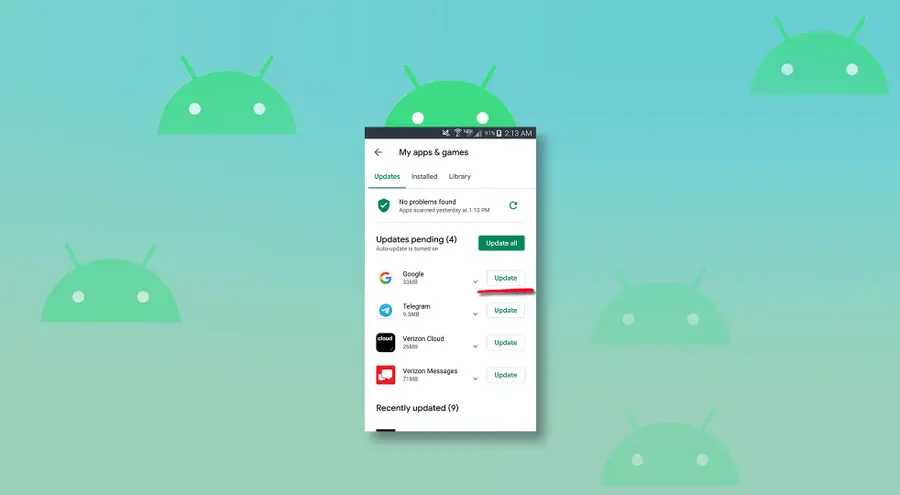
Make sure your email is up to date, check out our guide on how to update Android apps for help.
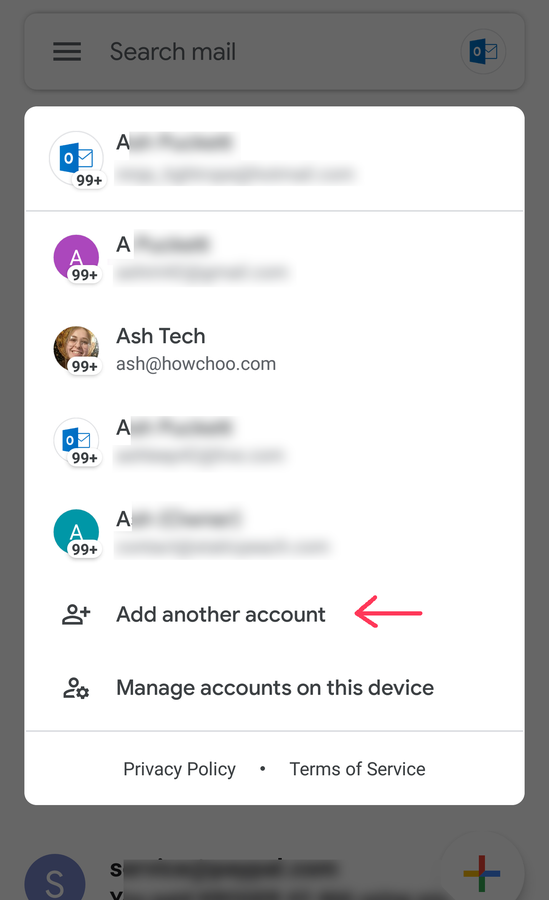
You can add an existing email account using the Gmail app.
Open the Gmail app.
Select your profile photo in the top-right corner.
Choose Add another account.
2 – Choose the account type
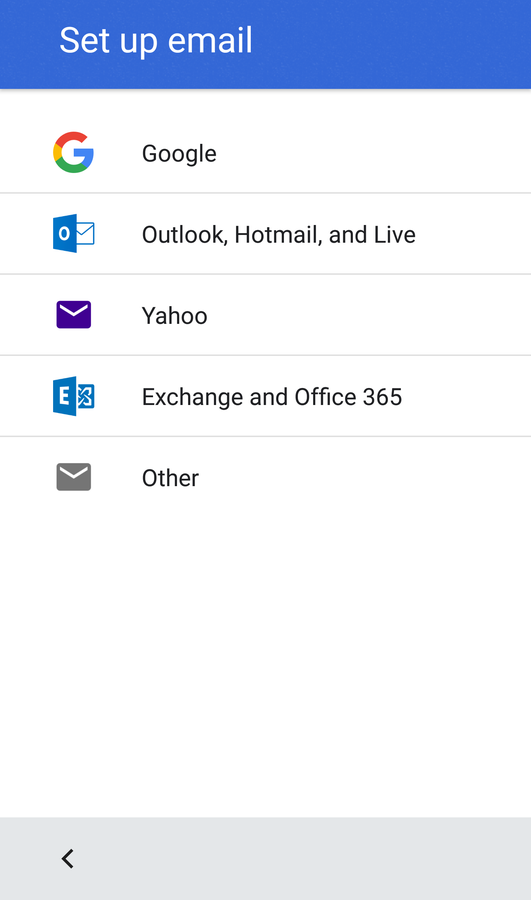
Choose the account type you want to add. If your company email uses one of the major providers in the list, select it. If you use Outlook in the office, you may not have an Outlook email address. Outlook emails end with domain extensions like @outlook.com, @live.com, and @hotmail.com. If your work email address has a different extension on the end, you probably need to use the Other option.
3 – Add the account details
Supported email providers
Follow the setup process to add your account details. The major providers like Yahoo and Microsoft (Outlook/Hotmail/Live) will only ask for your email address and password.
Other email providers
If you choose Other, you’ll have to manually configure your email. To do so, you’ll need the following information:
Email protocol (IMAP or POP3)
Incoming server address
Outgoing server address
Typically, your company’s IT department should be able to provide this information.
To configure your email:
Enter your email address, and choose Next.
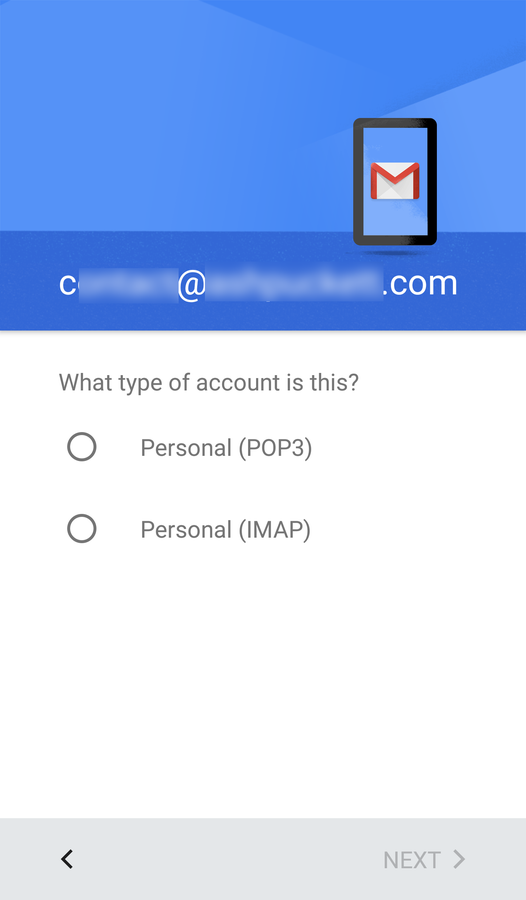
You will be prompted to confirm if the account is POP3 or IMAP. Tap Next.
Enter the password associated with the email account. Tap Next.
Confirm the incoming server address for your work email. Tap Next.
Enter the outgoing server address for your work email. IT support should have this address, as well.
Tap next and confirm the notification/sync settings for the email account.
4 – How to switch between inboxes
Once the account has been added, you can easily swap between different inboxes.
Tap your profile photo in the top-right corner.
Choose an account to switch to.
5 – How to add a signature
The Gmail app makes it possible to add a custom signature to outgoing emails.
Open Gmail.
Open the Main Menu.
Choose Settings.
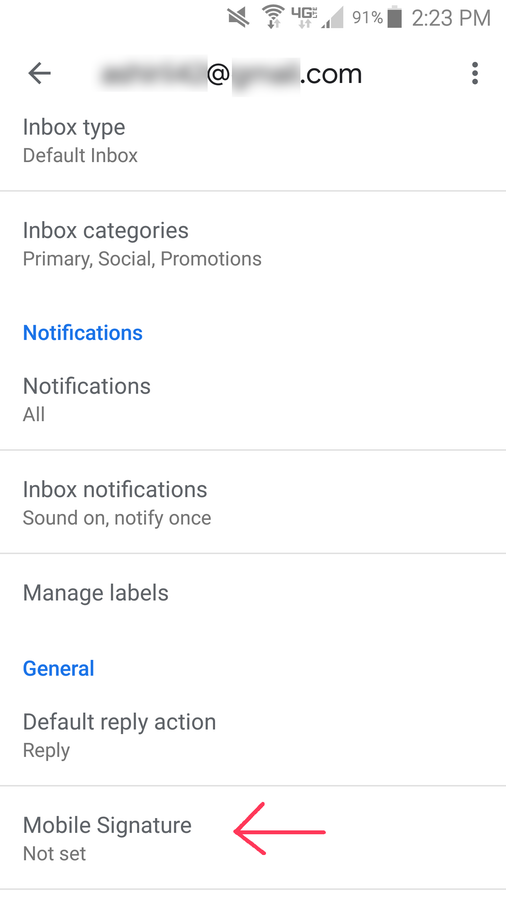
Select your account, and go to Signature settings.
Set Mobile Signature to on.
Create a custom mobile signature to use with the account.
Press the back button to save the changes.
6 – Troubleshooting
If your emails won’t come through after setting up your email, verify your network connection. If necessary, reset your network settings and try again.
How to Reset Network Settings on Android devices
Network trouble on your Android device? Try this.
NEXT UP
Everything You Need to Know About Amazon Household
If you’re an Amazon Prime member you understand just how great the benefits are. From free shipping and discounts to streaming and media sharing, Amazon has something for every member of the family. With this guide, you’ll receive a comprehensive tour of Amazon Households, and you’ll click away knowing how to set up an account, establish your
Introducing Howchoo, an enigmatic author whose unique pen name reflects their boundless curiosity and limitless creativity. Mysterious and multifaceted, Howchoo has emerged as a captivating storyteller, leaving readers mesmerized by the uncharted realms they craft with their words.
With an insatiable appetite for knowledge and a love for exploration, Howchoo’s writing transcends conventional genres, blurring the lines between fantasy, science fiction, and the surreal. Their narratives are a kaleidoscope of ideas, weaving together intricate plots, unforgettable characters, and thought-provoking themes that challenge the boundaries of imagination.