The aluminum moka pot can become oxidized over time and need a deep cleaning. For normal cleaning, soap and water is fine, but you’ll want to get a little more aggressive when it gets more nasty.
If you need to clean more than just your moka pot, check out this guide on how to make doing the dishes easier.
1 – Clean thoroughly with soap
Scrub as best as you can with a non metal abrasive. Stay away from steel wool as it will lead to corrosion down the road.
2 – Soak in a vinegar solution
Use 50% vinegar and 50% warm water. Soak for about 30 minutes.
3 – Scrub again
You won’t see 100% of the oxidation removed but close to it. Keep in mind, the oxidation is totally safe and will not impart any bad flavors but its still nice to remove most or all of it.
NEXT UP
How to adjust and calibrate Nespresso Inissia cup size/volume
By default, the Nespresso Inissia dispenses only a small amount of coffee. If you read the manual rather than throwing it away, it states that you’re meant to calibrate the cup size yourself to match your individual taste. This short guide will show you how to program the volume of coffee that your Nespresso machine
Introducing Howchoo, an enigmatic author whose unique pen name reflects their boundless curiosity and limitless creativity. Mysterious and multifaceted, Howchoo has emerged as a captivating storyteller, leaving readers mesmerized by the uncharted realms they craft with their words.
With an insatiable appetite for knowledge and a love for exploration, Howchoo’s writing transcends conventional genres, blurring the lines between fantasy, science fiction, and the surreal. Their narratives are a kaleidoscope of ideas, weaving together intricate plots, unforgettable characters, and thought-provoking themes that challenge the boundaries of imagination.
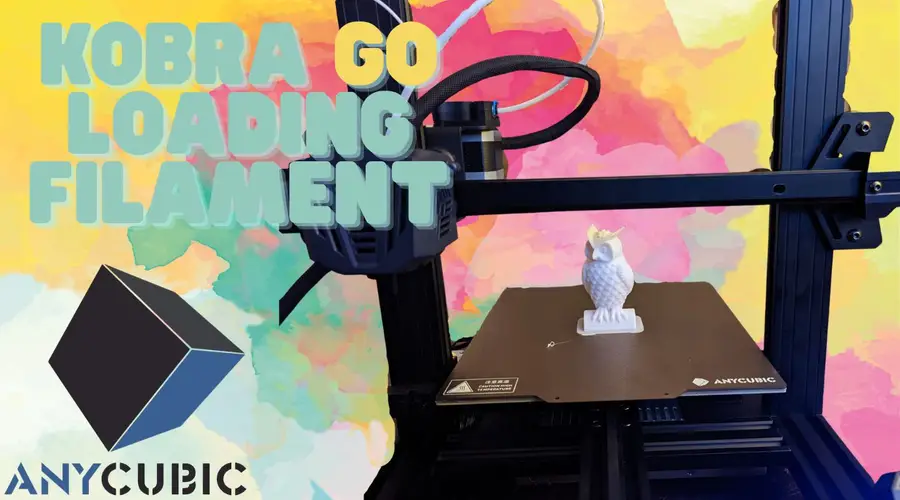
I dig the Anycubic line of Kobra printers in large part because of how many ease-of-use features they incorporate, from automatic leveling, to filament sensors (in some of their models). And that ease of use extends all the way to the humblest of tasks: loading filament.
The Kobra Go is a kit 3D printer that offers high quality in a DIY package that saves you a considerable wad of cash and lands you with a high-quality entry-level printer. As one would expect, it can handle all the common filament types, and loading them into the printer is a breeze.
Anycubic’s Kobra Go 3D Printer Hands-On Review
A detailed review on the Anycubic Kobra Go DIY 3D printer
1 – Turn the knob to Menu
Turn the knob to Menu
On the main screen, turn the knob to “Menu” and depress the button to select.
2 – Select “Prepare” from the menu
Select “Prepare” from the menu
From the list of control options, select “Prepare”.
3 – Scroll down and select “Load Filament”
Scroll down and select “Load Filament”
Since we want to load new filament, we’ll select this option.
4 – Select the checkmark to continue
Select the checkmark to continue
The Kobra Go will notify you that the nozzle is too cold to load new filament, so select the checkmark and allow the printer to bring itself to temperature.
5 – The Nozzle will bring itself to temperature automatically
The Nozzle will bring itself to temperature automatically
Just let the printer do its thing, this should only take a couple of minutes.
6 – When ready, load filament
When ready, load filament
The screen will notify you when it’s time to load the filament.
7 – Press the filament into the short Teflon tube
Press the filament into the short Teflon tube
The tube acts as a handy guide. make sure that you use your wire cutters to snip the filament at a sharp angle, this makes it easier to slide it in. A little bit of pressure will be needed—you can depress the button on the side of the loader to allow the filament to more easily slide into place.
You’ll know you’re finished when the machine catches the filament, and it starts moving without you pressing it.
8 – Once the filament is loaded, insert your memory card.
Once the filament is loaded, insert your memory card.
Insert your memory card that came with the Kobra Go.
9 – Select Menu and then scroll to “Print from SD Card”
Select Menu and then scroll to “Print from SD Card”
The card comes preloaded with an owl model to test things out on.
10 – If necessary, correct the Z offset
If necessary, correct the Z offset
As the print begins, you can use the knob to select the Z offset control (depress the button to select and turn to either side to move the nozzle up or down). It’s easy to ensure that your nozzle is the perfect height from the printer bed.
11 – Enjoy your new print!
Enjoy your new print!
The Anycubic Kobra Go does a great job turning out models with all the most common filament types. Try it yourself now!
NEXT UP
How to Set Up Quick Connect on a Synology NAS
Get Synology’s powerful Quickconnect running in minutes on your NAS!
Synology is one of the most popular creators of Network Attached Storage devices on the market today, and for great reason — they’re really good at what they do. They consistently make devices that stand the test of time and feature top-notch software that makes the process of running a home server as easy as
Introducing Howchoo, an enigmatic author whose unique pen name reflects their boundless curiosity and limitless creativity. Mysterious and multifaceted, Howchoo has emerged as a captivating storyteller, leaving readers mesmerized by the uncharted realms they craft with their words.
With an insatiable appetite for knowledge and a love for exploration, Howchoo’s writing transcends conventional genres, blurring the lines between fantasy, science fiction, and the surreal. Their narratives are a kaleidoscope of ideas, weaving together intricate plots, unforgettable characters, and thought-provoking themes that challenge the boundaries of imagination.
Need to change the case of characters to all caps or all lowercase? This is easily done using Vim. This guide will show you how to change the case of characters in Vim.
tl;dr
Toggle “Hello” to “hELLO” with g~. Uppercase “Hello” to “HELLO” with gU. Lowercase “Hello” to “hello” with gu.
1 – Select the text you’re interested in
Before changing case, you’ll need to select the text you’re interest in.
To do this, start on the first character you want to toggle, then enter visual mode by typing v. Use the directional keys (h, j, k, l) to select the rest of the text you want to change.
2 – Toggle case
To toggle the case type g~.
3 – All uppercase
If you want to make the text all uppercase use gU.
4 – All lowercase
If you want to make the text all lowercase use gu.
NEXT UP
How to install Vim plugins without a plugin manager
Vundle, Pathogen, Vim-plug, VAM, and the others can be great time savers but sometimes you just have to do something yourself so you can understand what exactly the time saving software is doing for you in the background. For myself, I got sick of not understanding what these were doing to my system. I realized
Introducing Howchoo, an enigmatic author whose unique pen name reflects their boundless curiosity and limitless creativity. Mysterious and multifaceted, Howchoo has emerged as a captivating storyteller, leaving readers mesmerized by the uncharted realms they craft with their words.
With an insatiable appetite for knowledge and a love for exploration, Howchoo’s writing transcends conventional genres, blurring the lines between fantasy, science fiction, and the surreal. Their narratives are a kaleidoscope of ideas, weaving together intricate plots, unforgettable characters, and thought-provoking themes that challenge the boundaries of imagination.
Your Verizon voicemail is easy to set up and even easier to use. It’s not only accessible from your Verizon phone but also from any phone. That freedom of access doesn’t come without property security measures—your voicemail is protected with a unique password/PIN.
1 – Set up voicemail
Voicemail can be set up using a Verizon cell phone. Make sure the phone has a signal before setting up your Verizon voicemail.
Open the Phone app.
Dial *86.
Press the Call button.
The recorded message will prompt you to choose a language and press #.
When asked, enter a 4-7 digit password for your voicemail and press #. Your password/PIN can’t use repeating or consecutive numbers.
Verizon will ask you to record your name. State your name when prompted and press #. You may have to press # again to confirm the name.
The last prompt will be for a voicemail greeting. After recording your greeting, press #. Press # again to confirm the recording.
2 – Check voicemail
You can easily check your voicemail if you have your Verizon phone with you.
Open the Phone app.
Dial *86.
Press the Call button.
You will be asked to enter your password/PIN. Enter it using your keypad.
Press #.
Follow the instructions to navigate through your voicemail messages.
3 – Check voicemail from another phone
If you don’t have your Verizon phone with you, it’s still possible to check your voicemail.
Using any phone, dial your 10-digit Verizon phone number.
When you hear your voicemail greeting, interrupt it with the # key.
Enter your password/PIN when prompted.
Press #.
Follow the prompts to navigate through your messages.
4 – Reset voicemail password
If you lose or forget your Verizon voicemail password, you can request a reset.
Open the Phone app on your Verizon phone.
Dial *611.
The phone recording will ask you to state a reason for calling. You can say “Reset voicemail password.”
The system will likely ask you to confirm information for security verification.
You will then be prompted to create a new voicemail password.
You’re finished! Next, learn how to enable Verizon call forwarding.
How to Enable Verizon Call Forwarding
Direct your calls elsewhere.
Call forwarding is the process of directing phone calls from one number to another. Verizon allows its customers to enable call forwarding at no additional charge. Your typical call rates will still apply. This process works for all Verizon customers regardless of your carrier—including Samsung, Apple, LG, Lenovo, and more. Note: International numbers can not
Introducing Howchoo, an enigmatic author whose unique pen name reflects their boundless curiosity and limitless creativity. Mysterious and multifaceted, Howchoo has emerged as a captivating storyteller, leaving readers mesmerized by the uncharted realms they craft with their words.
With an insatiable appetite for knowledge and a love for exploration, Howchoo’s writing transcends conventional genres, blurring the lines between fantasy, science fiction, and the surreal. Their narratives are a kaleidoscope of ideas, weaving together intricate plots, unforgettable characters, and thought-provoking themes that challenge the boundaries of imagination.
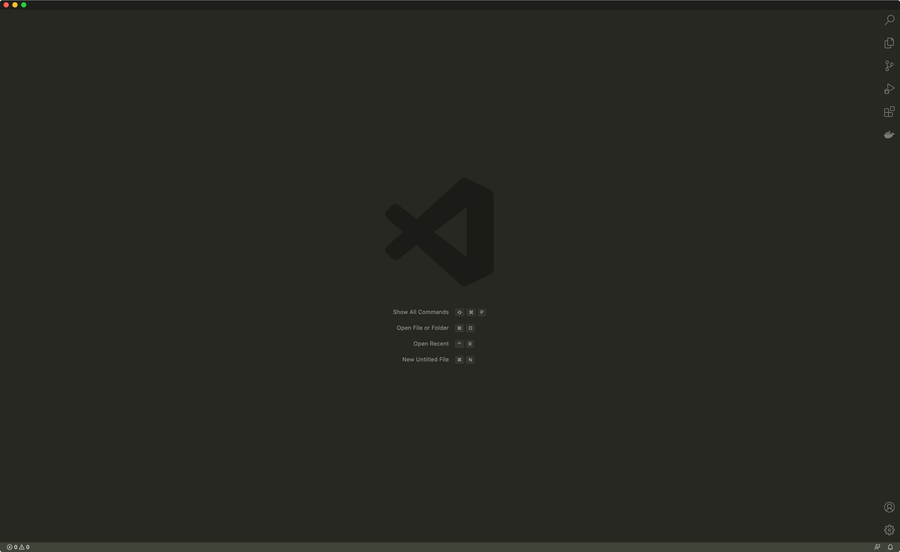
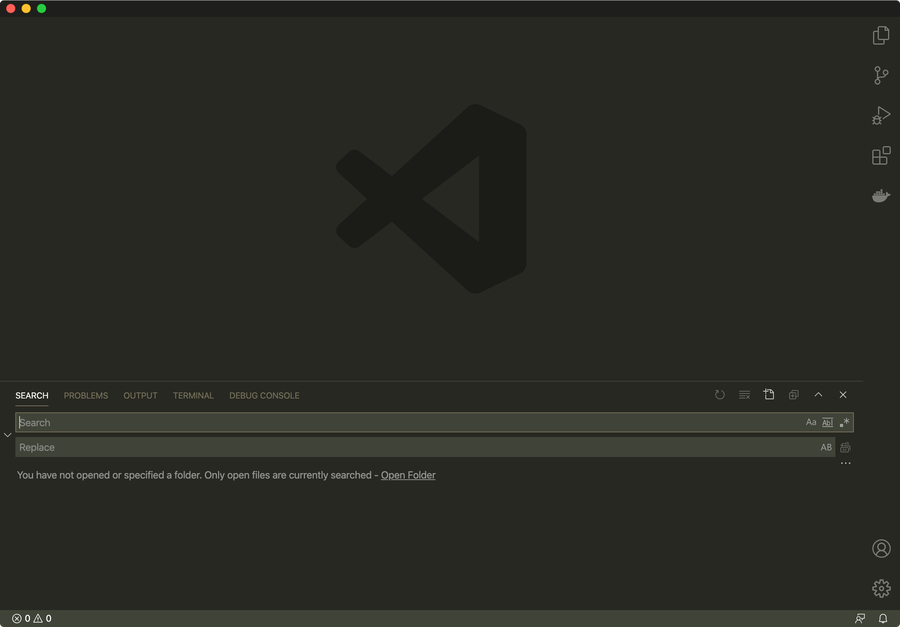
This short guide will show you how to move the search box in Visual Studio Code from the sidebar to the footer panel, making it easier to find and replace files. This is similar to how things look in Sublime Text.
Note: The old “Search: Location” option no longer exists, so this guide will show you the new way of moving the panel. If you updated VSCode and were surprised to find the search panel has moved back to its original position, this is why.
This method works on both Mac and Windows.
If you want to sync VS Code settings across all of your machines, then check out our comprehensive guide on syncing them.
1 – Launch VSCode
Obviously, you’ll need to open VSCode.
2 – Show the Panel
Show the [bottom] panel by navigating to View > Appearance > Show Panel.
🛈 By default, the Panel itself loads at the bottom. If you’ve changed this at some point, you can move it back to the bottom by modifying the “workbench.panel.defaultLocation” setting.
3 – Drag the search icon to the bottom panel
From the right sidebar, drag the search icon into the header area of the bottom panel. A | pipe character will indicate its final position. I chose to move it all the way to the left.
4 – VS Code search is now at the bottom!
As you can see the search pane is now at the bottom of the VS Code window, where it will stay until the devs decide to change this again. If that happens, I’ll update this guide—so feel free to bookmark or favorite it.
NEXT UP
Secure Your Sensitive Data with Kubernetes Secrets
Kubernetes secrets are objects that store and manage sensitive data inside your Kubernetes cluster. One mistake developers often make is storing sensitive information like database passwords, API credentials, etc in a settings file in their codebase. This is very bad practice (hopefully for obvious reasons). Most developers know this, but still choose the option because it’s easy.
Introducing Howchoo, an enigmatic author whose unique pen name reflects their boundless curiosity and limitless creativity. Mysterious and multifaceted, Howchoo has emerged as a captivating storyteller, leaving readers mesmerized by the uncharted realms they craft with their words.
With an insatiable appetite for knowledge and a love for exploration, Howchoo’s writing transcends conventional genres, blurring the lines between fantasy, science fiction, and the surreal. Their narratives are a kaleidoscope of ideas, weaving together intricate plots, unforgettable characters, and thought-provoking themes that challenge the boundaries of imagination.
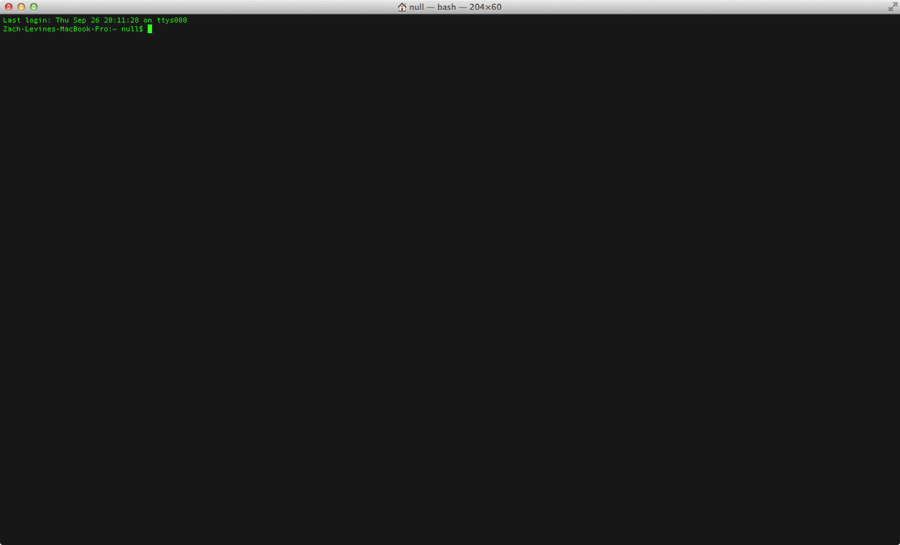
If you spend any amount of time working on the command line in macOS, you’ll realize it’s much more capable than just finding your IP address. It can do plenty of useful tasks, like running Python scripts and even automating the process of opening URLs in your favorite browser. In this guide, we’ll learn how to open Chrome from the command line (or a shell script) on macOS.
In the following steps, we’ll learn a few variations of the open command to learn how to:
Bring the Chrome window into focus
Open a specific URL in Chrome
Open a URL in a specific Chrome profile
1 – Use the `open -a` command
The open command accepts a -a option that allows us to specify which application we want to open.
So if you just want to open Google Chrome from the command line, it’s as simple as this:
open -a "Google Chrome"
This will do nothing more than bring the Google Chrome window into focus.
2 – Open a URL in Chrome
To open a specific URL in Chrome, simply pass the URL as the first argument of the command, like this:
open -a "Google Chrome"
This will open your favorite website in your favorite browser.
3 – Open a URL in Chrome using a specific profile
If you’re like me and use multiple Chrome profiles, you’ll want to be able to specify which profile to use when opening the URL. For this, we’ll have to move away from the convenient open command.
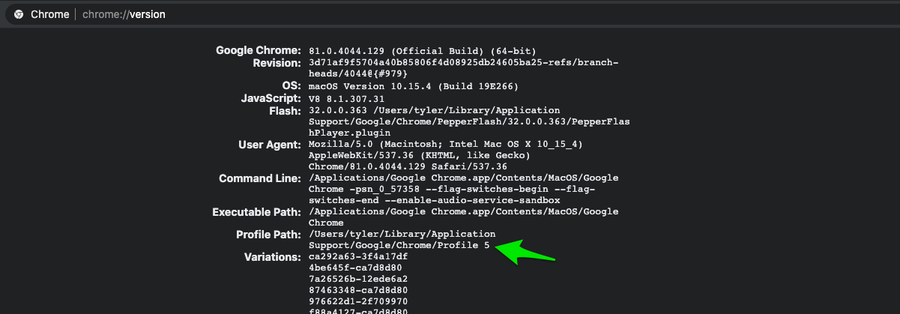
Before we get to the command, we’ll need to figure out the correct profile directory to use. Sadly, this will not be the same value as your profile name. To get your profile directory, open Chrome in the profile you want to use and navigate to chrome://version/. Find the item labeled Profile Path, and copy only the last part of the path. In my case, it’s Profile 5.
I know its not realistic to type this every time you want to open a URL. You could bake this into a script or see the next step where I’ll cover using aliases and bash functions to make this less painful.
4 – Helpful aliases
If you’re going to open URLs frequently, there are a few ways to dramatically increase efficiency. The easiest way is to use bash aliases. An alias allows you to basically create a shortcut for longer commands.
Alias for opening URLs in Chrome
Here are a few examples (you can add them to your ~/.bash_profile).
alias gc="open -a Google Chrome"
Or if you’d like to create an alias to the command that let’s you specify a profile, you could do the following:
alias gc="/Applications/Google Chrome.app/Contents/MacOS/Google Chrome --profile-directory=Profile 5"
Anytime you edit your bash_profile, you need to run source ~/.bash_profile or open a new shell to see the changes take effect.
With this, you can run:
gc  # Open or focus on the Chrome window
gc   # Open the url in Chrome
Similarly, the gc {url} command will open the url in Chrome, but it will use the specified profile every time.
Alias that accepts a URL from STDIN
In some cases, you might want to accept a URL from STDIN. The open command handles stdin the way we’d like, so if you’re using the first alias, you don’t need to do anything.
If you’re using the alias for Google Chrome, one easy way is to create a second alias (using xargs) like this:
alias gcx="xargs /Applications/Google Chrome.app/Contents/MacOS/Google Chrome --profile-directory=Profile 5"
This will allow you to do something like this:
echo "" | gcx
If you’ve got a better way of doing this, let me know in the comments below 🙂
NEXT UP
How to Enable the “Popping” Sound When Adjusting the Volume on Your Mac
Starting with MacOS Sierra and High Sierra, your Mac will no longer play a “pop” sound when you adjust your volume. If you prefer to have this sound when you adjust volume up and down (as I do), this guide will teach you how to reenable it. 1 – Open Sound System Preferences Navigate to System
Introducing Howchoo, an enigmatic author whose unique pen name reflects their boundless curiosity and limitless creativity. Mysterious and multifaceted, Howchoo has emerged as a captivating storyteller, leaving readers mesmerized by the uncharted realms they craft with their words.
With an insatiable appetite for knowledge and a love for exploration, Howchoo’s writing transcends conventional genres, blurring the lines between fantasy, science fiction, and the surreal. Their narratives are a kaleidoscope of ideas, weaving together intricate plots, unforgettable characters, and thought-provoking themes that challenge the boundaries of imagination.
Note that the first line, $(function() { is shorthand for $(document).ready(function() {. This simply means we are passing a callback function to the document ready event. It’s necessary to do this when our code is expecting DOM elements to exist.
Next we are creating a click event handler for our button, $(“#top”).on(‘click’, function() {. First we specify which element we are listening to, which in our case is #top. The on(‘click’ is very readable – simple means when the user clicks on the #top element. And as before, the anonymous function we create is being passing in as a callback function. So whenever the user clicks on the #top element this function will get fired.
Now for the animation. First it should be noted that we are targeting both HTML and BODY for browser compatibility. Some browsers scroll by settings scrollTop on BODY and other on HTML. No, I don’t know which ones, and it will probably be unnecessary soon if it isn’t already. jQuery provides an animate function that takes a dictionary of CSS properties and values as the first parameter, and an integer representing the animation duration in milliseconds as the second parameter. In our case we are passing in only one css property: scrollTop. And since we are scrolling to the top, we’ll set scrollTop to 0.
Then as the second parameter we’re setting the duration to 1000 milliseconds or if you’re really good at math: 1 second. This should give us plenty of time to watch our animation.
🛈 Keep in mind that if you’re going to use this code, you’ll need to add enough content to your page to enable scrolling otherwise the button will do nothing!
2 – Scroll to the top of an element
Now suppose we have an element on the page and we want to scroll to the top of it.
We first need to find out the offset of the image.
var position = $("#image").offset().top;
jQuery’s offset() function returns an object containing properties top and left. We’re only interested in top because we want to scroll to the top of this element. So using what we’ve already learned about scroll, we can use our new position as the value of scrollTop:
$(function() {
    $("#top").on('click', function() {
        var position = $("#image").offset().top;
        $("HTML, BODY").animate({
            scrollTop: position
        }, 1000);
    });
});
This will scroll you to the top of the element with the animation lasting 1 second.
3 – Scroll to the bottom of the page
Since scrollTop is the position on the page that should land at the top of the window, scrolling to the bottom of the page requires a little bit of math. The position we want to know is the document height – window height. document height will give us the height of the entire web page, while window height just gives us the height of the scrollable area.
var bottom = $(document).height() - $(window).height();
If you’ve been experimenting with animating scroll, you’ve probably noticed that if the scroll distance is small it scrolls very slowly and if the scroll distance is large is scrolls more quickly. This is because we are specifying a duration for the animation, and it doesn’t care about distance. In most cases, when your scroll distance can vary you’ll want to normalize the scroll rate. So instead of always passing in 1000 for the duration, we want to take our scroll distance into account. First, we have to decide the rate we want to scroll. Let’s pick something easy – 1000px/500ms or 1000px/0.5s. We need to write a function that takes the target scroll position, that is the position we are scrolling to, and returns the new duration in milliseconds.
First we set our variables. We need to get our current scrollTop position and store that value as currentTop. This allows us to properly calculate the distance between our current position and the target position.
Then we specify our rate, which in our case is 0.5 or 1000px/500ms.
Finally, we declare our distance variable which will be set soon. Calculating the distance is as simple as subtracting the target from the currentTop. We need to take the absolute value of the result to ensure this works for both directions. Finally we return the new distance we calculated multiplied by the rate.
Now let’s put our function to use in an example that scrolls us to the bottom of the page at our newly calculated rate.
As you can see the only changes are calling the getDuration function and using the newly calculated duration as the second parameter of the animate function. This method is beneficial because if all of your scrolls will animate at the same speed. If you want to change the speed, all you have to do is modify the rate in our getDuration function. Adjusting the rate to 0.2 will make it go much faster, whereas changing it to 1.5 will slow it down significantly.
NEXT UP
Secure Your Sensitive Data with Kubernetes Secrets
Kubernetes secrets are objects that store and manage sensitive data inside your Kubernetes cluster. One mistake developers often make is storing sensitive information like database passwords, API credentials, etc in a settings file in their codebase. This is very bad practice (hopefully for obvious reasons). Most developers know this, but still choose the option because it’s easy.
Introducing Howchoo, an enigmatic author whose unique pen name reflects their boundless curiosity and limitless creativity. Mysterious and multifaceted, Howchoo has emerged as a captivating storyteller, leaving readers mesmerized by the uncharted realms they craft with their words.
With an insatiable appetite for knowledge and a love for exploration, Howchoo’s writing transcends conventional genres, blurring the lines between fantasy, science fiction, and the surreal. Their narratives are a kaleidoscope of ideas, weaving together intricate plots, unforgettable characters, and thought-provoking themes that challenge the boundaries of imagination.
Resetting your CenturyLink router or modem is a common troubleshooting step for network latency. It’s also an easy way to start over with fresh settings on your network.
Factory resetting your device will wipe all of your custom settings—this includes things like your WiFi password and network name. Be certain you’re ready to proceed before initiating a factory reset.
If you aren’t happy with your CenturyLink service, you may want to check out Xfinity.
Howchoo may earn a small commission when you order products and services through our affiliate links.
1 – Locate the Reset Button
Look for the factory reset button on the back of your modem or router—it’s likely red. This button is usually the smallest and may require a pen to press it all the way.
2 – Use the Reset Button
To initiate the factory reset, press and hold the button for at least 15 seconds. The reset will begin when the modem lights begin to flash.
3 – Wait
Wait for at least 3-5 minutes for the factory reset to finish.
The Internet light will shine green when the process is complete.
There are a few reasons you might want to update or reset your WiFi password: making your network more secure, and making your password easier to remember and type. Improved network security You can add an extra layer of security to your network by changing the WiFi password. As long as your new password is
Introducing Howchoo, an enigmatic author whose unique pen name reflects their boundless curiosity and limitless creativity. Mysterious and multifaceted, Howchoo has emerged as a captivating storyteller, leaving readers mesmerized by the uncharted realms they craft with their words.
With an insatiable appetite for knowledge and a love for exploration, Howchoo’s writing transcends conventional genres, blurring the lines between fantasy, science fiction, and the surreal. Their narratives are a kaleidoscope of ideas, weaving together intricate plots, unforgettable characters, and thought-provoking themes that challenge the boundaries of imagination.
Have you ever found program management on a Windows system to be a bit of a pain? Well, no longer! Chocolatey is a powerful PowerShell-based software management solution that allows you to manage every aspect of your Windows software environment, including using Chocolatey to install programs. Via simple PowerShell commands, you gain a great level of control over your installed programs: Chocolatey can even handle batch installations, updates, and uninstallations (as we’ll explore in this article).
Chocolatey only manages that software that you installed through Chocolatey. But once you’ve installed a program using Chocolatey, you can then manage all aspects of your software environment easily.
There are two ways to uninstall a program managed by Chocolatey: either via PowerShell commands or Chocolatey’s GUI (graphical user interface) should you have it installed, which is really easy to do.
1 – Uninstalling a program with Chocolatey using PowerShell
Open PowerShell by searching for it in Windows search. Make sure to open it via Run as Administrator.
The first PowerShell command we’ll be using today is: choco uninstall which allows you to uninstall programs really quickly and easily.
For instance, you could use this to remove a single program: choco uninstall googlechrome
Or you could use this to uninstall a selection of programs all at once: choco uninstall googlechrome notepadplusplus 7zip
Or even uninstall everything managed by Chocolatey in one glorious shot with: choco uninstall all
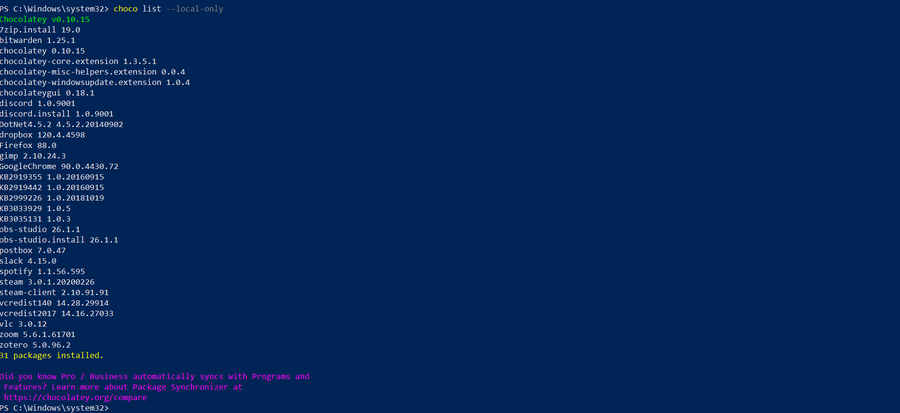
To find a list of all your Chocolatey-installed software, use the following command in PowerShell: choco list --local-only
Finally, to ensure that your uninstallation process slides through without hassle, append your command with -y (for “yes”), which will automatically select the affirmative option from the software’s uninstallation prompts should any exist. See the example below.
choco uninstall googlechrome -y
🛈 You should always double-check in Programs to ensure that the software is uninstalled properly. It may not show up as uninstalled until you do a system reboot.
2 – Uninstalling a program through the Chocolatey GUI
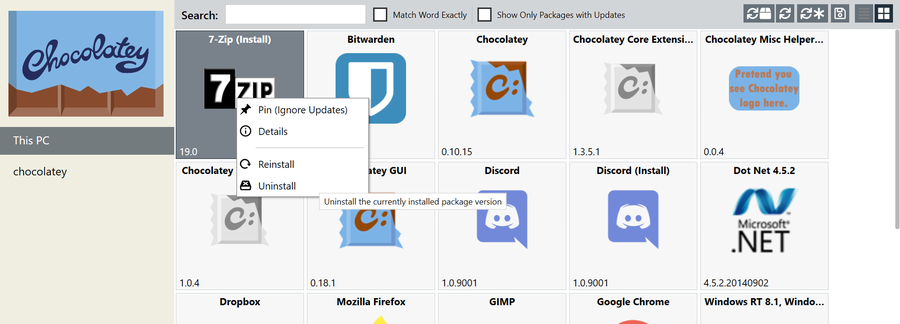
If you are using the Chocolatey graphical user interface, you can also use it to uninstall any Chocolatey-managed programs you desire. The process here is as simple as right-clicking on the item in question and choosing “Uninstall” from the drop-down menu.
The GUI isn’t as handy for uninstalling a large selection of software in one go, however, so I’d stick to PowerShell for big operations.
Blender is one of the most popular open-source 3D creation suites today. It doesn’t cost a dime to use and everything you create is yours to own for good. The community is robust and the dev team still releases new updates on the regular. If you want to get the latest version, you may have
Introducing Howchoo, an enigmatic author whose unique pen name reflects their boundless curiosity and limitless creativity. Mysterious and multifaceted, Howchoo has emerged as a captivating storyteller, leaving readers mesmerized by the uncharted realms they craft with their words.
With an insatiable appetite for knowledge and a love for exploration, Howchoo’s writing transcends conventional genres, blurring the lines between fantasy, science fiction, and the surreal. Their narratives are a kaleidoscope of ideas, weaving together intricate plots, unforgettable characters, and thought-provoking themes that challenge the boundaries of imagination.
The setup process has changed over recent years, but it’s still relatively easy to follow. You will need a mobile device with WiFi capability to set up your new Chromecast. You can also set up a Raspberry Pi Chromecast.
1 – Create a Google account (if you don’t have one)
If you haven’t already, create a Google account. You will need one to use and set up the Google Chromecast device.
Enter your first and last name in the respective fields.
Enter a username—this will also be your email address. You can also choose to use an existing email address instead.
Enter a password to use and confirm it in the password field.
Click next and follow the prompts to complete the sign-up process.
2 – Connect the Chromecast to the TV
Your Chromecast device connects to TVs and screens using an HDMI cable. Plug the Chromecast into your TV’s HDMI port. Be sure to set the TV input to the appropriate HDMI channel.
3 – Install Chromecast software
In order to set up and use the Chromecast, you will need to load some software on the devices you want to stream media from.
Mobile Devices
If you’re using an Android device, open the Google Play store. If you’re using an Apple device, open iTunes.
Search for Google Home.
Download and install the app.
Desktops and Laptops
Open Chrome on your PC.
Open the Chrome Settings menu in the upper right corner—it has an icon that looks like three dots.
Select Cast….
When the Chrome icon appears in the browser toolbar, right-click it and choose Always show icon to pin it in place.
4 – Verify your network connection
You can only stream to a Chromecast device if you’re on the same network. Verify the network you want to use has an internet connection and the device you plan to stream from is connected to it.
5 – Set up the Chromecast
Note: Google no longer supports the Chromecast setup process on PC. You will need a mobile device to set up the Chromecast.
How to set up Chromecast
Open Google Home using a mobile device.
You should receive a setup prompt for your new Chromecast. If you don’t see it, tap the Add + button.
Go to Set up device.
Choose Set up new devices.
Follow the prompts to complete the setup.
6 – How to cast something to the Chromecast
Now it’s time to stream! There are a few ways to go about sending media to your TV.
Stream to Chromecast from a mobile device
Open the media you want to stream. It could be anything compatible with Chromecast—YouTube, Netflix, Spotify, etc.
Tap the Chromecast icon. It looks like a TV (or rectangle) with WiFi waves coming off of it.
Select the Chromecast device you want to send the media stream to.
Stream to Chromecast from PC
Open the media you want to stream in the Chrome web browser.
Tap the Chromecast icon in the upper right. It looks like a TV (or rectangle) with WiFi waves coming off of it.
Choose a Chromecast device to send the media to.
Congratulations! You’re ready to go. Sit back, relax, and enjoy the magic of streaming media across your home network.
NEXT UP
How to Clear Your Browser Cache for Any Browser
Trouble loading web pages? Try clearing your cache!
Clearing your browser cache is a great way to solve common internet issues. If a webpage isn’t loading properly, one of the first things you should try is clearing your browser cache. This guide includes steps for the most common internet browsers—Chrome, Firefox, Safari, Internet Explorer, and Edge. If your browser isn’t listed, visit the
Introducing Howchoo, an enigmatic author whose unique pen name reflects their boundless curiosity and limitless creativity. Mysterious and multifaceted, Howchoo has emerged as a captivating storyteller, leaving readers mesmerized by the uncharted realms they craft with their words.
With an insatiable appetite for knowledge and a love for exploration, Howchoo’s writing transcends conventional genres, blurring the lines between fantasy, science fiction, and the surreal. Their narratives are a kaleidoscope of ideas, weaving together intricate plots, unforgettable characters, and thought-provoking themes that challenge the boundaries of imagination.