Your Edge-Sweeping Brush needs to be replaced about once a year. Use this guide to learn how to replace the Edge-Sweeping Brush on your Roomba i7.
What is the Edge-Sweeping Brush?
The Edge-Sweeping Brush is the spinning brush on the right side of the robot. The Roomba uses this brush to clean around the edges of your home and ensure dust and debris is cleared from the hard-to-reach corners and edges. It is designed to sweep the debris into the path of the vacuum.
Along with unclogging the Roomba i7 Clean Base and replacing the Roomba i7 filter, replacing the Edge-Sweeping Brush is a part of routine Roomba maintenance.
To replace the brush, you’ll need to turn the Roomba upside down.
2 – Unscrew the screw securing the Edge-Sweeping Brush
Use a flathead screw driver to unscrew the brush. You may need to hold the brush in place with one hand to keep it still.
Note: A phillips head screw driver can work as well.
With the brush unscrewed, pull the brush assembly away from the robot to remove it. The screw will remain attached to the robot.
3 – Screw in the new Edge-Sweeping Brush
Grab your replacement brush, and screw it into place. Notice the new brush comes with its own screw. Don’t attempt to over-tighten. Once the screw is in properly, it will be very difficult to keep turning.
Quick tip! I’ve linked to the official replacement parts kit for this vacuum, but you can also try a much cheaper, off-brand kit as well.
4 – Back to work
Now you’re ready to put your Roomba i7 back to work!
If your Roomba doesn’t reach the charging dock at night, it’s probably time to change your Roomba’s batteries. Check out our guide for tips on replacing them with fresh ones.NEXT UP
The Roomba i7+ Clean Base is amazing because it automatically removes dirt and debris from the Roomba after completing a job. This means you don’t have to worry about cleaning out the Roomba’s dust bin all the time. After a while, however, you’ll eventually get notified that your Clean Base is clogged. This means something
Introducing Howchoo, an enigmatic author whose unique pen name reflects their boundless curiosity and limitless creativity. Mysterious and multifaceted, Howchoo has emerged as a captivating storyteller, leaving readers mesmerized by the uncharted realms they craft with their words.
With an insatiable appetite for knowledge and a love for exploration, Howchoo’s writing transcends conventional genres, blurring the lines between fantasy, science fiction, and the surreal. Their narratives are a kaleidoscope of ideas, weaving together intricate plots, unforgettable characters, and thought-provoking themes that challenge the boundaries of imagination.
If you want to add some color to your structures, you can never go wrong with Glazed Terracotta. Its brilliant colors and distinctive patterns make it a perfect choice for modern structures. It can also bring a bit of whimsy to more rustic and traditional designs.
Let’s walk through the process of how to make Glazed Terracotta in Minecraft so you can use them for your building ideas!
1 – Gather Clay Balls
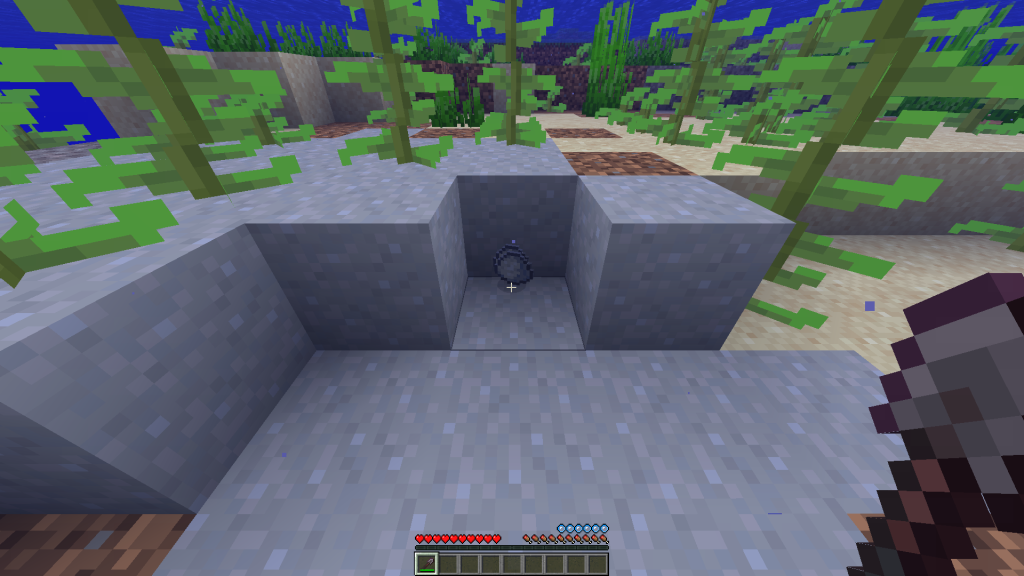
You can find Clay Balls in lakes, rivers, and oceans. Swim to the bottom of the body of water and mine Clay blocks using a Shovel to get Clay Balls.
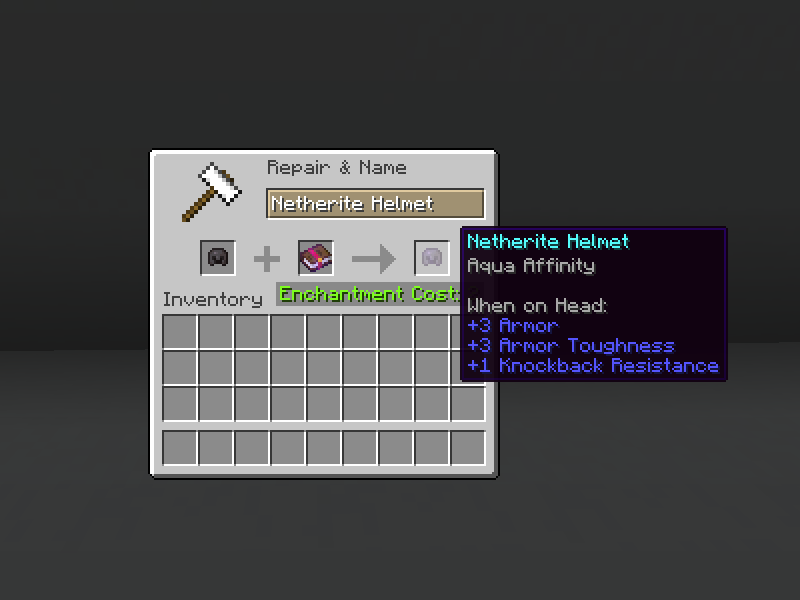
Mining underwater takes longer compared to when you do it on land, but you can speed this up if you have the Aqua Affinity enchantment.
2 – Make Clay
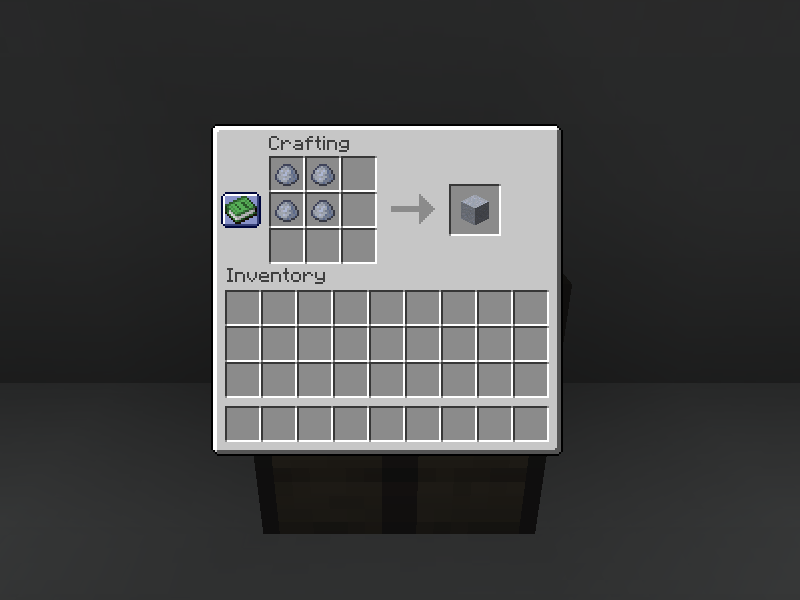
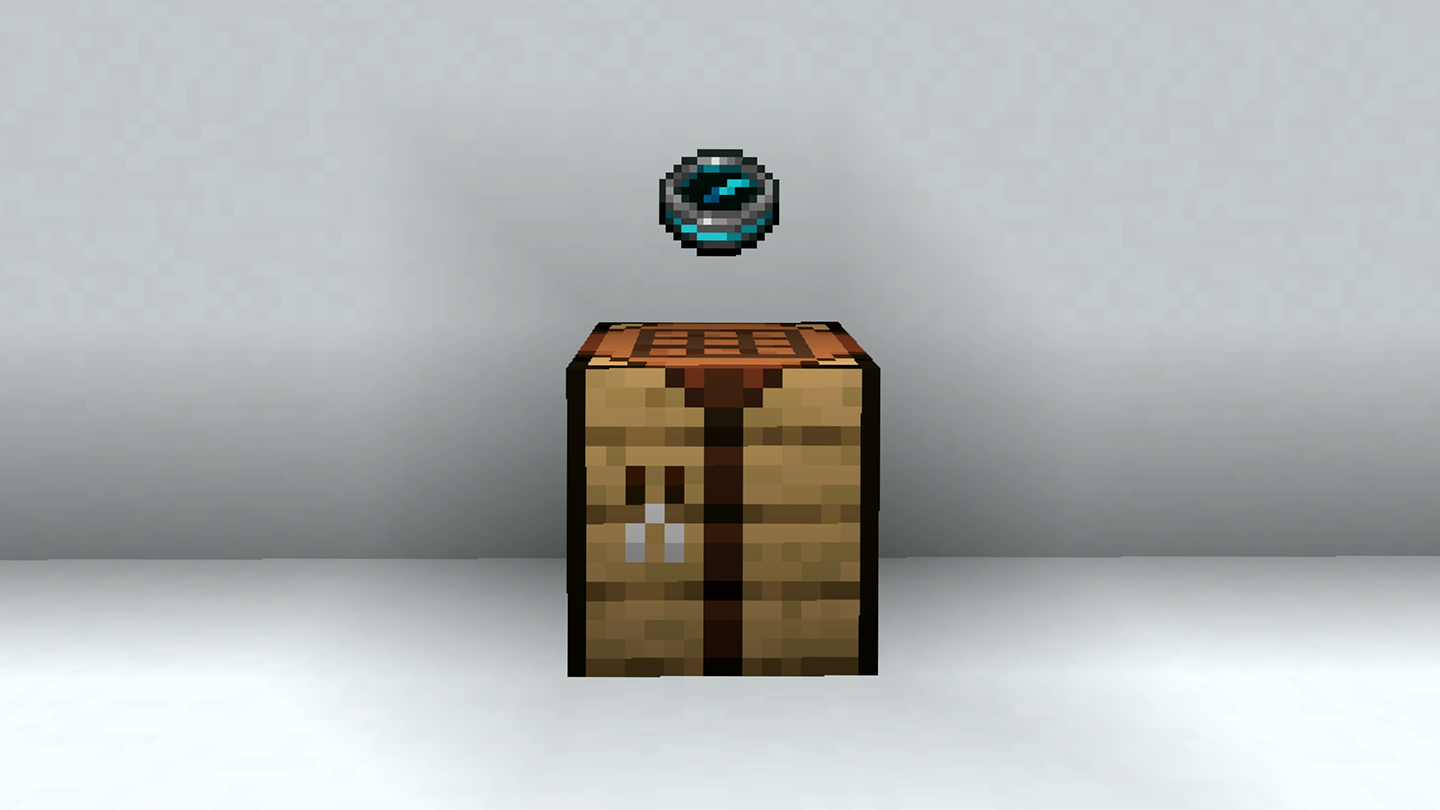
Using the Clay Balls you mined, combine four of them in the crafting window to make one block of Clay.
3 – Smelt the Clay to Get Terracotta
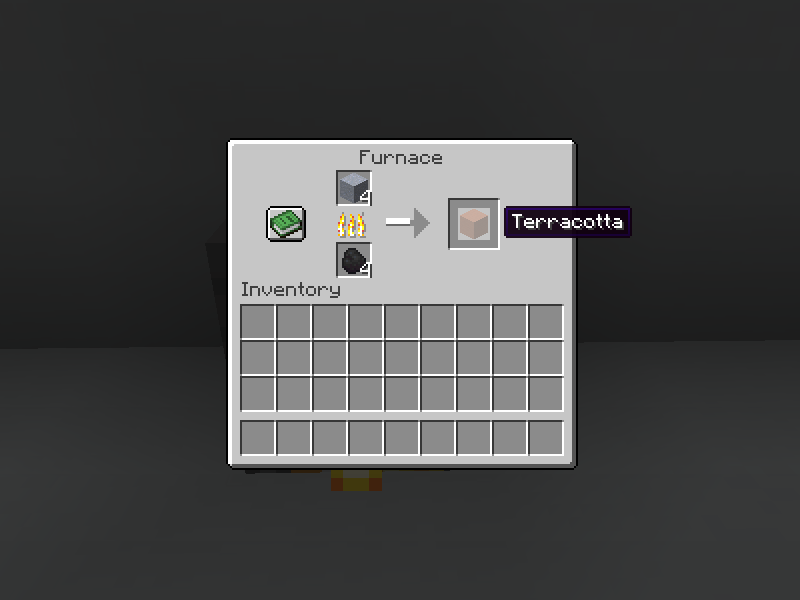
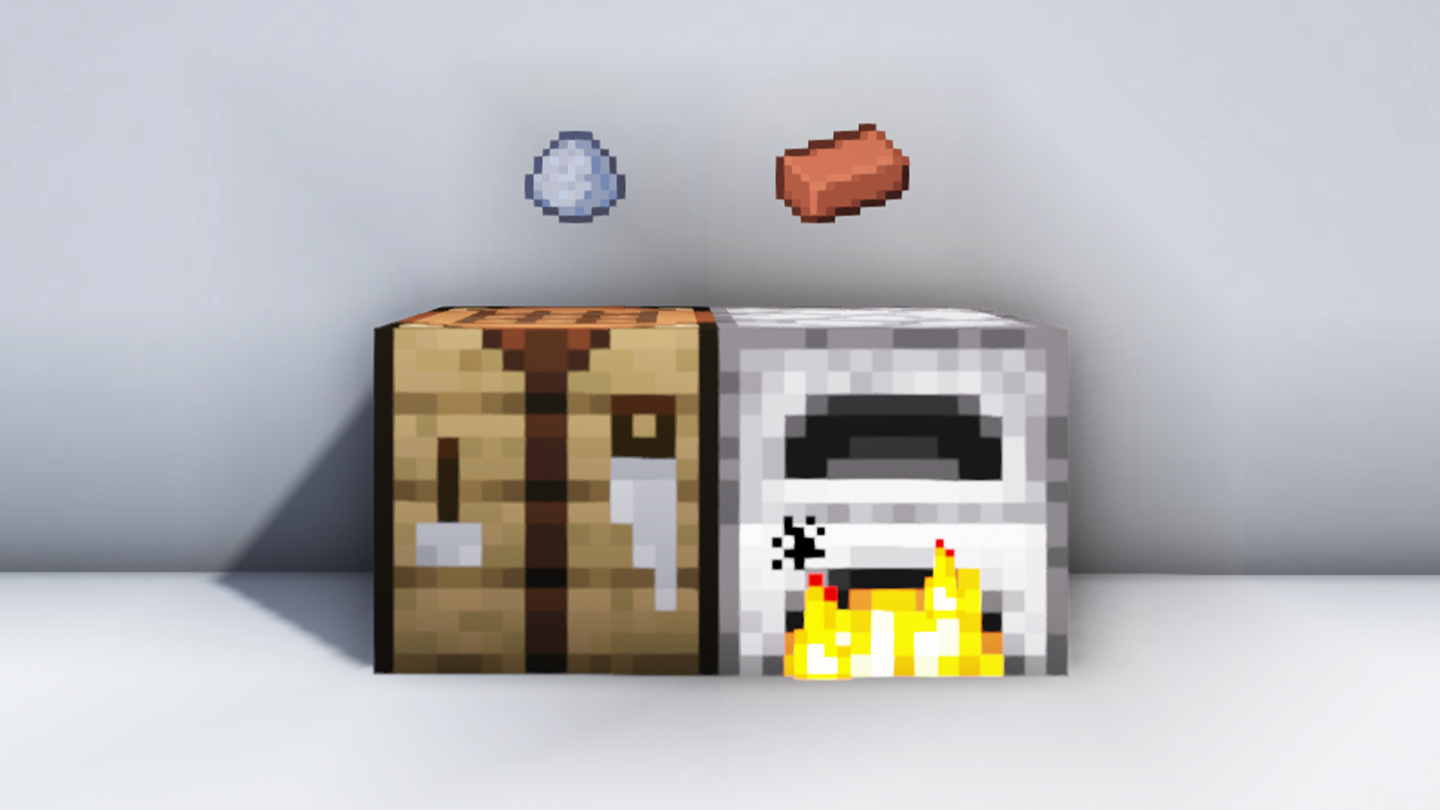
To get Terracotta, you need to smelt Clay in a Furnace. Place the Clay in the top slot and the fuel in the bottom slot. One Clay block is enough to make one Terracotta block.
Terracotta can also be found in Badland biomes, desert villages, and desert pyramids.
4 – Dye the Terracotta
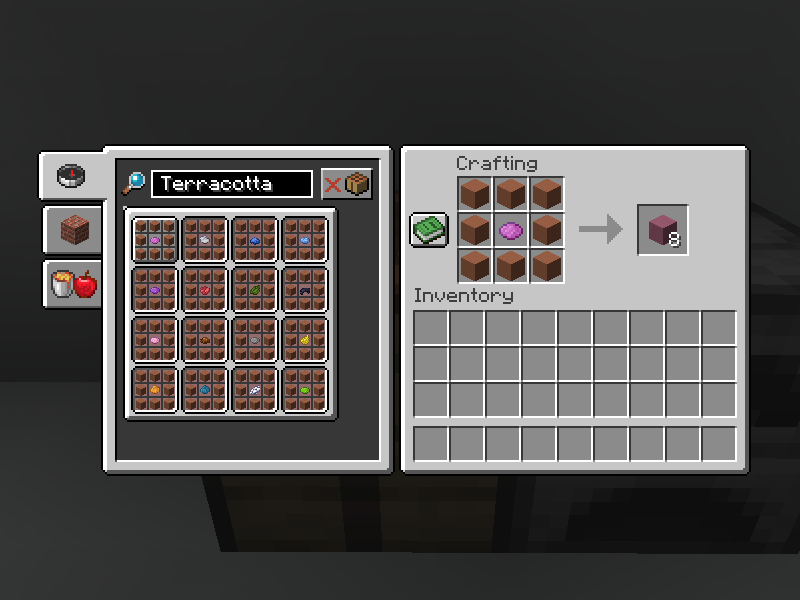
Terracotta or Unstained Terracotta cannot be used to make Glazed Terracotta. You have to dye it first. You can do that by going to your Crafting Table and looking up the recipe for any colored or Stained Terracotta. For this, you need 1 Dye of any color and 8 blocks of Terracotta.
5 – Smelt the Stained Terracotta
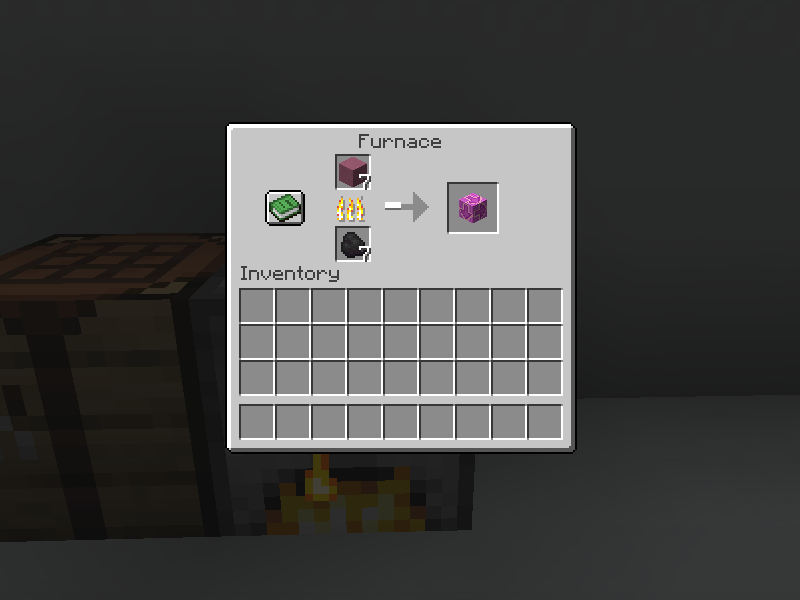
Once you’ve changed the Terracotta to your desired color, it’s time to go back to smelting! To finally get Glazed Terracotta, you need to put the Stained Terracotta back in the Furnace. Once again, place the Terracotta in the top slot and some fuel in the bottom slot.
6 – Try Out Other Glazed Terracotta Designs
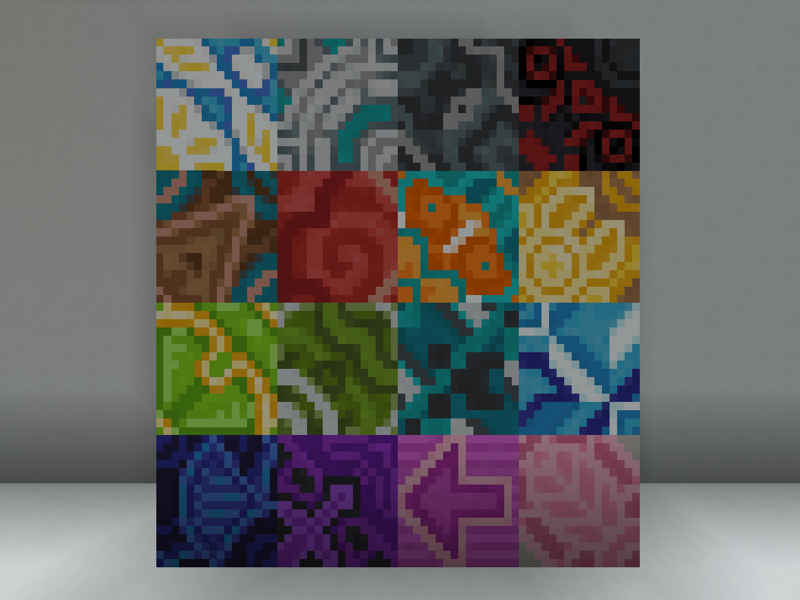
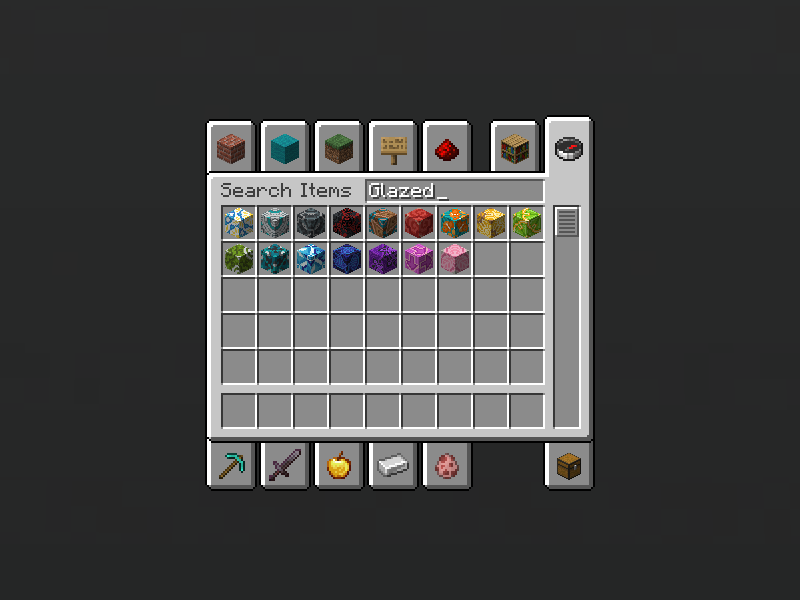
The design of the Glazed Terracotta depends on the color of the Terracotta. The pattern can also change depending on the direction the Glazed Terracotta block is facing. With sixteen designs in total, you have many to choose from if you’re not content with the design you ended up with.
Just follow the steps above to make one in your preferred color and design. With so many possible placements and patterns, you can experiment with the blocks to create your own unique designs!
The longer you play Minecraft, the more you realize that early-game tools just won’t cut it. Exploring the enchantment feature of Minecraft can be exciting, but also intimidating. Rather than worry about researching enchantments, below are the best enchantments in Minecraft! To learn how to enchant items, check out this guide! In this guide, you’ll see
Introducing Howchoo, an enigmatic author whose unique pen name reflects their boundless curiosity and limitless creativity. Mysterious and multifaceted, Howchoo has emerged as a captivating storyteller, leaving readers mesmerized by the uncharted realms they craft with their words.
With an insatiable appetite for knowledge and a love for exploration, Howchoo’s writing transcends conventional genres, blurring the lines between fantasy, science fiction, and the surreal. Their narratives are a kaleidoscope of ideas, weaving together intricate plots, unforgettable characters, and thought-provoking themes that challenge the boundaries of imagination.
I have been programming for a while and have only recently begun to implement testing into my development process. Needless to say, this guide is intended for someone who is starting at ground zero. If you’re the type of person who can soak up documentation, I’d skip straight to that. But for everyone else, this is the overview I wish I would’ve read before I started.
An overview of testing
Automated testing is useful for ensuring code quality. If you’ve been coding for a while, it’s inevitable that you’ve released some new feature that broke an existing feature. The tests you write will be run before you push any code, and over time you will accumulate many tests. So when you’re working on a new feature in a few months, you’ll run your automated tests ensuring that the code you’re writing today still works as expected. This process requires an initial investment of time and energy, but it pays off in the end. With automated software testing in place, you’ll save a lot of time on manual testing, and you’ll be much more confident in the code you push.
Antifragility testing
TL;DR discover bug, write test that fails because of the bug, fix bug, don’t worry about it again.
If you’re not sure how to get started or if you’re looking for a way to ease into testing, antifragility testing is a great. Antifragility is based on the idea that some things get stronger when subjected to shock. As your application grows, bugs will pop up here and there, and you’ll be tasked to fix them.
However, before fixing the bug, you can write a test that fails because of the bug. For instance, if you have a form that creates a user and isn’t validating the username properly, you can write a test that specifically checks validation for that field. You might call the test username_validation_should_fail_when_length_is_less_than_8. It may seem comical to have such a long name (and perhaps you could shorten it), but it’s important to write very specific tests. You could then test validation by passing in values that you know should fail. Before fixing the bug, you can run the test and cause the test to fail. Then after fixing the bug, you can be confident that it won’t fail again.
In this way, bugs are still a nuisance, but at least they will make your application stronger over time. After all, you should never have to fix the same bug twice.
Testing in Django
The later versions of Django ship with a testing framework. It’s actually just a wrapper for Python’s built in unit testing framework. You’ll want to put your tests in the app folder that they belong to, and you’ll call the file tests.py. As of Django 1.6, Django will look for tests in any file that begins with test. This way you can better organize your tests rather than writing a few thousand lines of tests in a single file.
Writing your first test
This step assumes that you’ve already setup a Django application. Open up a file called tests.py in the app of our choice (in Django the main application is called a project and it is often composed of many apps). At the top of the file, you’ll import Django’s testing framework:
from django import test
And any tests that you write will extend the test.TestCase class. So for our first test we will assume you want to check whether the homepage returns a 200 response status. If you haven’t setup your urls file or your views that’s OK. We can start by writing the test. When you write tests it’s good to force the test to fail so you know it works.
class URLTests(test.TestCase):
    def test_homepage(self):
       response = self.client.get('/')
       self.assertEqual
        (response.status_code, 200)
Django will run the test suite URLTests and execute any methods that begin with test. So in this case, test_homepage will be run automatically. So the first line of the test simply runs an HTTP GET request to fetch the home page. The response is stored in the response variable and we use the TestCase’s assertEqual method to ensure that the status code is 200.
TestCase.assertEqual will throw an exception if the assertion fails, and it will stop the test so you can fix the issue. At this point, since you haven’t built the home page yet you would go ahead and set up the URL and view and run the test again.
Running your tests
Now that you’ve written your test it’s time to run it. Tests can and should be run frequently as you develop. At the very least they should be run before deployment. With Django, you can run all tests in your project or target the tests for a single app. To run all tests you can simply run the following on the command line:
./manage.py test
To run only the tests in a specific app you can run:
./manage.py test app_name
As mentioned previously, these commands will find all applicable tests and run them. A test database will be created before and destroyed after, and as expected you’ll be notified if any tests fail.
When learning object oriented programming in Python, there can be a few gotchas when it comes to distinguishing between class and instance variables. In this guide I’ll explain the difference between class and instance variables and provide examples demonstrating various use cases. 1 – Class vs. instance variables First, a quick review if you’re new
Introducing Howchoo, an enigmatic author whose unique pen name reflects their boundless curiosity and limitless creativity. Mysterious and multifaceted, Howchoo has emerged as a captivating storyteller, leaving readers mesmerized by the uncharted realms they craft with their words.
With an insatiable appetite for knowledge and a love for exploration, Howchoo’s writing transcends conventional genres, blurring the lines between fantasy, science fiction, and the surreal. Their narratives are a kaleidoscope of ideas, weaving together intricate plots, unforgettable characters, and thought-provoking themes that challenge the boundaries of imagination.
If you’re a Charter WiFi user, you need to keep your network secure. Changing your WiFi password is a simple and effective way to add an additional layer of security to your network. This guide covers the best ways to manage your Charter Spectrum Network password.
Table of Contents
1 – Change Wifi Password
You can change the Charter WiFi password using a browser. First, connect to the network. If you’re not sure what the WiFi password is, then use our guide to help you locate your network security key. Alternatively, you can use an ethernet cable to connect directly to your router.
Open a browser window and go to this address: http://192.168.0.1
Log in to your router with the admin username and password.
Look through the menu options for an option to edit your WiFi network. The name of the network may be labeled with SSID, Gateway name, or Wireless Network.
The password field will probably be labeled WPA Pre-Shared Key. Once you find it, create a new WiFi password and save the changes.
2 – View current WiFi information
You can view your WiFi network name and password using the official Charter Spectrum website. There are two ways to access the information.
You can locate the default network login information on your Charter Spectrum WiFi router. Look underneath for a sticker containing your network name and key. Sometimes a technician will give you a separate note with the default Wi-Fi information.
There are a few reasons you might want to update or reset your WiFi password: making your network more secure, and making your password easier to remember and type. Improved network security You can add an extra layer of security to your network by changing the WiFi password. As long as your new password is
Board games may not be the first thing on your mind when you think of collectibles, and yet there is a deep and not-so-hidden world of board game hoarding, collecting, and trading as complex as that found within any other area of interest — perhaps deeper! There is a huge range of wonderful old games out there, limited edition runs, classics, and hidden gems that are worth their weight in gold to the right collector.
There are many factors that make a board game especially sought-after by collectors, from how many copies of the game were first made, to how many are known to exist, and how unique or artistically superior the artwork and aesthetic happen to be. As with any other genre of collectibles, the condition of the board games is a major factor in terms of their financial worth, though this is certainly a secondary aspect of what makes a collection valuable for many collectors. After all, certain games might exist in such a small supply that even a poorer-quality copy is going to be highly sought after.
But don’t mistake me: recent games can become collectibles as well, not just those dusty with history. Any limited edition run, even the alpha builds of now-popular games, can become collectible items. This can also happen with games that have special editions released for some purpose (perhaps an anniversary edition, or an edition released to coincide with some historical event). The genre of game can also have a major impact, with war games being one of the classic categories that draw in collectors.
Plenty of collectors will even go so far as to purchase copies of games that they think might be collectibles in the future, and then store them, waiting to see if their hunch pans out a decade or two down the road.
Board game collecting terminology
Now, I’m not going to go too deep into the world of collectibles, but it’s important to know a couple of common terms before continuing forward.
OOP: Stands for “Out of Print”. Games that are OOP are generally considered collectible in their own right, since (at least for a time) new editions of the game are not being printed. Sometimes, as with the board game Dune, games will find a renewed life with fresh print runs years or decades after they originally went OOP, but even so, copies from the original runs are likely to be highly prized (if they’re in good condition).
P / UP (Punched or Unpunched): Traditionally used in reference to items being hung on retail pegs but for board games, it refers to whether or not the pieces of the game have been detached from their original cardboard sheets. This makes them valuable to both collectors and people looking to buy a used copy of the game who wish to ensure that all the original pieces are included (since it’s easy to see if there are any missing (“punched out”) from the sheets.
Mint: A bit more commonplace, this refers to games that are still shrink-wrapped. However, be aware that plenty of unscrupulous sellers exist. “Mint” alone is not enough to clarify the new and unopened state of the game, so look for clarifications. The abbreviations MISB (Mint in Sealed Box), or MIB/MIP (Mint in Box/Mint in Package) are better indicators for the condition.
NRFB (Never Removed From Box): this is a handy way for a seller to indicate that the item comes in original condition in all aspects save that it is no longer shrink-wrapped. It would have all its parts in their original unpunched condition, and all pieces in their original baggies or containers.
These are not by any means the only terms you’ll come across, but they are a couple of the more common as you begin your deep dive into the world of collectibles.
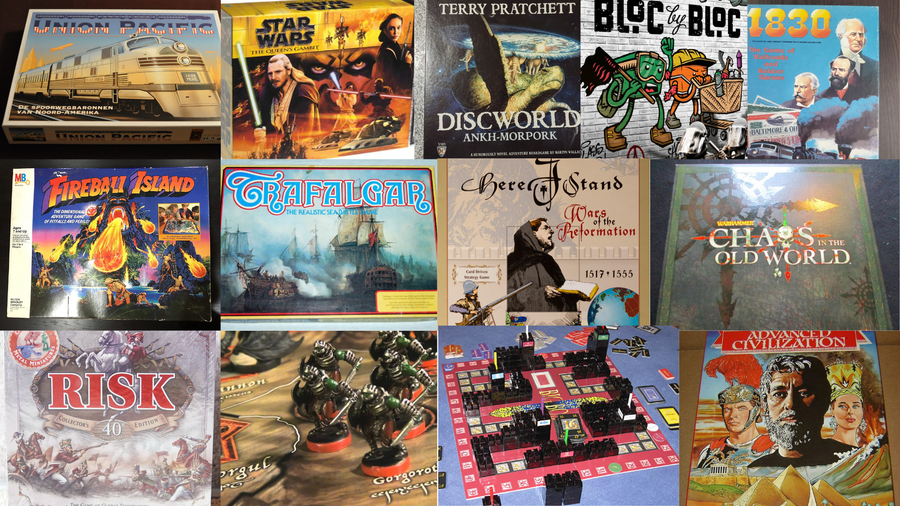
1 – Bloc by Bloc
Estimated market value: $75-$100
Designer: R. D. Lee, T.L. Simons
Artist: T.L. Simons
Publisher: Out of Order Games
A smashing Kickstarter success story, Bloc by Bloc: The Insurrection Game is a semi-cooperative game of social unrest and resistance inspired by the real-world uprisings of the Occupy and post-Occupy era. This one is actually looking at its 3rd edition release planned for spring of 2022, so it’s certainly not a discontinued or impossible to find game. But the limited run nature of the first edition definitely qualifies this one as a collector’s item, with a low enough price tag to appeal to novice collectors.
Bloc by Bloc also happens to be a really fun game, where the principal mechanic is area control: players try to hold back the riot cops and take control of the city by occupying specific sections of the city before the military arrives and quashes the rebellion. This one is a total favorite for me, with the historical linkage to real modern events, but without a specific tie to any single historical event — it explores the nature of rebellion in a really interesting way, and the frankly adorable artwork does a great job of creating a unified aesthetic.
Artist: Peter Dennis, Paul Kidby, Ian Mitchell, Bernard Pearson
Publisher: Treefrog Games
If you are not yet aware of the sheer and incalculable brilliance that is Terry Pratchett’s Discworld series, stop reading this review right now, go down to your local bookstore or library, and grab yourself every darned book in the series.
No. Seriously. Do it.
Discworld is easily one of my top-five book series ever, and for a good gosh-darned reason: Sir Terry Pratchett’s genius at storytelling was only rivaled by his genius at wit. The satirical humor of his books has had me cracking up more times than I could ever count, and so I naturally gravitated toward other avenues of connecting with this most beloved universe. Enter Discworld: Ankh-Morpork which, most sadly, is OOP now and rather difficult to find.
This is one game that I would happily shell out the $200 for simply because the design itself is drop-dead gorgeous. The artwork throughout the game is so totally and perfectly Discworld that it feels like it’s got a line straight to my imagination. But the fact that there will likely never be another run of this incredible game is a tough pill to swallow.
The game concentrates on the city of Ankh-Morpork where the city’s ruler, Lord Vetinari, has vanished. In his absence, the players take on the roles of the various factions vying for control. It’s a simple enough card-based game with rules that just about anyone can pick up in no time at all, so it’s just a matter of actually finding a copy and shelling out those hard-earned Morpork dollars to add it to the collection.
3 – Chaos in The Old World (2009)
Estimated market value: $200
Designer: Eric M. Lang
Artist: Tim Arney-O’Neil, Kevin Childress, Andrew Navaro, Brian Schomburg, WiL Springer
Publisher: Fantasy Flight Games
Chaos game players had three ways to reshape the world to suit their twisted visions as they vied for dominance as one of the four gods from the Realm of Chaos. Players could kill, infest, change, and seduce their way to victory, unleashing hoards of demons and defending against not just the machinations of their fellow chaos gods, but also against those mortal denizens of the old world intent on forever banishing them back to the Realm of Chaos.
Okay, so this made a lot of waves in its early days but it eventually fell out of favor and many of the mechanics that were experimented with in Chaos were perfected later in other games such as Blood Rage. All that said, it’s still worth playing, but if a good playing experience is all you’re looking for there are other options around. No, what you want this game for is collecting purposes.
As a collectible, Chaos is not an impossible find, but getting a good quality copy (that isn’t in German) can be.
4 – Dark Tower (1981)
Estimated market value: $450
Designer: Roger Burten, Alan Coleman, Vincent A. A. J. Erato
Artist: Bob Pepper
Publisher: Milton Bradley
Easily one of the most delightfully ’80s games imaginable, Dark Tower combined “cutting edge” computer technology and a really nifty game design to provide players with a superb adventuring experience. Taking on the role of a knight, players led groups of warriors on an attack against the evil Dark Tower, moving and gathering gold, hiring troops, finding special items, and recruiting special characters along the way (while also encountering random events and enemy troops).
The Dark Tower itself sat in the middle of the game board and, via a digital number screen and several rotating slides, created the gaming experience. Players would push different button combinations on the tower to program the different moves they were making and to see what they would encounter along the way. There were a whole host of possible outcomes, each of which was accompanied by a uniquely ’80s special effect.
The game is one of those clear classics that just cannot be underestimated. Not only fun but innovative, combining early simple computing effects with an excellent aesthetic design. It’s a blast to play (luckily, you can find emulators that recreate the various conditions of the game without actually owning the original tower itself). As expected of something this unique and also fun, it’s extremely rare, with complete copies (opened and used, mind) going for nearly $500.
5 – Fireball Island (1986)
Estimated market value: $250
Designer: Chuck Kennedy, Bruce Lund
Artist: N/A
Publisher: Milton Bradley
I had a copy of this as a kid and by golly, I wish I’d held onto it. Alas, one move too many occurred and it vanished into the nether world (and probably the private collection of some overjoyed collector).
For such a simple game, Fireball Island was a massive amount of fun. The premise of reaching the top of the island, grabbing the ruby, and getting away to your waiting escape boat felt like being literally inside an Indiana Jones film.
Comprised of an awesome and massive 3D board game, where the outcome of the game got decided by the actual spewing of lava-centered fireballs! Or, well, red marbles anyway. Players worked their way up the sides of a 3D island map, ducking into caves, searching for shortcuts, and hoping not to have their explorer figurine dashed asunder by the sudden and unexpected release of one of the marbles from Vul-Kar’s maw.
There is a 2018 re-release of this game that’s apparently a blast to play, so anyone who’s excited by this doesn’t have to miss out. But if you have an old copy hanging around, especially one that still has all its parts, be aware that you’re holding one heck of a sought-after gem (and we’re not talking about Vul-Kar’s jewel).
6 – Trafalgar (1973)
Estimated market value: $200
Designer: Tom Waterman
Artist: Auguste Étienne François Mayer
Publisher: Action Games and Toys Ltd
An action war games classic, Trafalgar features exciting naval combat with a huge range (ha!) of tactical maneuvering that can take place between the opposing fleets that fought in the actual battle of Trafalgar in 1805. You could do everything with this game, including simulate hits to your ship’s masts by removing the functional mast from the ship model!
There are newer editions, and prettier editions, than the original, so there’s no reason why modern players who find themselves interested in this can’t go out and get some great naval combat on, but for the collector, this is the one to grab. Of course, it’s in notoriously short supply. It’s not in as high demand as some other collectible games, so it might be possible to find a copy under $100, but usually, the price hangs out at around double that (assuming a copy is available at all).
7 – Capes & Cowls: The Superhero Board Game (2006)
Estimated market value: $230
Designer: Robin Spriggs
Artist: Kelly O’Neal, Robin Spriggs
Publisher: Wyrd House
Robin Spriggs is a fascinating guy, an actor and writer of horror-themed short fiction, and Kelly O’Neal, also an actor did some amazing work on this game. The design of the game is superb, providing a silver-age comic feel. This was an indie game but the design and production quality were extraordinarily high-quality, and the game features an entire mythos and in-game world experience. The scenarios and rulebook are both designed like comics, and the characters themselves all feel extremely unique.
Gameplay-wise, Capes & Cowls concentrates on tactical combat, doing away with much of the random factor often inherent in such games by highlighting the importance of placement on the game board. Different squares on the board provide different bonuses representing terrain differences, there are line-of-sight rules, and the various special abilities that the super-powered characters have creates dramatically unique play experiences.
8 – Star Wars: The Queen’s Gambit (2000)
Estimated market value: $600
Designer: Rob Daviau, Alan Roach, Craig Van Ness
Artist: Clark Mitchell (I)
Publisher: Avalon Hill Games, Inc., Hasbro
Whether you like or hate The Phantom Menace there were some undoubtedly epic scenes in that film, like the final chapter featuring the huge battles in space and on land, and the epic final light-saber battle between Qui-Gon Jinn, Obi-Wan Kenobi, and Darth Maul (some great choreography there). And that’s the part of the film that The Queen’s Gambit attempts to recreate. The goal for the light-side folks is to capture the Viceroys, destroy all the battle droids, and kill Maul.
But to understand this game you really have to see how massive it is — it even recreates the palace of Theed in an epic three-story construct. With over a hundred and fifty plastic miniature, this game is not kidding around about giving you an epic Star Wars battle experience.
Artist: Charles Kibler, George I. Parrish, Jr., Regina De Simone
Publisher: The Avalon Hill Game Co
Twenty-five years ago an absolutely brilliant little space game called Merchant of Venus, an epic space economy control game where players compete as space traders for total economic superiority in the galaxy by delivering cargo and discovering new worlds open to trade.
The basic move mechanic is pretty simple, but the complication comes from which items can be traded and purchased in different systems and what sort of upgrades can be made to the player’s ship. It reminds me a bit of the Firefly board game in this regard, actually, though the mechanics in Merchant of Venus are more complex.
Now, there was a 2012 2nd edition that featured almost an identical system of play, and I would love to be able to send excited players off to buy it… but, sadly, it too appears to be OOP, and nearly as expensive as the original in the few places I could find online. I guess this one really has become a permanent collector’s item!
10 – Advanced Civilization (1991)
Estimated market value: $300
Designer: Lauren Banerd, Jim Eliason, Jeff Groteboer, Bruce Harper
Artist: Rodger B. MacGowan
Publisher: The Avalon Hill Game Co
An expansion for the original 1980 game Civilization, Advanced Civilizations provides players of the original game with a large number of enhancements for furthering play, like expanding the technology tree and a few convenient rule changes including some major alterations to victory conditions.
The whole point of the Civilization game is to develop an ancient culture from around 8000 B.C.E. to the middle of the 3rd century B.C.E., vying with other players to carve out a permanent niche for your unique ancient world culture. Still considered one of the best games of this type, the base game is actually still pretty easy to find at cheap prices and mostly intact. The expansion, however, of Advanced Civilization is a very different matter with the limited-run making this a very difficult and expensive game to find.
11 – Dune (1979)
Estimated market value: $200
Designer: Bill Eberle, Jack Kittredge, Peter Olotka
Artist: Jean Baer, Linda Bound, Fabrice Lamy, Mick Uhl
Publisher: The Avalon Hill Game Co.
So this is a bit like the great grandfather of the strategy game world. It is EPIC, and I really do mean that, but it’s also utterly unforgiving and incredibly intense. Players take control of one of the Great Houses of the Dune universe and attempt to exploit the heck out of Arrakis, with the Emperor presiding over everything but only gaining power from the acquiescence of the whole… I mean, there are just so many delightful and potent mechanics at work, building up a massively complex political network and an intense military mechanic where a military campaign can be made or broken by a sandstorm.
But this one is a bit of a doozy because, due to the forthcoming Dune film franchise reboot, there’s a whole new release of the game. That makes it great for people who want to just play it and have a great time, but really, really lousy for people who want to try and sift through to find a collectible copy (especially if you’re newer at the collecting game, or aren’t interesting in collecting for its own sake but just really want some collectible Dune memorabilia).
12 – Titan (1980)
Estimated market value: $150-$900
Designer: Jason B. McAllister, David A. Trampier
Artist: Mike Doyle (I), Kurt Miller, Kenn Nishiuye, David A. Trampier, Chris White (I)
Publisher: The Avalon Hill Game Co
Titan is an absolute treat and happens to be such a great game, with so much dynamic range in the tactical approaches possible, that it maintains a dedicated player base even today, over forty years after its release.
More of a wargame than a fantasy adventuring game, Titan is all about… Titans. Players control a mythical Titan, recruit armies, and send those armies into battle against other players and their Titan avatars. The last Titan left standing (and, boy, are they hard to kill), is the winner.
There are a bunch of elements to Titan that I really love, like how players who have fewer points than others can win — because it’s last Titan standing rather than a score-based victory condition. The way the game is played, too, spread between two different map types (the master board and the battle boards) is excellent, and the battle boards vary depending on the location a fight begins on the master board, creating some great tactical range.
There was actually a re-release of the game by Valley Games in 2008, but it is now also an OOP collectible. Expect versions of the 1980 version to go from anywhere between $400-$900 depending on condition, while the 2008 version can be found in okay condition to MIB for $100-$250. Anyone who wants to play the game for fun and owns an iPad, however, can grab Titan from the iPad app store.
Artist: Mike Atkinson, Jared Blando, Charles Kibler, James Talbot, Mark Zug
Publisher: The Avalon Hill Game Co
Take on the role of the villains of capitalist America’s 1800s in 1830, where the goal is to amass the greatest fortune by buying and selling the stocks of 19th-century companies in the Eastern United States. Maximize profits through private railways and vie for the greatest hoard while risking bankruptcy every step of the way.
An important entrant in the 18XX series of games, Railways & Robber Barons is still one of the most beloved games from the line, made especially interesting for its chanceless mechanics which, like with a game of chess, offers the same outcome for any move during any game — meaning that playing the same moves across different games will result in the same outcomes.
There have been a few different editions of this game, all of which now appear to be OOP, and all of which are worth a fair penny — depending on condition and edition.
14 – Up Front (1983)
Estimated market value: $200
Designer: Courtney F. Allen
Artist: Charles Kibler, Rodger B. MacGowan
Publisher: The Avalon Hill Game Co
One of the most famous and playable wargames around, Up Front offered an innovative card-based gaming mechanic that completely eschewed the use of a game mat in favor of “terrain cards” which provided the sense of being in the world, and “range chits” which did an incredible job of creative relative ranges between opposing sides without a single hexagon in sight.
I’m not often a fan of straight-up wargames on the tabletop, largely because of the massive amount of set-up time they can take and the relatively slow rate of play. Board games with wargame components, sure, but I’m more likely to go for Twilight Imperium than I am some of the others (TI being a game where trying to go the full military route isn’t likely to end well).
But Up Front changed all of that. The card system is ingenious, allowing set-up and play to take place in about the space of a lunch hour, but with campaigns and scenarios that can extend gameplay out to as much as a week. There’s even an international league of Up Front players that hold tournaments.
There have been a few different editions, but the Avalon Hill Game Co edition from 1983 will run a collector anywhere from $150-$250 depending on the condition.
15 – Here I Stand (2006)
Estimated market value: $100
Designer: Ed Beach
Artist: Rodger B. MacGowan, Mark Simonitch
Publisher: GMT Games
The game designers went out of their way on this one to create a system that could capture all the political intrigue and backstabbing machinations of the 16th century during the period of the Protestant Reformation… and they did a really fine job.
A point-to-point game, Here I Stand utilizes point values on cards to undertake actions, and various events provide a sense of narrative progression through the time period. It’s complex enough to give even hard-core players a run for their money, but the underlying mechanic is simple enough to allow for deep and engaging play once that initial learning curve has been overcome.
This is one of the games that integrate some classical wargame components with a truly detailed historical setting, placing diplomacy, finance, and political maneuvering just as high (if not higher) on the list than the ability to field troops.
There are a bunch of different editions floating around but the first edition of Here I Stand will look good on any collector’s shelf.
Princes of the Renaissance (2003)
Estimated market value: $75
Designer: Martin Wallace
Artist: Michael Christopher, Peter Dennis, Richard Hanuschek
Publisher: Warfrog Games, Mercury Games
The Renaissance provides a great thematic background for game designers, given its inherent elements of war, intrigue, and economic and political upheaval. Players in Princes of the Renaissance enter this world as one of several rival condottieres (leaders) who are fighting to control the most stakes in a number of Italian cities and dominate the world.
The game is heavily biased toward the auction mechanic, and both money and influence are used to bid for different outcomes in the game. This combines with the intrigue mechanics to make for some great elements of political maneuvering.
There have been a couple of re-releases since the game’s initial 2003 release, so it’s possible to pick up a copy to play for fun relatively easily, but copies of the first edition are absolutely a collector’s item now. The price is low enough on both editions to make this a great introductory purchase for a collector just looking to start out.
17 – Robert the Bruce (1978)
Estimated market value: $150
Designer: Kenneth Clark
Artist: N/A
Publisher: Fusilier Games
A hex-grid-based wargame, Robert the Bruce is thematically centered in the late middle ages during the Scots Wars of Independence. A seriously classic game that drove straight at its battle-mechanics point, Robert the Bruce offered straightforward rules, quick and deadly combat, and some neat extras along for the ride like “The Fuzileer” an in-box accompanying magazine that provided additional historical information on the period.
It’s not easy to find copies of this little beauty around anymore, and there is no information on how many were produced in the first place. That said, used and even unpunched copies do emerge from time to time, always drifting back and forth between collectors (or at estate sales).
There are better wargames to play from modern designers that feature the same theme, so go elsewhere if you’re looking just for gameplay, but if you love the historical material or are a true collector then this is a good find.
18 – The Longest Day (1979)
Estimated market value: $$200-$400
Designer: Randall C. Reed
Artist: Rodger B. MacGowan, Randall C. Reed
Publisher: The Avalon Hill Game Co
Here is another war game for our list, and an absolutely massive one at that. The Longest Day depicts the first three months of the invasion of Normandy and provides two modes of play: a set of scenarios that are partially intended as primers to the rules and gameplay, and a campaign mode that can literally take months to play.
This is probably one of the largest games and most complex games ever produced by Avalon Hill, and it did a great job of capturing the total feel of the Normandy invasion and the slog that the allies had to grind through. It’s not the rarest of games, but copies in high condition can fetch a really solid price. However, considering that it has over 2,600 game pieces, finding a copy in good condition is probably not the easiest thing.
Risk is one of the first games I played seriously as a kid and easily one of my favorites to this day, providing players with an immensely satisfying strategic war game experience simplified down to the bare basics. I remember being so totally addicted to this one that I’m certain I annoyed the heck out of all my friends with repeated arguments for spending the whole day playing it (while they were more interested in playing Battlefront II).
The game itself didn’t change for this one: the 40th edition of Risk is simply a special collector’s edition release, made intentionally in limited number and accompanied with a certificate of authenticity. You could certainly play with one of these sets, and considering the incredible quality of the redrawn board and the die-cast minis, it would be easy to want to, but for the price of just one of these you could probably buy ten copies of a more basic version.
20 – Case Blue (2007)
Estimated market value: $600
Designer: Dean Essig
Artist: Nicolás Eskubi, Dean Essig
Publisher: The Gamers, Multi-Man Publishing
Wargamers tend to think of this one as one of the big blockbusters of the genre, with enough complexity to be considered almost a simulation game more than a wargame. The content here is seriously massive and the basic rules are… well… complex and equally as massive as the game itself. We’re talking a combined rule book of over 60 pages, over a hundred pages of scenario booklets, and well over 3,000 counters.
The sort of game that gets set up in the basement (I mean… “command center”) and can last players many months, Case Blue takes the Nazi invasion of Russia to a whole new level of intricacy, allowing players to simulate the strategic level of the historical events to an unprecedented degree.
You can find copies of this game floating around, sure, but it was already expensive when released. Grabbing a full copy for anything less than $500 is a total miracle.
21 – Age of Renaissance (1996)
Estimated market value: $100
Designer: Don Greenwood, Jared Scarborough
Artist: Stephen Langmead, Kurt Miller
Publisher: The Avalon Hill Game Co, Descartes Editeur
Age of Renaissance follows the same compelling concept as the Civilization game, with lots of trading, research, and territory control. Players encounter events, leaders, and various reward cards in a deck of cards, and the order of draw determines a massive amount of how the game plays.
One of the main reasons why the game likely never took off in the more mainstream range of play is due to the tracking complexity of the various component elements of gameplay. It’s not as easy a game to pick up and play as Civilization in other words, even if it does run off of some of the same themes.
Despite all that, it does have a dedicated following and there are certainly still plenty of playable copies in circulation. Copies that are in MIB condition, especially if still shrink-wrapped, can fetch a higher price, however, and it seems likely that picking one up now will lead to a real collector’s item in a couple of decades once fewer remaining copies are floating around.
22 – On to Richmond! (1998)
Estimated market value: $250
Designer: Joseph M. Balkoski, Ed Beach
Artist: Charles Kibler, Keith Rocco
Publisher: The Avalon Hill Game Co
An operational war game, On to Richmond! covers the 1862 Peninsular Campaign from the American Civil War. It’s the 6th in the Great Campaigns of the American Civil War series, each of which concentrates on a different important operation from the Civil War.
The game does try to simulate the historical conflict accurately, while still allowing players to make new decisions and tackle the scenarios in innovative ways. This is pretty common with war games, where players are often looking for simulation-level material from real-world conflicts, but the Great Campaigns series overall does a good job of it.
It’s very possible to still find copies of this game that run only around $150, so it’s worthwhile even just for players who are looking for something from the era to play. But it’s also drifting into solid collectibles territory now as well.
23 – Operation Typhoon: The German Assault on Moscow, 1941 (1978)
Yet another war game, this time one simulating a specific action from WWII — the Nazi attempt to take Moscow in 1941. There’s a lot of game to unpack here, and it’s rightly considered a “monster” game due to its sheer physical size, and it also happens to be the first game using this system to include variable unit strength based on size, moral, and fog of war.
This one never seemed to make it into the high-demand arena of some of the other war games from the late 1970s, but that makes it a good buy for collectors who love war games, or for anyone who really just wants to play a war game using this system since relatively intact copies aren’t liable to run out the wallet.
Do note that there’s a 2009 game of the same name floating around as well, and that one is absolutely not the same game (though it’s also OOP, so maybe not a bad purchase either).
A monster wargame, War in Europe is now firmly in the realm of collectibles, unlike a fair few other similar games. This is partly because updated versions exist (many of which are themselves collectibles) and that other games concentrating on the same time period and concept have been designed. Still, this one could absorb players for days at a time as they dived deep into the initial conflict of the Second World War.
Finding the game in really good condition will run a collector around $200, with a mostly unheard of MIB copy possibly going for double that.
25 – Union Pacific (1999)
Estimated market value: $50
Designer: Alan R. Moon
Artist: Franz Vohwinkel
Publisher: AMIGO
I like trains and I’ve written a bit before about why trains are so cool, it’s likely not a surprise to anyone who reads my work that I’m also a fan of a board game centered on trains. There’s also a reason why the later version of this game (which ran essentially the same rules and re-implemented the theme as airlines did little to arouse my attention).
Union Pacific is a very simple money collection game, where players attempt to increase stock market shares in their train company and the winner is the one with the most money at the end of the game.
Decidedly OOP but with plenty of copies still floating around, UP is a great game for someone who likes train-related games and wants to find a copy to play, or for the discerning collector with an eye toward the future when fewer of these little gems are still intact and on the market.
26 – Abtei der wandernden Bücher (1993)
Estimated market value: $1000-$2000
Designer: Thomas Fackler
Artist: Thomas Fackler
Publisher: Thomas Fackler
What a game, boy-howdy! Not an ordinary game by any means, Abtei der wandernden Bücher is a work of brilliant art, designed and personally created by the German visual artist Thomas Fackler. The premise of the game, where the abbot of a monastery hides the pieces of a word throughout many books, and the other players (the monks) have to hunt down the books and figure out the complete word. If they can’t, the player playing the abbot wins the game.
I love the idea of a word game married with a logistics enterprise. The books the players need to read can be blocked by the abbot, or only accessed at specific points in the game day, and there are additional elements that further complicate the game. This is one I’d personally love to own since the art is absolutely incredible, but auctions for it are very rare and the price is no poor man’s entry.
27 – HeroQuest (1989)
Estimated market value: $100-$800
Designer: Stephen Baker
Artist: Gary Chalk, Max Dunbar, Les Edwards
Publisher: Games Workshop Ltd., Milton Bradley
This has to be one of the most elementally classic board games around, taking the Dungeons and Dragons experience and implementing it on the board in a delightfully iconic and fun way. I love RPG games and games that are heavily themed, so this one is an absolute favorite of mine. I also contend that it remains highly playable despite all the modern alternatives, and since I’m also a sucker for nostalgia I think this wins out on some of its more modern and complex inheritors.
Now, this is a good example of a collectible game that can confuse early collectors, largely because there are so many different expansions and the difference between an open and used copy and one that’s MIB is pretty huge in terms of price.
It’s absolutely possible to pick up a copy in relatively good condition with all the parts for around $100, maybe even cheaper if you’re thrifting. An NRFB copy will run somewhere around $250 from what I’ve seen, and a MIB copy could run for double that. Start adding the expansion in and the price will just keep climbing.
28 – Hotel Life (1989)
Estimated market value: $100
Designer: Urs Hostettler, Hermann Wieland
Artist: N/A
Publisher: Fata Morgana Spiele, Schweizer Hotelier-Verein
Hotel Life has become something of a cult game among collectors. It’s a funny game, a surprising game, and a well-crafted game, though, so it makes sense that it would endear itself to players.
In the game, players take on the operation of different hotels, trying to sate the needs of their guests while dealing with increasingly complex interrelationships between those guests and the ever-present danger of a war breaking out someplace and creating cause for the army to billet its troops in your hotel rooms. Players need to maintain amenities and guest satisfaction in several ways.
Wonderfully complex, Hotel Life is a series of extended chain reactions set off by the arrival of new guests and can be a bit of a long play, but it remains a very fun and surprising game as well with both a theme and a quality of gameplay that a really surprisingly wide range of player personality types are sure to enjoy.
29 – Big Boss (1994)
Estimated market value: $200
Designer: Wolfgang Kramer
Artist: Wolfgang Kramer, Franz Vohwinkel
Publisher: KOSMOS
A game of financial oneupmanship, Big Boss is all about investing and building – literally – a corporate dominion. One of the coolest aspects of the game is that, as a player invests more and more into their company, the skyline literally grows upward on the three-dimensional board, making the experience of winning a decidedly visceral one.
Big Boss is really easy to learn and play (players who aren’t as fast with maths as others can use a calculator when the deep game emerges), but the game also unfolds in a very similar way each play-through despite the limited randomization factors built in. Because of that and the fact that it’s hard to pick up a copy with all the pieces for a non-collector price, this one is pretty firmly in the collectibles-only category.
I have seen people do some pretty cool things though, like create their own boards and pieces, so if you’re really excited by the premise and have a 3D printer handy maybe Big Boss isn’t out of your reach.
30 – War of the Ring: Collector’s Edition (2010)
Estimated market value: $1,500
Designer: Roberto Di Meglio, Marco Maggi, Francesco Nepitello
Artist: Paolo Ciurli, John Howe, Matteo Macchi, Fabio Maiorana, Bob Naismith
Publisher: Nexus Editrice
A different take on the classic wargame, War of the Ring offers players the opportunity to take part in the grand and sprawling battlefield challenges presented by the Lord of the Rings canon… and it does this very, very well. War of the Ring is probably one of the best-known fantasy wargames for a reason: it excels at recreating the strategic experience that every Lord of the Rings fan has imagined.
That said, the game itself can be picked up for around $100 and is still in print (and the $100 is pretty good considering the literally massive size of the game). Here we are considering the special Collector’s Edition of the game, which ups the presentation and quality of the game to a really lovely artistic level.
Really this just highlights how the artificial scarcity of something works: you don’t need this edition to have blast playing War of the Ring so it only makes sense to keep an eye out for this if you are a massive collector who just totally loves Lord of the Rings. Otherwise, go pick it up from your local gaming store and make the store’s owner very happy with their daily sales goals.
NEXT UP
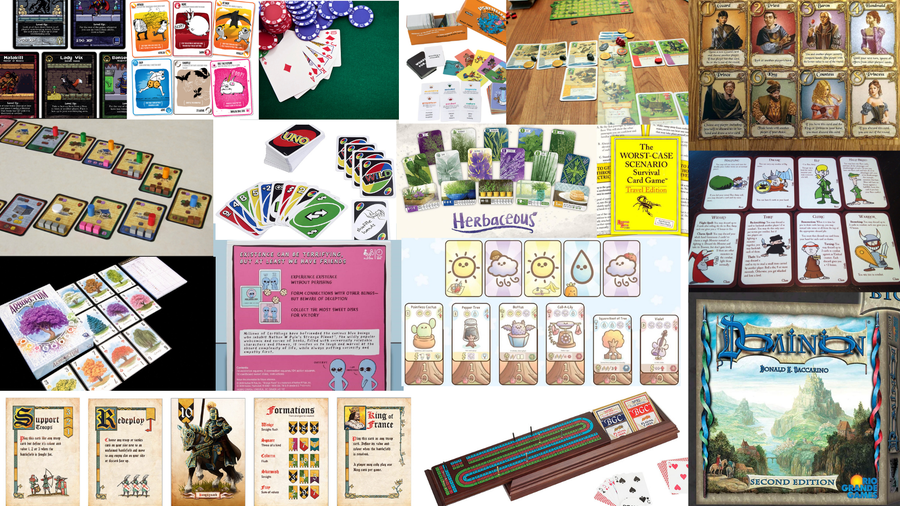
The 30 Best Card Games of All Time
Old classics and new giants collide in this list of 30 of the best card games!
I grew up playing games like Cribbage with my dad. Despite a dive into D&D in his 20s, he never really went deep with the variety of board games that would eventually become such a passion for me, but his love of the classics was strong. My Mom, too, loved card games, and I have
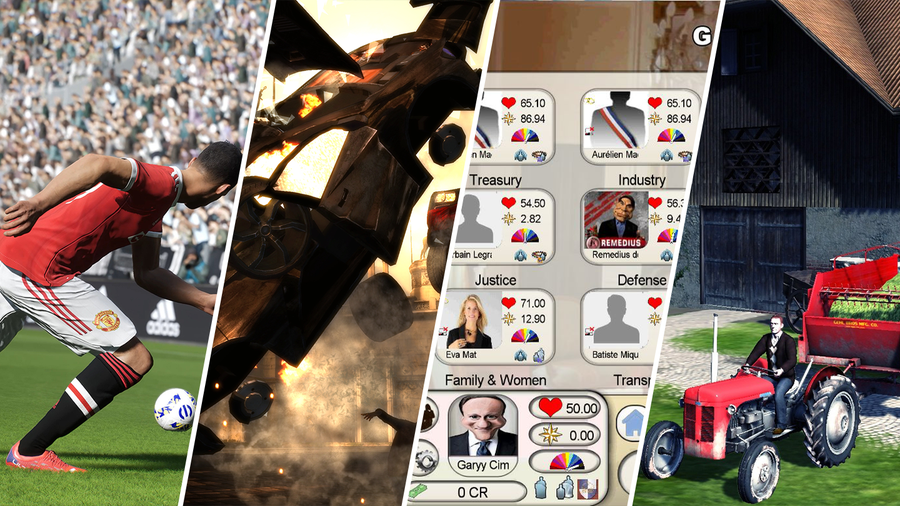
There are thousands of games on Steam at any moment! In 2020 alone, over 10,000 new games were released on Steam, which got us wondering what the worst of the worst are. So we dived into the extremely long list of every game on Steam to find which games people hated the most.
We learned a few things in this tedious and math filled journey. First, a lot of simulation games seem to be made solely for the cash grab, regardless how well they’re made. Secondly, publishers and developers of bad games, just can’t help but keep making bad games. As you’ll notice in this list, there are quite a few developers and publishers who’ve released low quality games. Which begs the question: do they care more about developing games or making quick money?
And finally, the games that are listed here as the worst were also games that people were looking forward to. Which had us hopeful, because players aren’t just review bombing as a trend, they genuinely were excited about a game’s release. But it also had us disappointed at how the developer or publisher just didn’t live up to their promises before a game’s release.
How subjective is a Steam rating?
We’d be remiss if we didn’t comment on the internet phenomenon that is “review bombing”. Some games have such a bad release that users bombard Steam with negative reviews. A most recent example would be Battlefield 2042. However, as with every form of digital media, the reviews can change or improve over time. So while our scoring is objective to the numbers, and not our opinions, the numbers themselves could still be subject to the majority opinions of the internet subculture.
How did we rank by Steam rating?
The steam rating used data directly from Steam’s website and their own listing of every game available, sorted by user reviews. We used two inputs: the number of positive reviews and the total number of reviews. In a basic math formula, we calculate the percentage of a positive Steam rating: positive reviews ÷ total reviews X 100.
The games were then ordered based on the number of reviews in total. For example, two games may have zero positive reviews, yet the one with the most total reviews would be considered “worse” since there was more community engagement.
Table of Contents
30 – Nuclear Power Station Creator
Tap by Tap
Another poor release by Tap by Tap! Nuclear Power Station Creator is a strategy game focused on developing and improving a nuclear power plant. Very quickly into starting the game, players can no longer progress, with little to no tutorial on how to actually play.
There are much better sports strategy games than Front Page Sports Football. Not only are some game rules just wrong, but it lacks customization, quality graphics of any kind, and next to none tutorial. As one review wrote, “The only reason I still own this is because Steam refunds didn’t exist back then.”
Considering how poor this game rates, you’d think it’d be one of its kind. You’d be wrong! The Secret Files is one of five Art of Murder games made by City Interactive S.A. Players struggled to get through this game mainly because of how poor the gameplay mechanics were. There is no real story to the game, seeming to be more like a bunch of puzzles put together without voice acting. There are much better titles than this in the hidden object genre.
The hand drawn art makes this platformer seem like it’d be finished and enjoyable. To the contrary, Eternity’s Child has bad control mechanics and levels that seemed to not have been playtested. The game’s ending is satisfying, leaving things open-ended with no conclusion in sight since it’s been abandoned by developers.
Cyber Team Manager is an esports team simulator. We’d say consider it a discount version of other (better) games of its kind, but that’d be generous. For $5 you can own a game that isn’t close to completion, has no tutorial, or even sound options. Even the developer stated this on the Steam page, “Don’t recommend to buy the game in current stance. Buy only if you want to support the dev process.”
The most interesting thing about Jurassic Island: The Dinosaur Zoo is the reviews. One review says, “This game makes me want to jump off a burning building into a lake filled with radioactive alligators with buzz saws for teeth.” There’s no explanation of game mechanics, money is lost too quickly, and overall it just doesn’t work.
What could have been a decent low-price horror game, turned into a constant reminder of early access game scams. The developer Narrow Monolith is seemingly known in the Steam community for creating a new game, remaking it, and repeating the cycle without supporting any of their games. With a broken saving menu and generally poor gameplay and plot, The Tower is not worth even the $0.99 price point.
Upon first glance, World Of Leaders reminds us of a Windows 95 PC game. However, it was released over a decade after the OS became obsolete. Ignoring the poor photo ratios, misspellings, and possibly copyrighted graphics, World of Leader has tons of lag, annoying AI assistant, and poor plot. Surprisingly, this resource management-type game required an online server in order to run, which is no longer available. However, the developer has continued to make similar games, though the price point is outrageous for the mediocre games they make.
Vigil is a puzzle RPG adventure that has a unique gothic horror style, but it doesn’t make up for the lack of gameplay and technical prowess. In order to even play the game, you have to first download the demo for it to register that you own a license for the full game. Once you get into the game, it’s filled with glitches, inconvenient camera angles, and cutscenes that refuse to play on more modern PCs.
While no longer available for sale, it’s still important to put on this list. Whether Patterns failed because of unattainable goals, or just because of poor developers, remains to be seen. IGN speculated that Patterns could be the new Minecraft, but just after release (or possibly before) the developers stopped supporting the game. At least they had the courtesy to remove the game from Steam rather than leaving it up for profit only.
NEW LIFE is a multiplayer simulation game where players can take on any role they want to make money and survive. It’s fraught with glitches and just generally feels like an unfinished game. Most reviews say that the game has big potential, but the developers just seemed to have released too soon and have little intention of improving upon it.
For simulation lovers, Pro Gamer Manager 2 would normally fulfill the niche. However, it fell flat when it comes to actually being a game. Filled with bugs, it seems almost pointless in trying to even progress in the game.
Price
$19.99
Release Date
Oct 5, 2017
Developer
Millenway
Publisher
Millenway
18 – Professional Farmer 2017
United Independent Entertainment GmbH
Professional Farmer 2017 has one thing that modern gamers don’t want to deal with: loading screens. With minimal things to actually do in the game, adding in loading screens for each area only makes players more frustrated. The UI is difficult for players to grasp, not to mention if they even manage to play the game, considering how frequently it lags and crashes.
Rather than debate the reasoning as to why sports management games do so poorly, we’ll just tell you not to buy World Basketball Tycoon. The UI is unintuitive, causing players to become frustrated with having to constantly switch to a different window. Many reviews claim that the game feels more like an idler because of how much they have to wait around for progress.
As the name implies, Age of Survival is about surviving while stranded on an island. The developers have openly admitted that the game was forced out and unplayable. Which is backed up by the many reviews that mention bugs, glitches, and poor quality.
In theory, a ship driving simulation game sounds cool and relaxing. World Ship Simulator is anything but. While the graphics are barely passable on the ocean, don’t even bother trying to enter the harbor building. The game becomes unplayable and slows to a crawl, unfixable by changing any of the graphical settings. This is the tip of the Titanic sized iceberg of issues with this game.
Race To Mars did so poorly upon early release that the developers have all but scrapped the name from their history of development. In fact, if you follow the red string of this game you’ll see that developer INTERMARUM essentially reskinned the game under another name while the publisher, One More Level, has abandoned it.
Historical Farming is a farming simulator with a very specific time niche: 1950 to 1970. There was an attempt on the developer’s part to make a game, however, players struggled with even starting the game without a crash. Overall, we found that the reviews were more enjoyable than the actual game.
Ah, yes…our old friends United Independent Entertainment GmbH! In their long line of simulation games, Towtruck Simulator 2015 fits in perfectly. Much as how we all should be towards UIEG games, this simulator just refuses. What does it refuse? Everything! Players will get stuck with a car on their truck that the game doesn’t register it. Sometimes physics will reject logic and your truck will suddenly flip upside down! Overall, don’t both putting money towards a publisher that doesn’t want to make a game people enjoy, they’re just here for the profit.
Much like one of its in-game contracts, Construction Machines 2014 is missing a lot. Poor optimization results in no control options, jerky handling, and sometimes screen hard locks. Also, forget about being able to navigate properly due to the terrible cameras.
A medieval RTS, Citadels copies what other real time strategy games do, but fails to implement them properly. There’s really no thought needed when playing, as spamming the basic military unit down will get the trick down in battle. The main campaign is unfinished, and the whole game is filled with bugs or flaws.
This construction simulator game promises a lot and fails to fulfill any of it. There’s very little going for Skyscraper Simulator in both content and quality. As Steam reviewer Petrus Romanus states, this game is “shallower than the Instagram feed of a self-described ‘influencer’.”
We’ll preface this by telling you to just go play the mobile version of Godus Wars. The biggest issue with this god simulator, is that they didn’t succeed in carrying over the touch mechanics of the mobile game onto PC. While it should be a relaxing simulation game, instead players are frustrated by crashes, lag, and general poor gameplay.
A game about making games that just made us sigh deeply. Not only is the game unresponsive, but it somehow causes PCs to lock up and users had to restart their computers. If they were able to play the game (or work their computer), players had to suffer through inefficient menus and locations. Rather than spend your money on Game Tycoon 1.5, check out a superior version like Game Dev Tycoon.
A remake of the original XIII developed in 2003 by Ubisoft, this version has better graphics but worse gameplay. Audio cuts in and out, characters glitched around, and general unpredictable controls. The story and graphics of the game can’t make up for the cons in this case. Our recommendation is to just buy and play [the original game for only $5.99](https://store.steampowered.com/app/1170760/XIII__Classic/.
As on brand with UIEG’s published games, Airport Simulator 2014 isn’t worth the time and money. With no tutorial, repetitive gameplay with no payoff, and a lot of waiting around, you’d probably find more fun in an actual airport.
Perhaps the saddest part about Kinetic Void is its untapped potential. The mission system doesn’t work, everything feels unfinished, and trade and inventory management is too complex. What could have been a great spaceship building game became an empty void of disappointment.
The third game in the racing franchise Flatout had players racing to refund the game. Flatout 3 is a mess of weird textures, screen resolution, and non-responsive gameplay. Perhaps the only thing going for it? Reviewer therealFloridaMan posted, “Still better than Fast and Furious Crossroads.”
Spacebase DF-9 is a base building game set in space (obviously). We won’t go into much depth with a description, since the developers decided not to do that with their own game. While many fans of the base-building genre could learn to somewhat enjoy this game, most would rather play a game with better mechanics and storyline.
When you see a game published by Konami, you expect a decent and playable experience. However, eFootball 2022 doesn’t fulfill those expectations. Players found this simulator to be slow, glitchy, and just unenjoyable for PC players. While the graphics look as good as FIFA, it just doesn’t score as well. Which is a shame, since they had a chance to make a better and free competitor to the FIFA franchise.
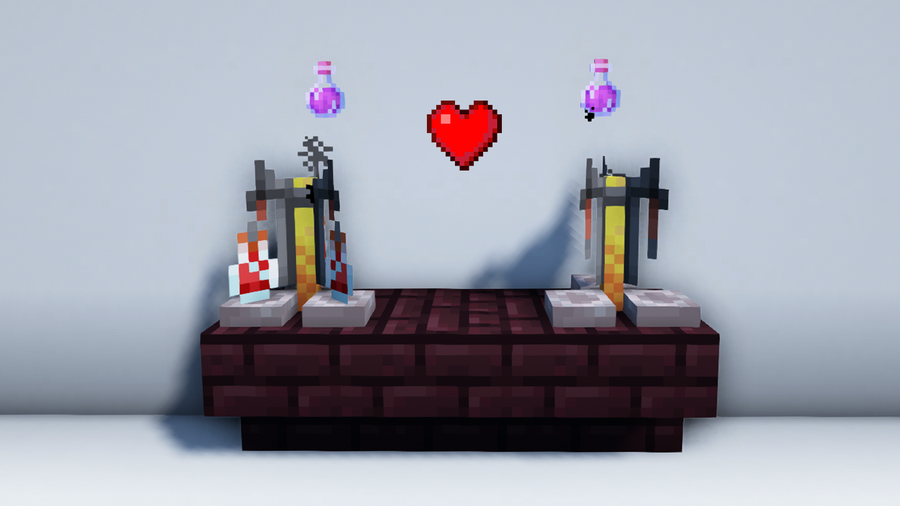
Along with a golden apple, the potion of regeneration can be invaluable while playing Bed Wars or just exploring caves. A potion of regeneration does as its name implies, it restores health by one half-heart every 1.2 to 2.5 seconds. Here’s an easy guide to brewing a potion of regeneration in Minecraft! 1 – Craft a Glass Bottle
Introducing Howchoo, an enigmatic author whose unique pen name reflects their boundless curiosity and limitless creativity. Mysterious and multifaceted, Howchoo has emerged as a captivating storyteller, leaving readers mesmerized by the uncharted realms they craft with their words.
With an insatiable appetite for knowledge and a love for exploration, Howchoo’s writing transcends conventional genres, blurring the lines between fantasy, science fiction, and the surreal. Their narratives are a kaleidoscope of ideas, weaving together intricate plots, unforgettable characters, and thought-provoking themes that challenge the boundaries of imagination.
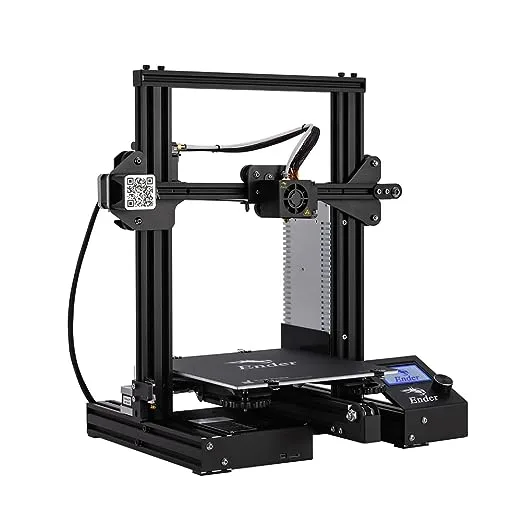
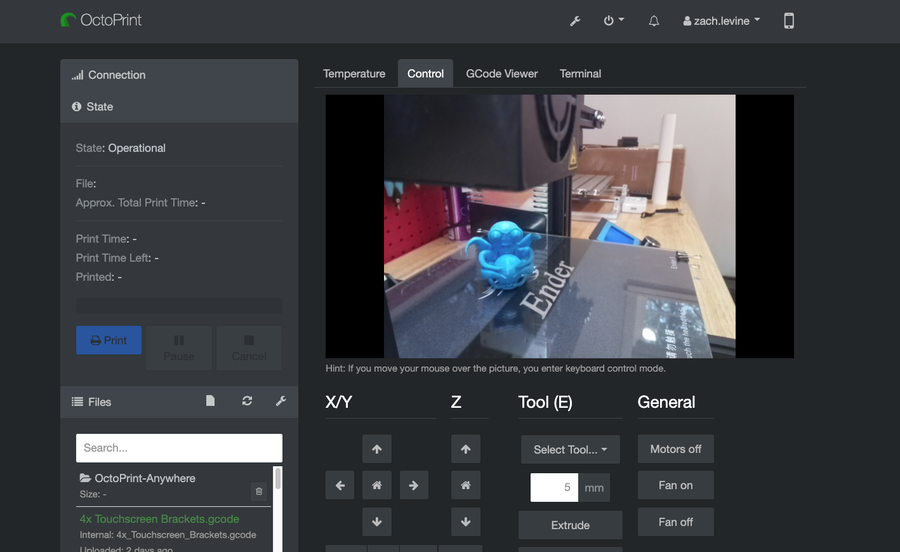
The Creality Ender 3 is amazing. The only thing that could make it more amazing is modding it so that you can control it remotely.
Well, now you can. This guide will show you everything you need to know about using OctoPrint (AKA OctoPi) with your Ender 3 or Ender 3 Pro, enabling you to start and view prints as well as view a whole host of data about your printer.
Form factor: Rectangular
Origin: Lower Left
Heated Bed: Yes (checked)
Heated Chamber: No (unchecked)
Width: 220mm
Depth: 220mm
Height: 250mm
Axes: Default**
Custom Bounding Box: No (unchecked)
Nozzle Diameter: 0.4mm
Number of Extruders: 1
Connection settings
Serial Port: /dev/ttyUSB0
Baudrate: AUTO
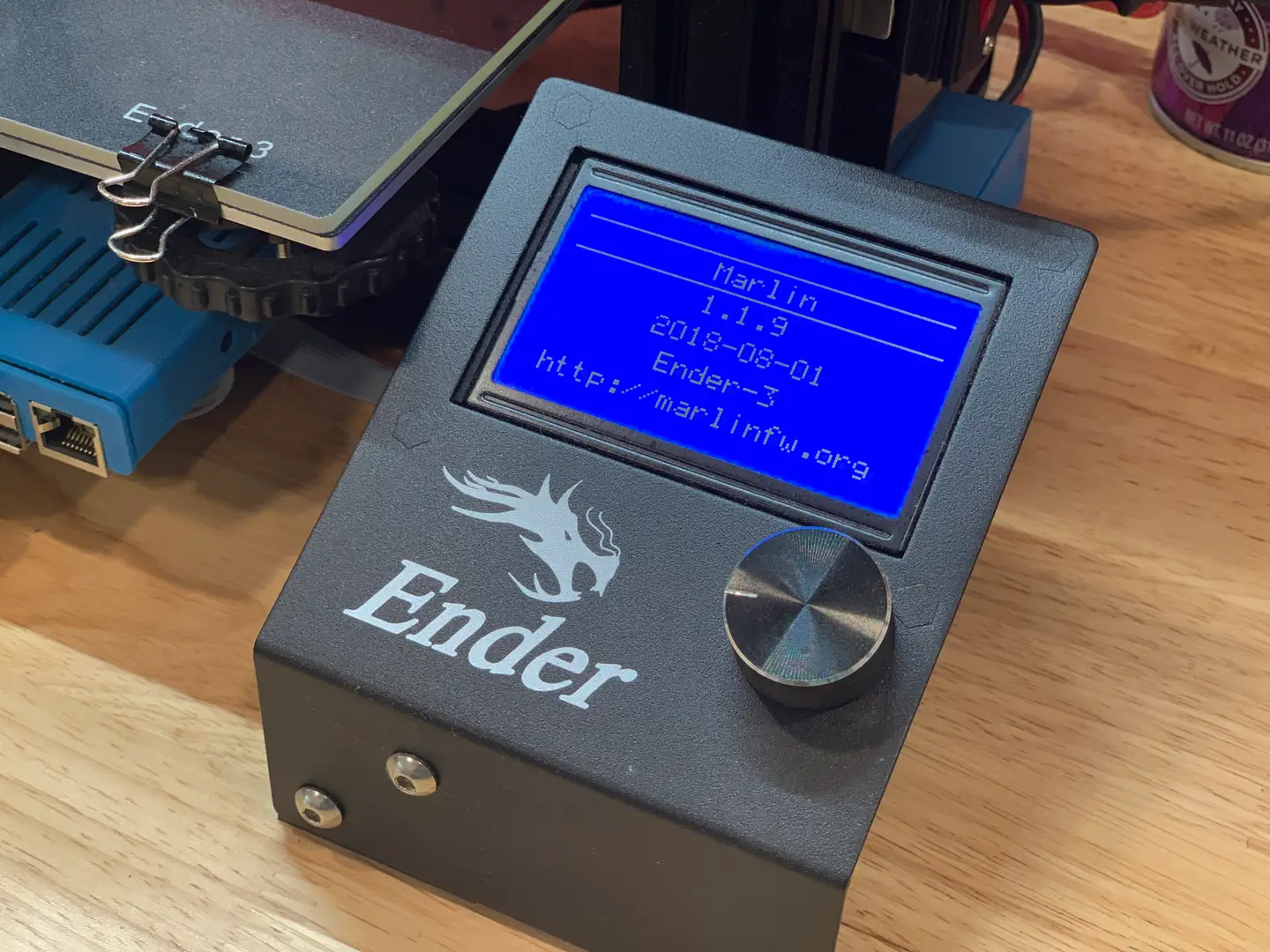
🛈 You’ll need to connect your Pi to the Ender 3 via USB before you can change the Connection Settings.
2 – Print the Ender 3 OctoPrint parts
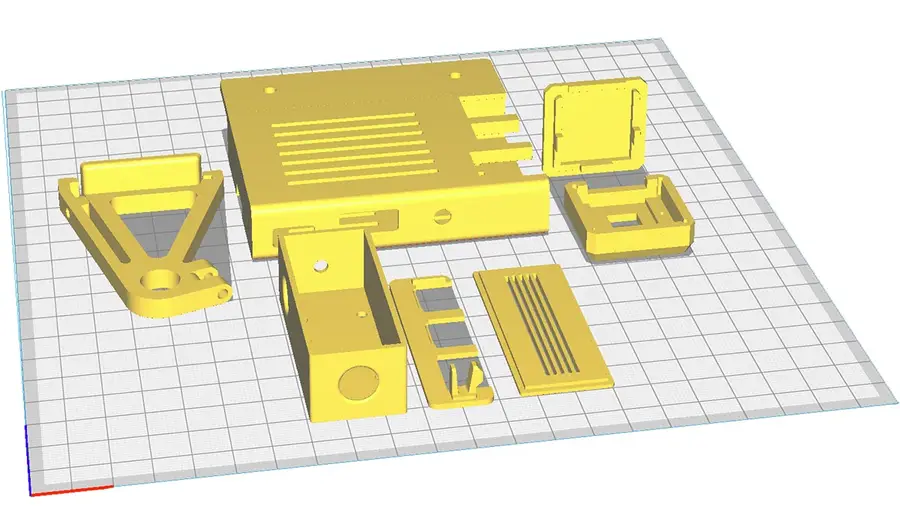
You’ll want to print a few components to mount everything to your Pi. Some of these are optional—for example, you don’t have to mount the Pi to your printer (you can keep it separate). Anyways, I recommend printing all of these for a cleaner, more organized setup.
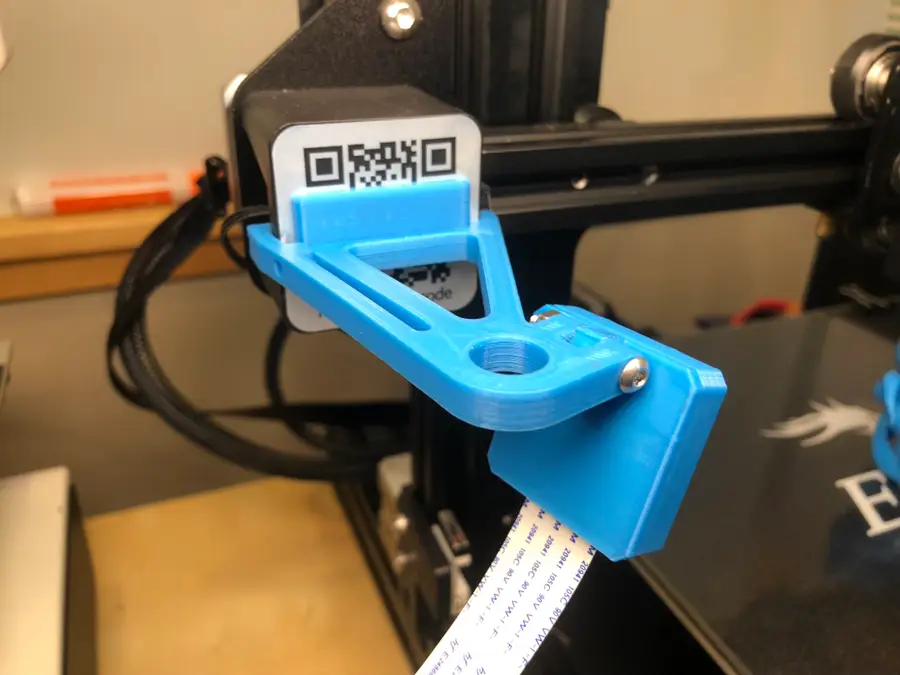
Ender 3 camera mount
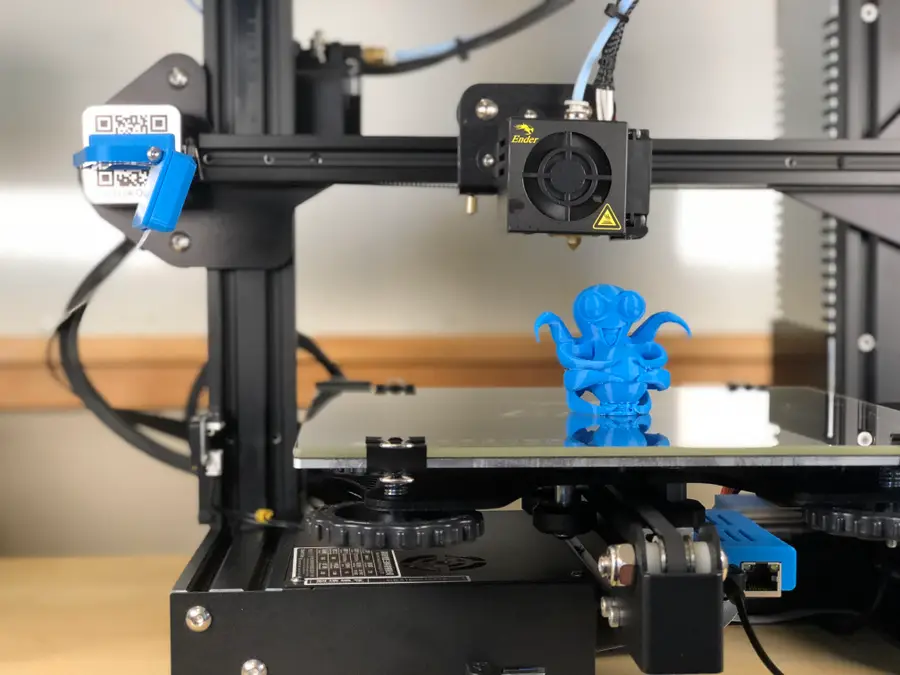
This component mounts your Raspberry Pi’s camera to the Z-axis stepper motor. This will give you a nice view of your extruder and print.
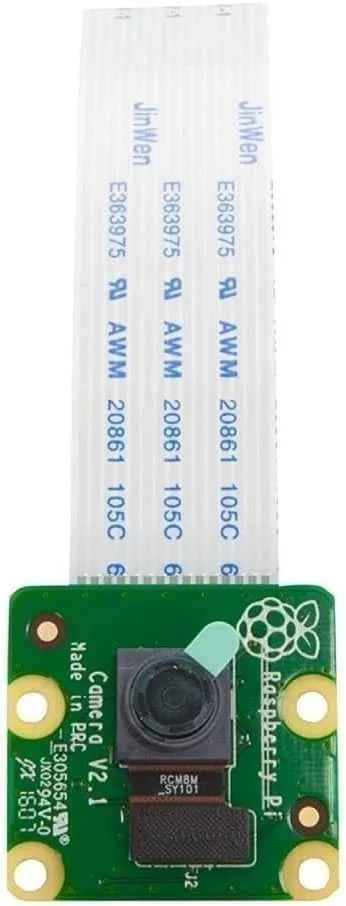
First, print this bracket/arm. If you’re using the Raspberry Pi camera v1, also print the included camera holder. If you’re using the Pi camera v2, I recommend printing this camera holder instead, as it’s much easier to work with.
Ender 3 Raspberry Pi enclosure
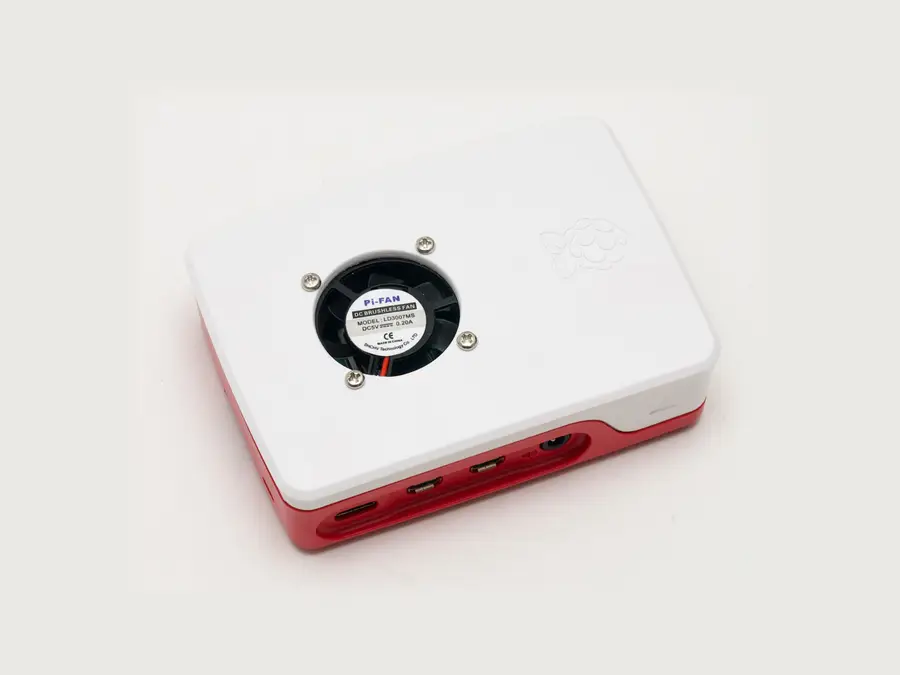
This component mounts the Raspberry Pi itself to the Ender 3’s extruded aluminum rails and can also be found on Thingiverse. There are two versions: one for the Raspberry Pi 3, and one for the Raspberry Pi 4. I’m using a Raspberry Pi 3 for OctoPrint, but the 4 will work fine too. If you decide to use a Raspberry Pi 4 for OctoPrint, I recommend adding a Raspberry Pi 4 fan to the case since things can get a bit hot.
If you plan on powering your Pi directly from the Ender 3, be sure to print out the included LM2596S buck converter enclosure as well.
Later on, I’ll show you how to connect your Pi to your Ender 3’s power supply.
3 – Mount the Raspberry Pi camera
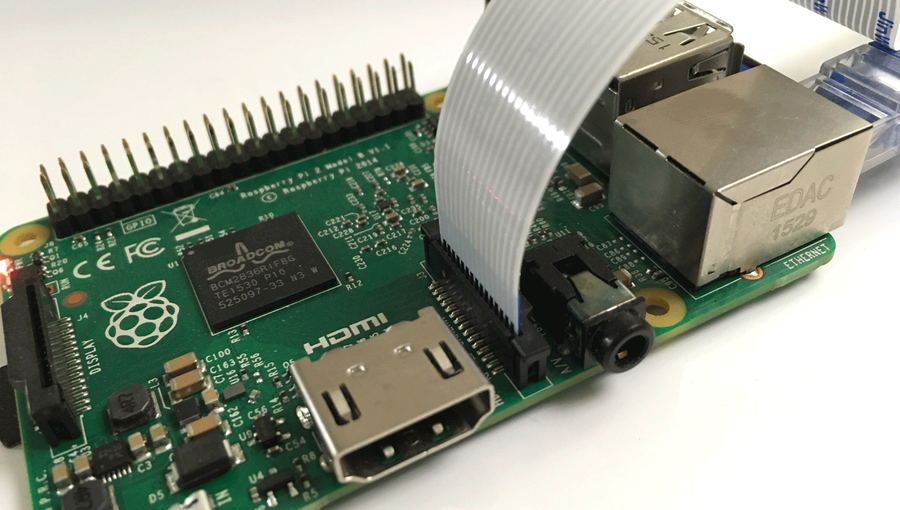
Use an M3 x 20mm bolt and nut to connect the two pieces of the Pi mount. Then, connect the Raspberry Pi ribbon cable to the camera, click the camera into place and slide the camera cover back on.
To mount the camera, you’ll need to use this Pi camera extension ribbon cable since the cable that came with your camera isn’t long enough. I’ve found the 610mm cable works perfectly.
It’s a tight fit. Be patient so that you don’t break your camera. 🙂 You might need to file some edges down. If you have no camera feed later, check and make sure the tiny connector that presses onto the camera itself hasn’t come loose.
It’s also possible to use other OctoPrint cameras and webcams rather than the official Raspberry Pi camera, though you’ll need a different mount to do this.
How to Choose the Best Camera for OctoPrint (including USB)
Keep an eye on your prints!
🛈 Before mounting everything to your printer, I recommend testing your connections in place. It’s easier to troubleshoot things without needing to connect and disconnect your mounts.
4 – Put the Pi into its case
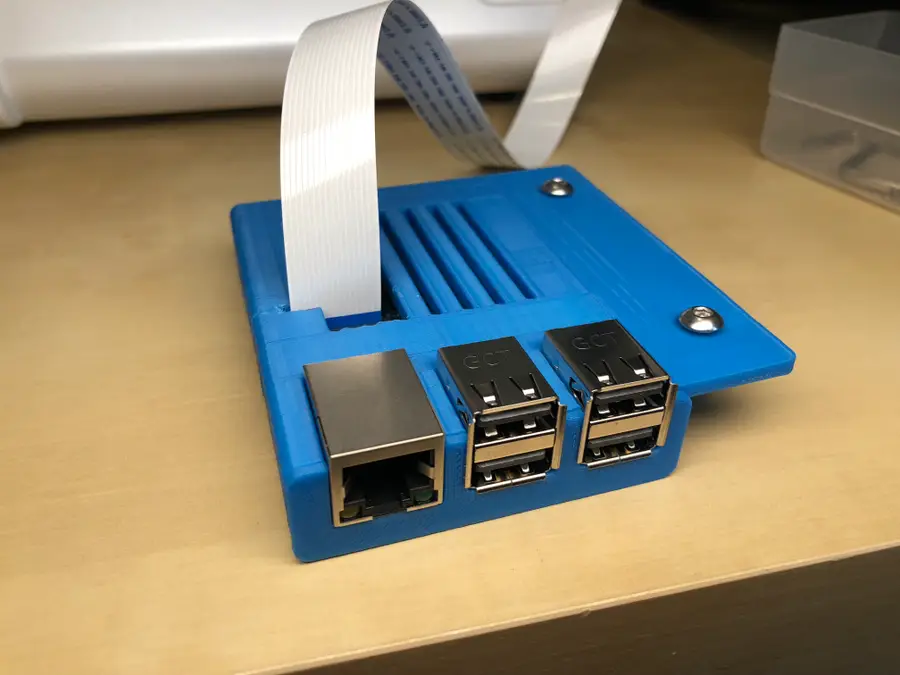
The 3D-printed Raspberry Pi case is comprised of two pieces: a port faceplate and the case itself. Attach the faceplate first.
The case I linked to above is a bit of a tight fit and doesn’t have a slot for the camera cable (as I learned while writing this guide). If you don’t want to print a different one, simply cut a small slot above the camera port, slide the Pi into its case, and then attach the camera cable.
Finally, connect your Pi to your Ender 3’s USB port using a short Mini-USB cable.
5 – Mount the Raspberry Pi
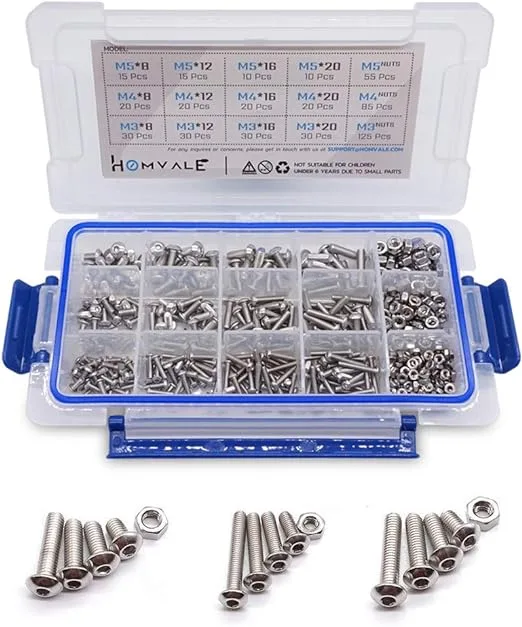
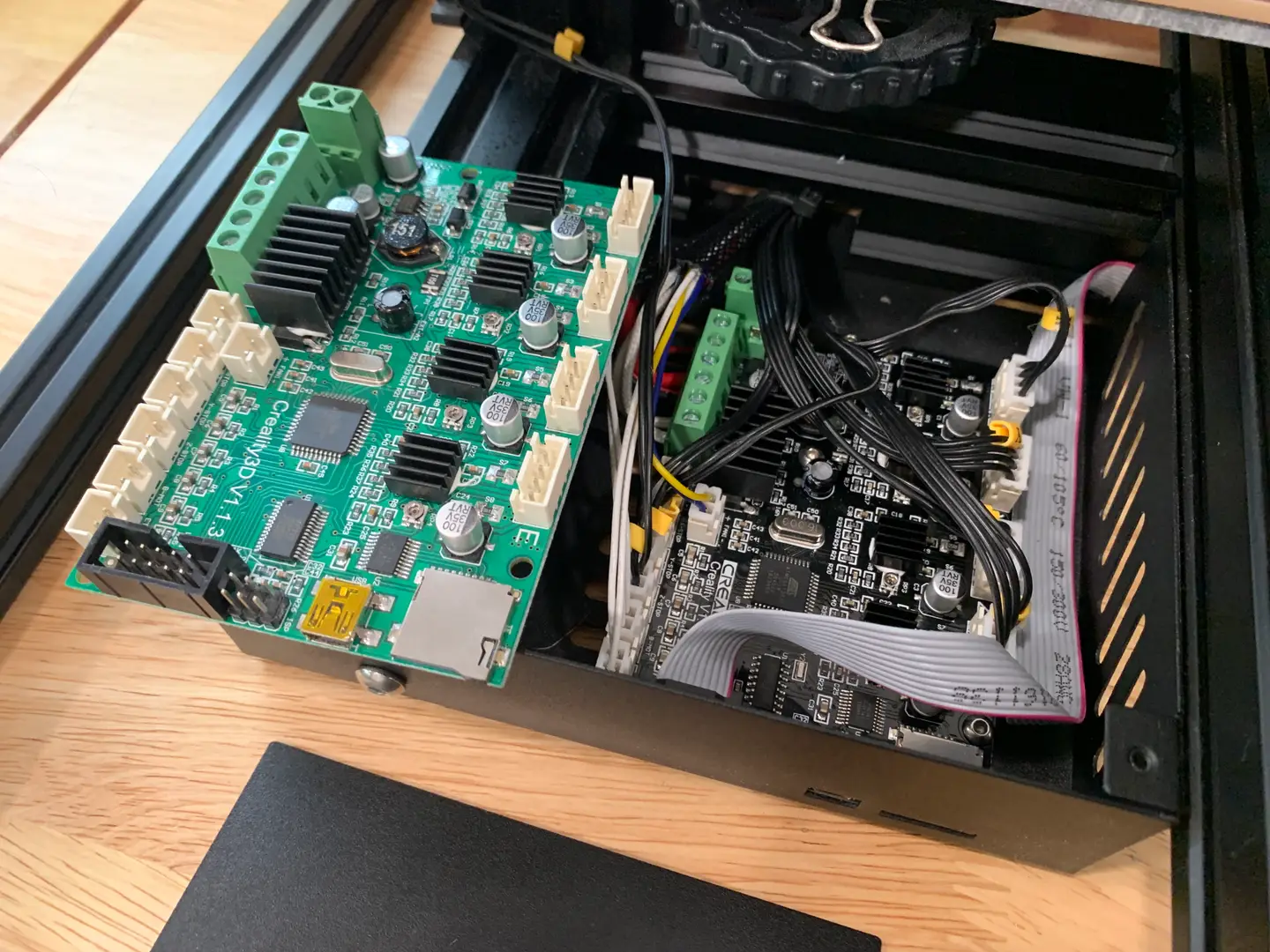
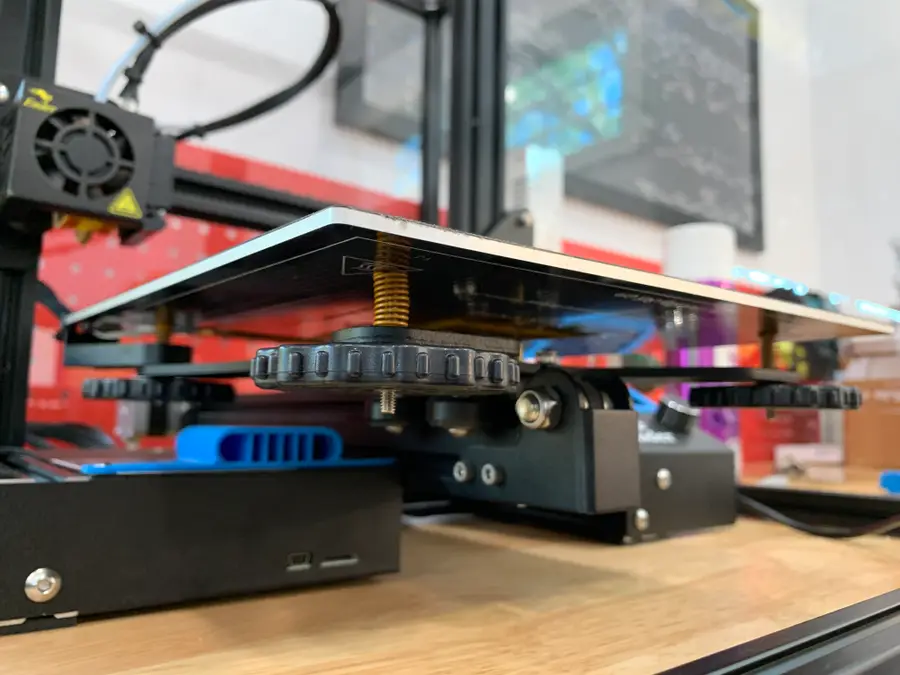
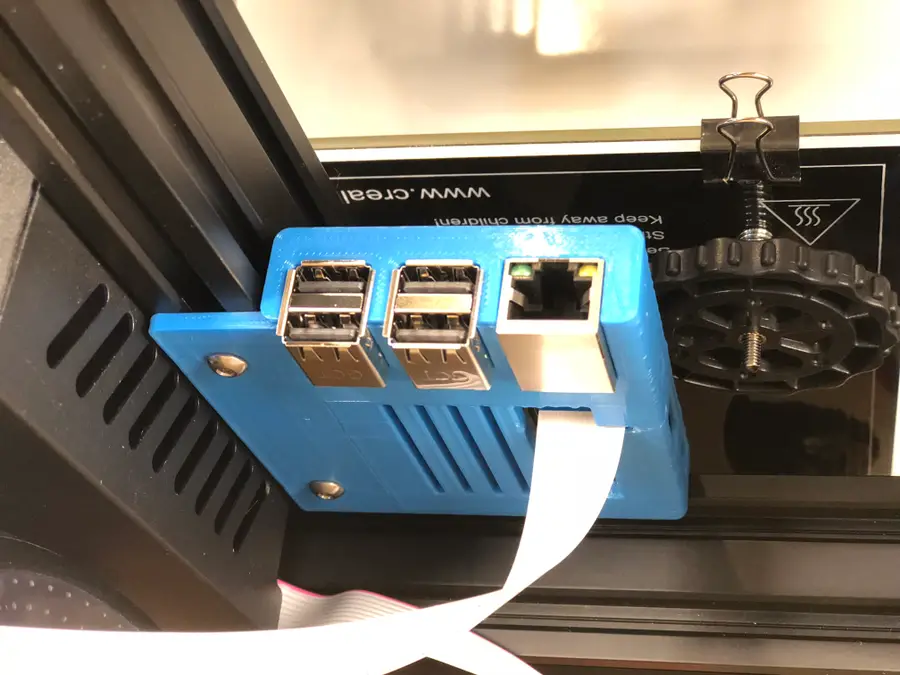
I chose to mount my Pi in the opening in the empty cavity directly beneath the bed. To do this, use two M4 x 8mm bolts and two M4 aluminum channel “T-nuts”. I reused two extra T-nuts that came with the printer.
Attach the bolts and nuts to the Pi case first (with the nuts facing up) and then slide the nut end of the bolts into the bottom piece of extruded aluminum. Finally, tighten the two screws from beneath.
Route the camera cable under the bottom of your printer, between the printer and your table. The printer’s rubber feet will allow it some freedom of movement.
🛈 You’ll need to tilt your printer back or move it to the edge of your desk to reach and tighten the bolts.
6 – Power the Pi from the Ender 3
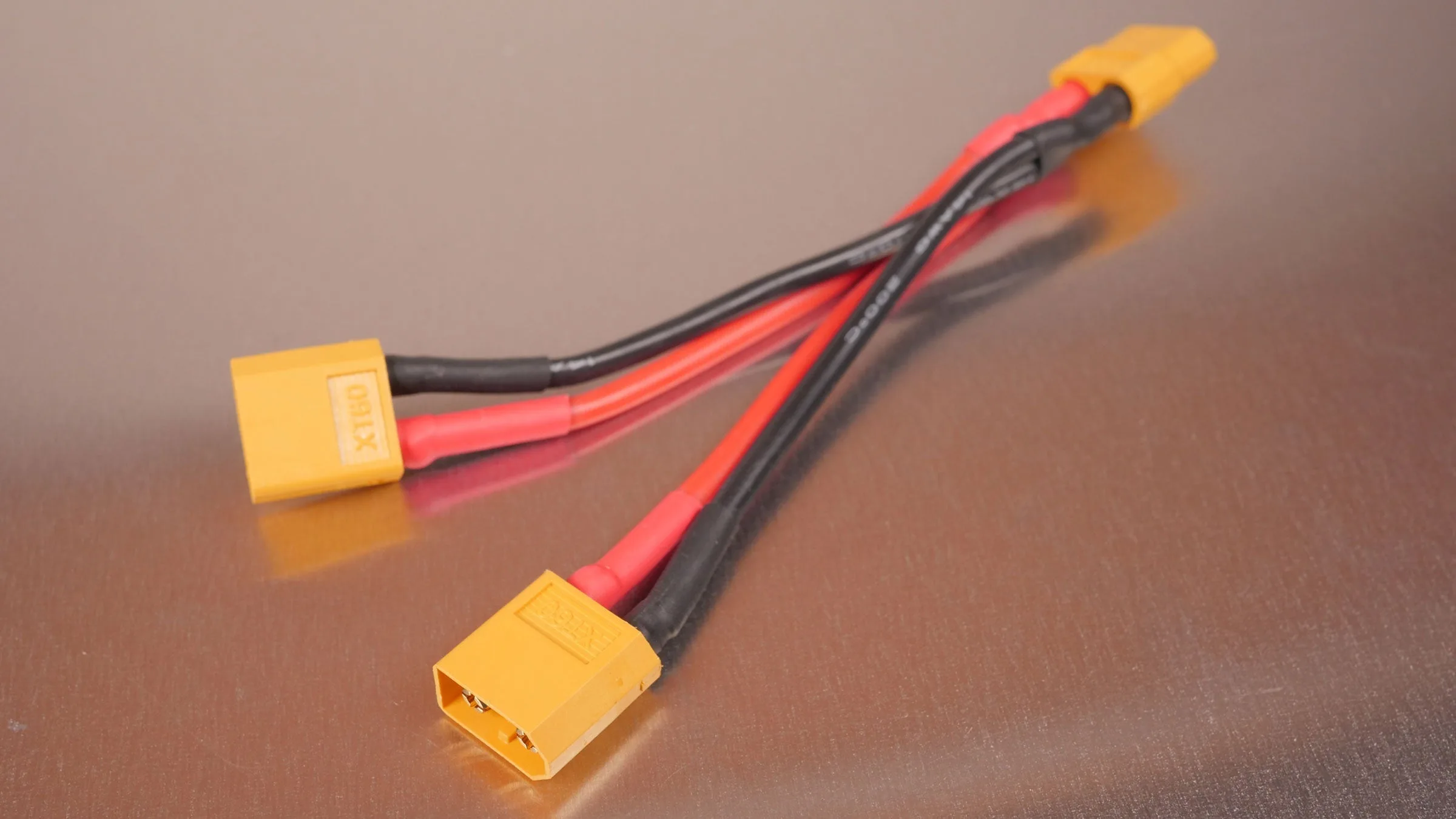
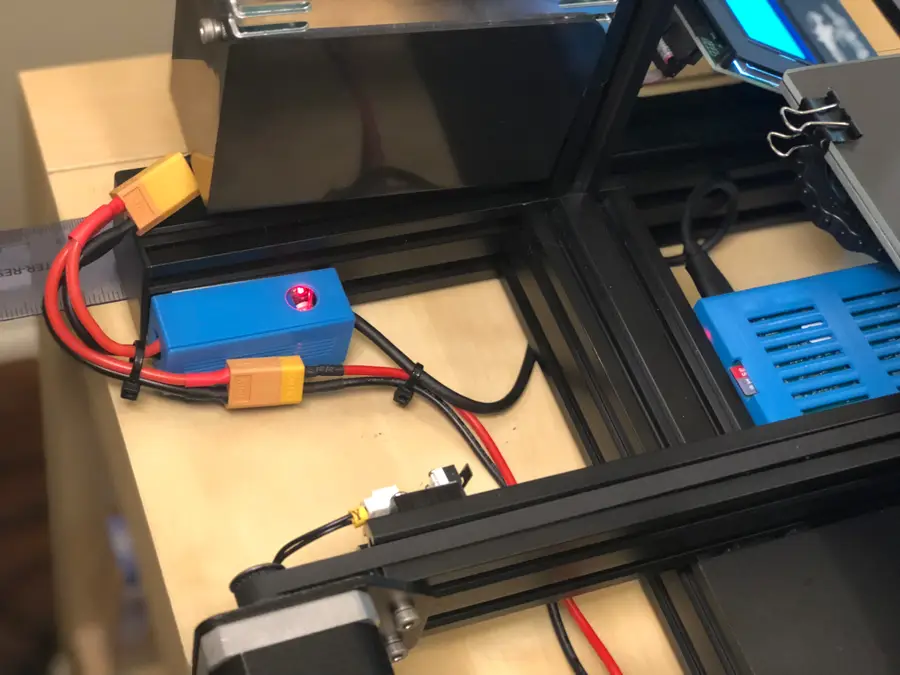
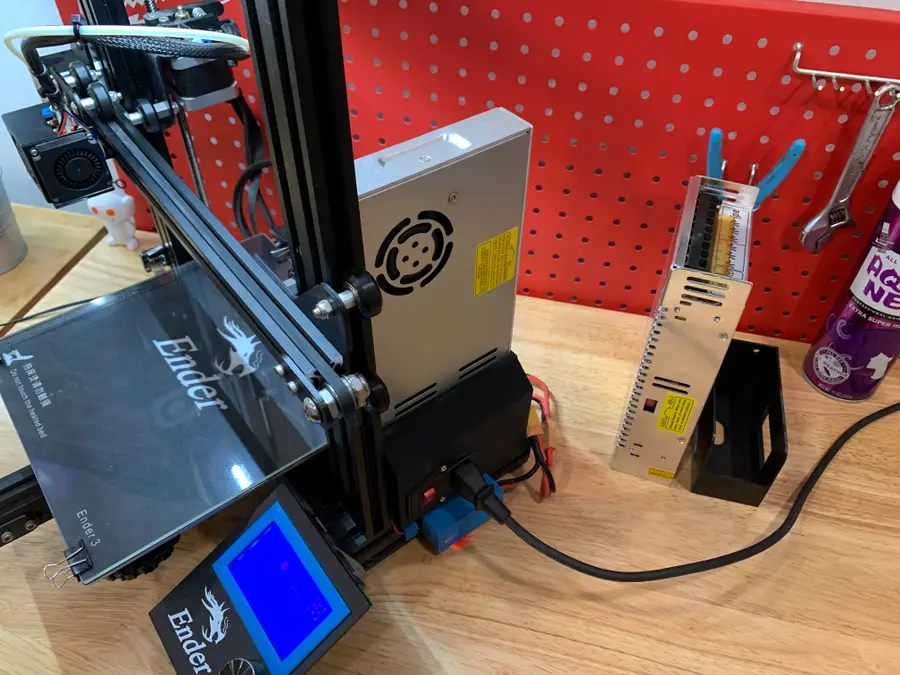
If you’d like, you can power your Raspberry Pi directly from your 3D printer’s power supply! This can be done easily by tapping into the cable coming out of the back of the Ender 3 using a Y-splitter, then reducing the voltage to 5V with a buck converter. I wrote a separate guide to show you how to power the Raspberry Pi using the 3D printer PSU if you’re interested.
This step is optional: if you just want to plug your Pi into the wall, that’s ok too.
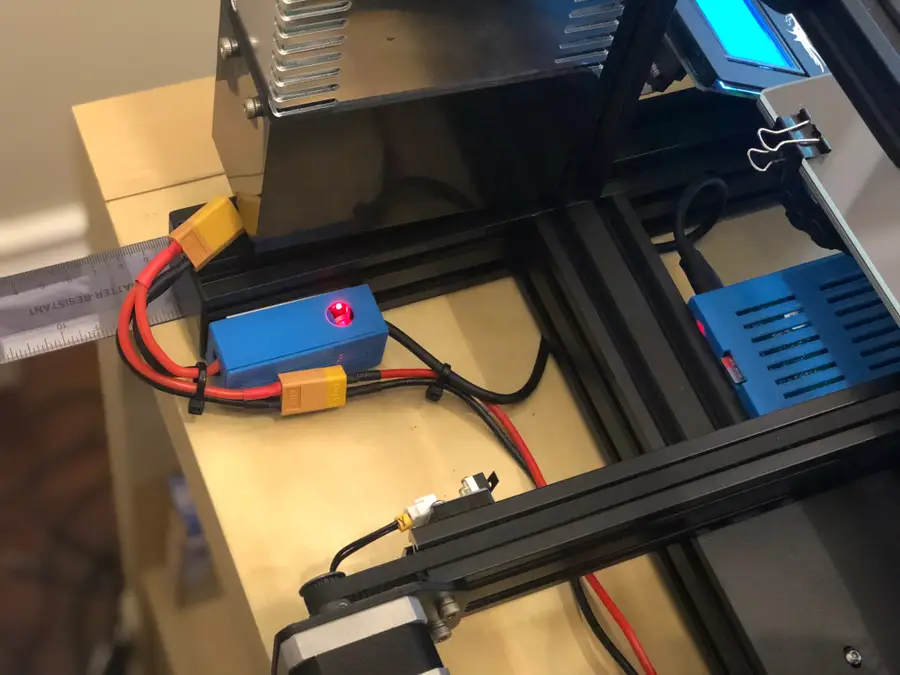
If you already completed that guide, now is a good time to mount your buck converter enclosure to the back of your Ender 3 using foam tape.
7 – Focus the Pi camera
View the camera feed in the OctoPrint/OctoPi interface. Center the bed and place a small object in the middle of it. Then, use the small white wheel that came with your camera to turn the lens of the Pi camera, thus focusing it. Turn it just a tiny amount at a time (maybe 1/16 of a turn) and check the feed periodically until it’s nice and focused!
8 – Final setup!
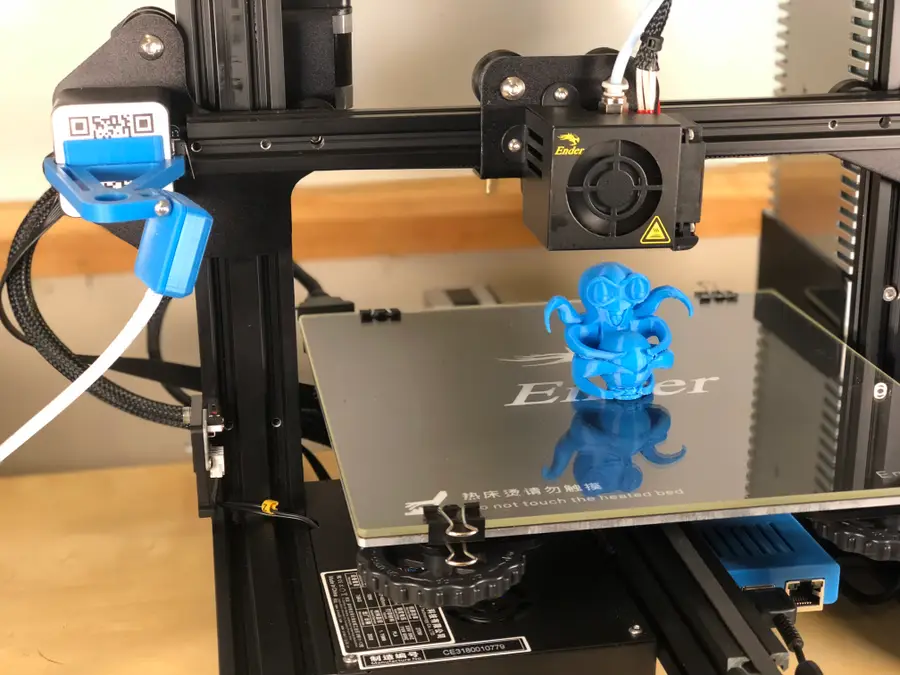
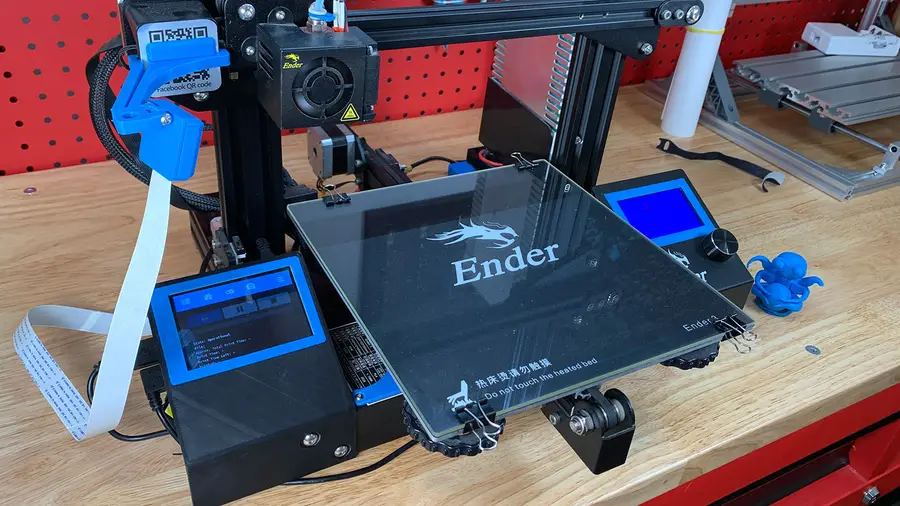
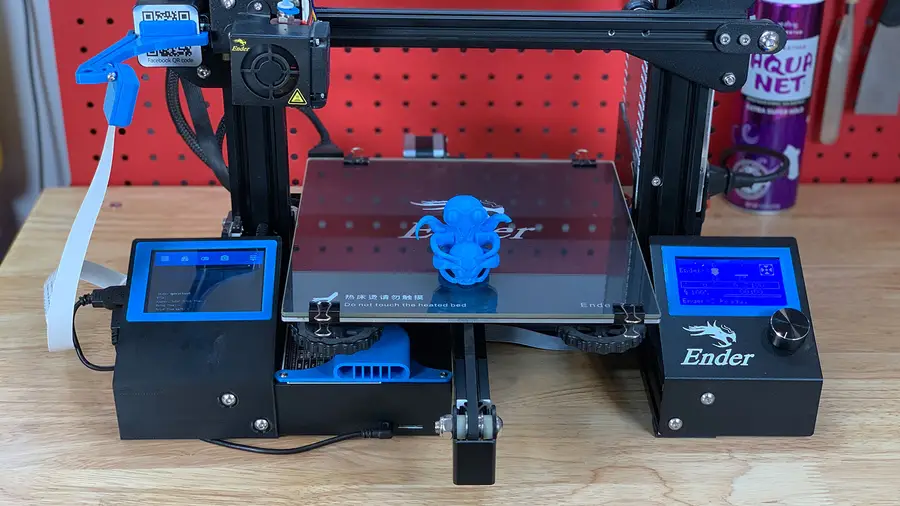
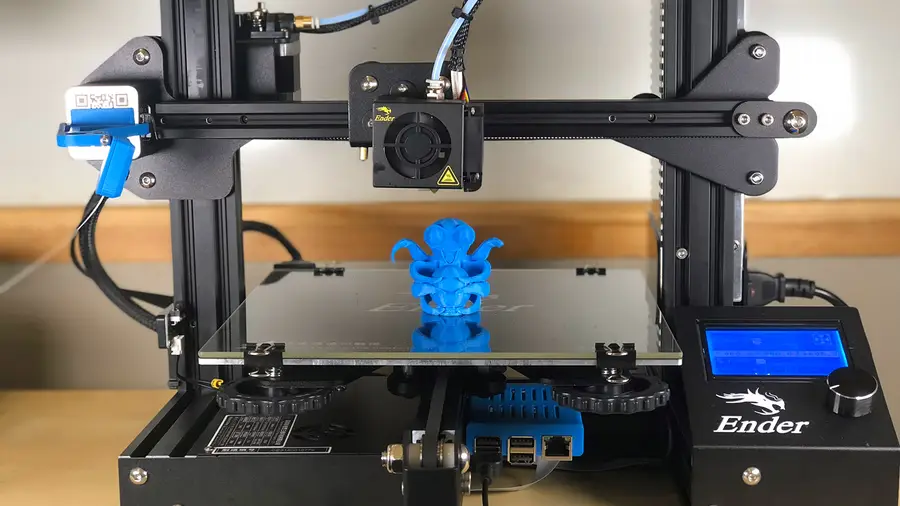
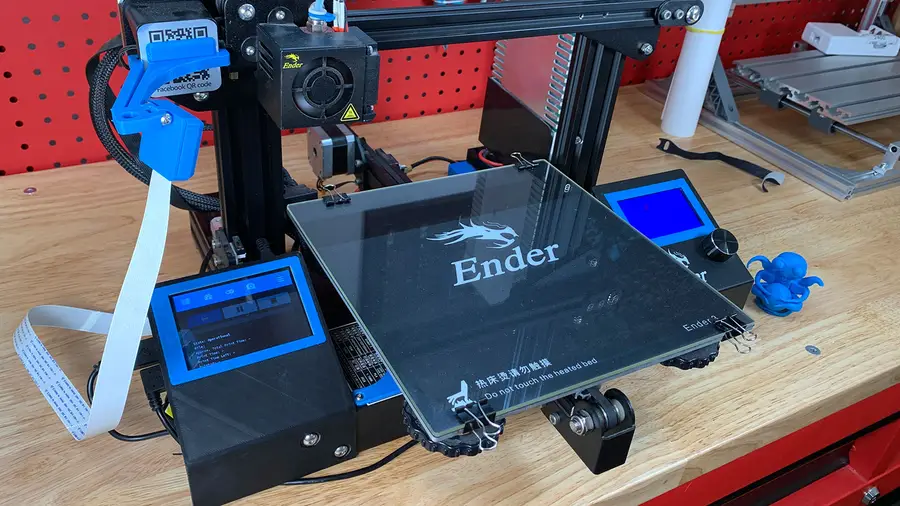
This photo shows everything fully mounted and running.
You’re all done! Be sure to check out my full OctoPrint guide if you’re still fine-tuning your OctoPrint setup. I also wrote a guide on adding an OctoPrint touchscreen to the Ender 3 if you’d like to check it out!
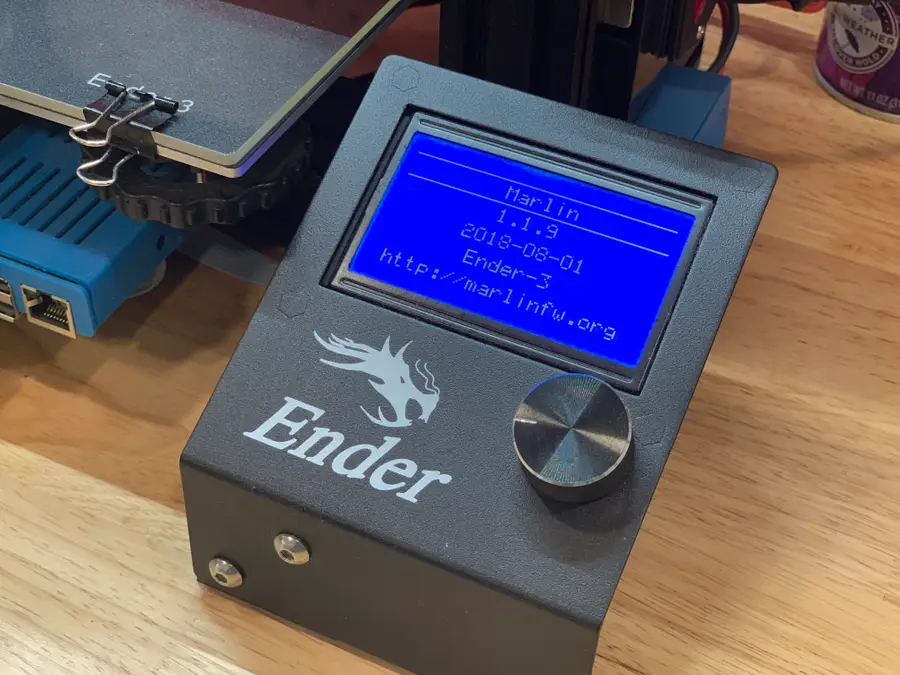
Now that you’ve gotten OctoPrint up and running, I highly recommend updating your Ender 3’s firmware. Why? The newer versions of Marlin add thermal runaway protection, which helps to prevent 3D printer fires. Also, be sure to check out my full Ender 3 upgrades and mods guide!
Blender is one of the most popular open-source 3D creation suites today. It doesn’t cost a dime to use and everything you create is yours to own for good. The community is robust and the dev team still releases new updates on the regular. If you want to get the latest version, you may have
Introducing Howchoo, an enigmatic author whose unique pen name reflects their boundless curiosity and limitless creativity. Mysterious and multifaceted, Howchoo has emerged as a captivating storyteller, leaving readers mesmerized by the uncharted realms they craft with their words.
With an insatiable appetite for knowledge and a love for exploration, Howchoo’s writing transcends conventional genres, blurring the lines between fantasy, science fiction, and the surreal. Their narratives are a kaleidoscope of ideas, weaving together intricate plots, unforgettable characters, and thought-provoking themes that challenge the boundaries of imagination.
This short guide will show you how to increase the system limit for file watchers in NodeJS.
1 – Why do I see this ENOSPC file watch limit error?
When using node to watch a project with something like nodemon, there will usually be an error like ENOSPC: System limit for number of file watchers reached...
This is due to system defaults and this limit can easily be increased with a few simple commands.
This can occur when trying to start up any kind of project that watches files for things like hot reloading as well as any piece of software that would want to keep watch on files to detect changes and take actions based on those changes such as Visual Studio Code.
2 – Increase the limit
“Visual Studio Code is unable to watch for file changes in this large workspace” (error ENOSPC)
When you see this notification, it indicates that the VS Code file watcher is running out of handles because the workspace is large and contains many files.
The current limit can be viewed by running cat or, even better, bat which as they say themselves, [bat] A cat(1) clone with wings which just means it has auto syntax highlighting, better output formatting in general, is available on Docker, Mac OSX and basically all flavors of Linux.
$ cat /proc/sys/fs/inotify/max_user_watches
# returned value:  8192
The limit can be increased to its maximum (524288) by editing /etc/sysctl.conf and appending this line to the file.
fs.inotify.max_user_watches=524288
You can do by opening up your favorite text editor and adding the line or by running:
$ echo 'fs.inotify.max_user_watches=524288' | sudo tee -a /etc/sysctl.conf
The value appended will be printed to the console if the append worked.
The new value can then be loaded/sourced by running:
$ sudo sysctl -p
This should be the only time you have to do this until you have to set up a new system again.
3 – Bonus: Sync VS Code Settings
We’re going to save you some time here. Definitely sync your VS Code settings across your computers to save you big time in the end!
How to Sync VS Code Settings Across Your Machines It’s your setup, wherever you are…
Introducing Howchoo, an enigmatic author whose unique pen name reflects their boundless curiosity and limitless creativity. Mysterious and multifaceted, Howchoo has emerged as a captivating storyteller, leaving readers mesmerized by the uncharted realms they craft with their words.
With an insatiable appetite for knowledge and a love for exploration, Howchoo’s writing transcends conventional genres, blurring the lines between fantasy, science fiction, and the surreal. Their narratives are a kaleidoscope of ideas, weaving together intricate plots, unforgettable characters, and thought-provoking themes that challenge the boundaries of imagination.
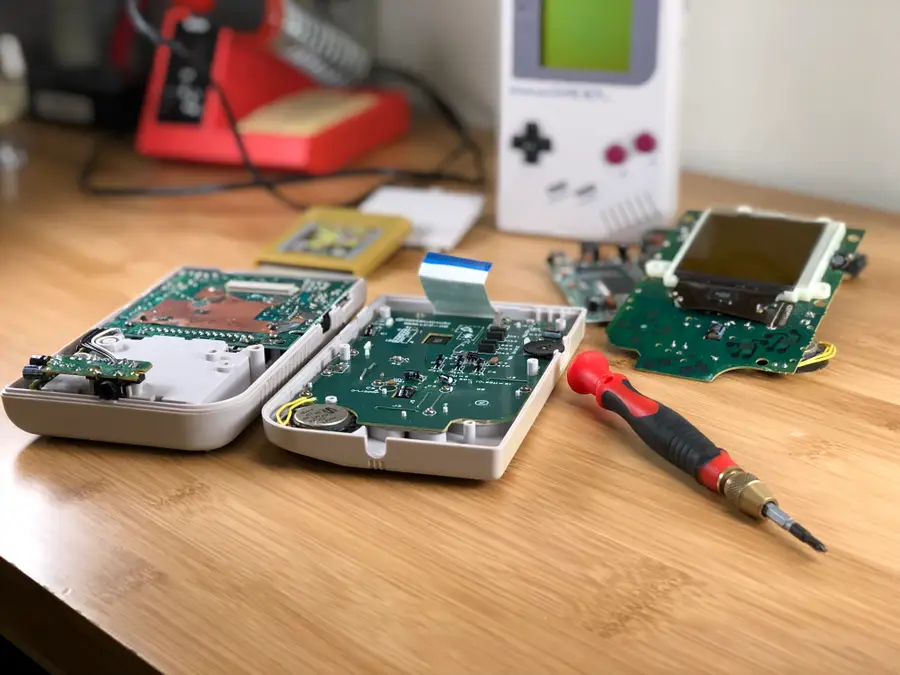
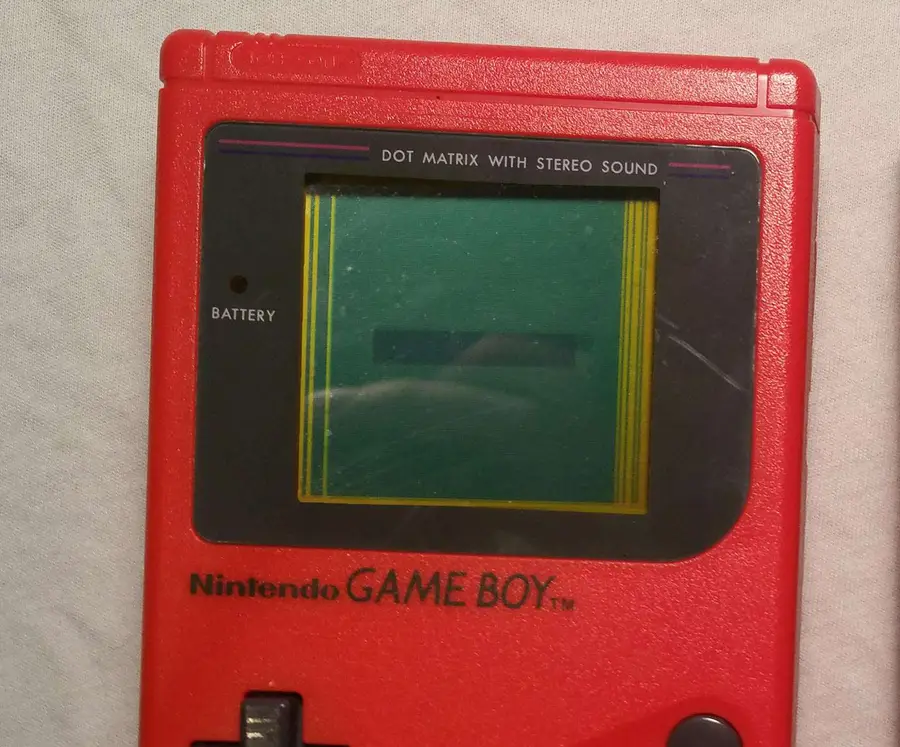
Are you struggling to see the pixels on your Game Boy?
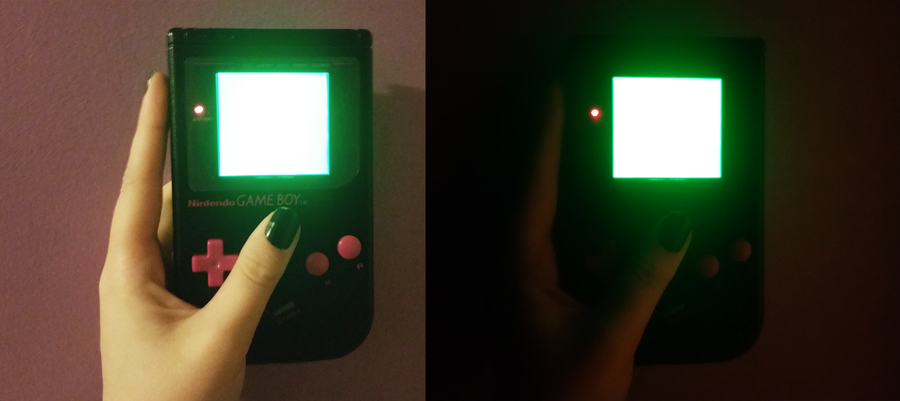
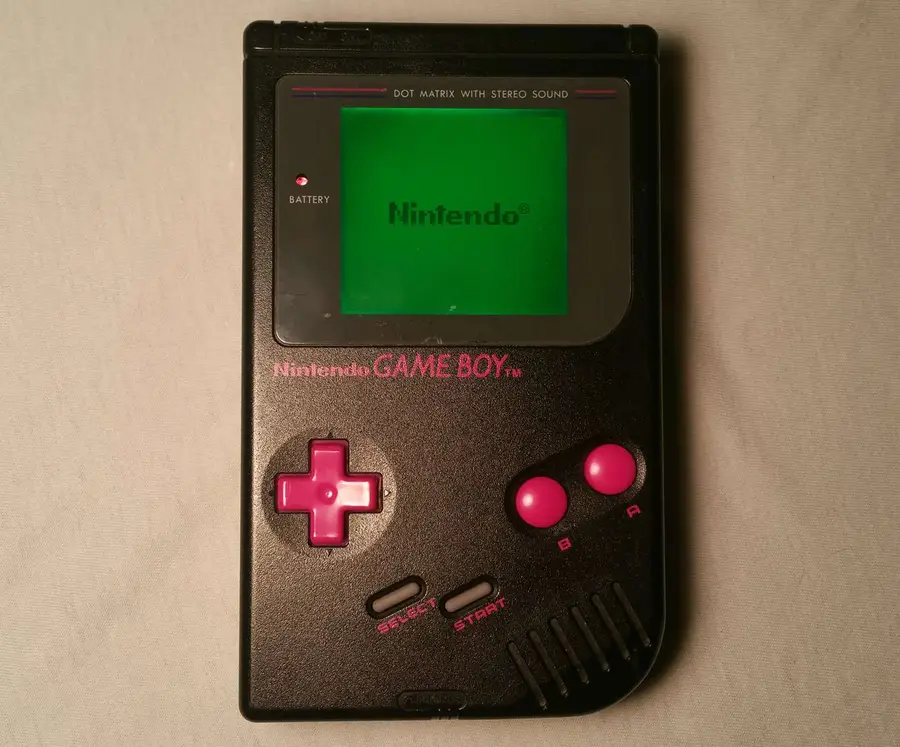
Why bother with ambient light fixtures when you could install your very own backlight? That’s right! In 2018, we no longer need the burden of a carefully placed lamp to make or break our gaming experience.
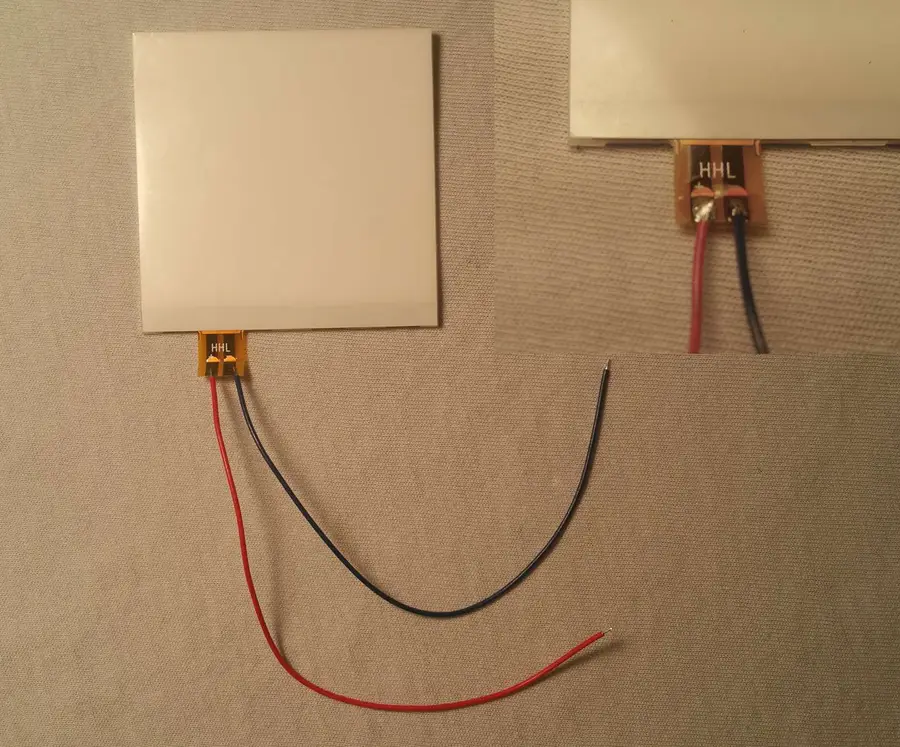
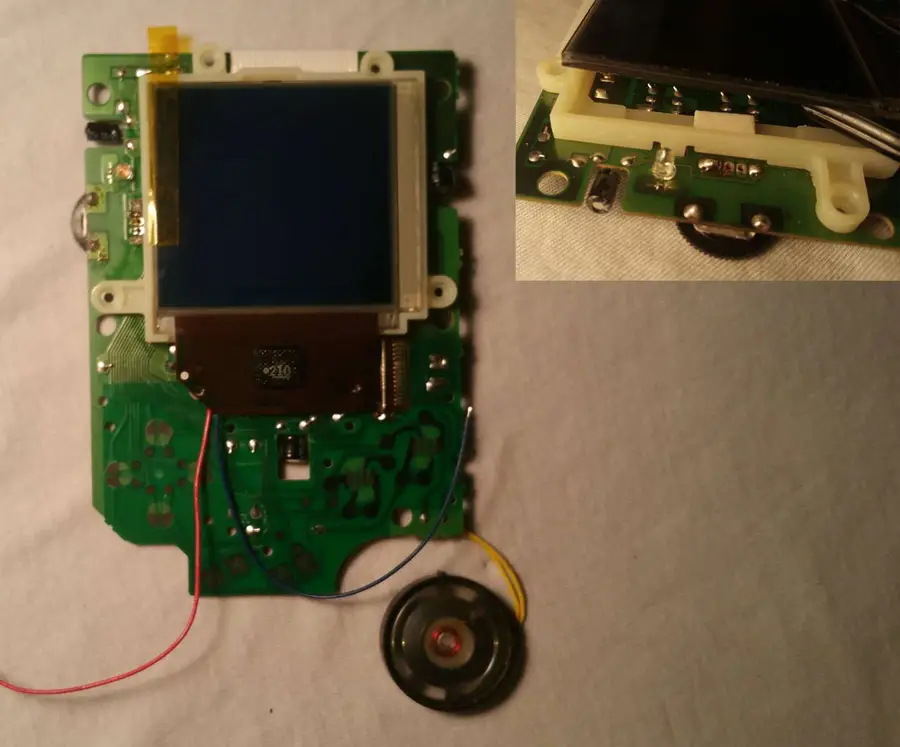
With the power of a Game Boy backlight kit from Hand-Held Legend, you can take your Game Boy DMG experiences into the night!
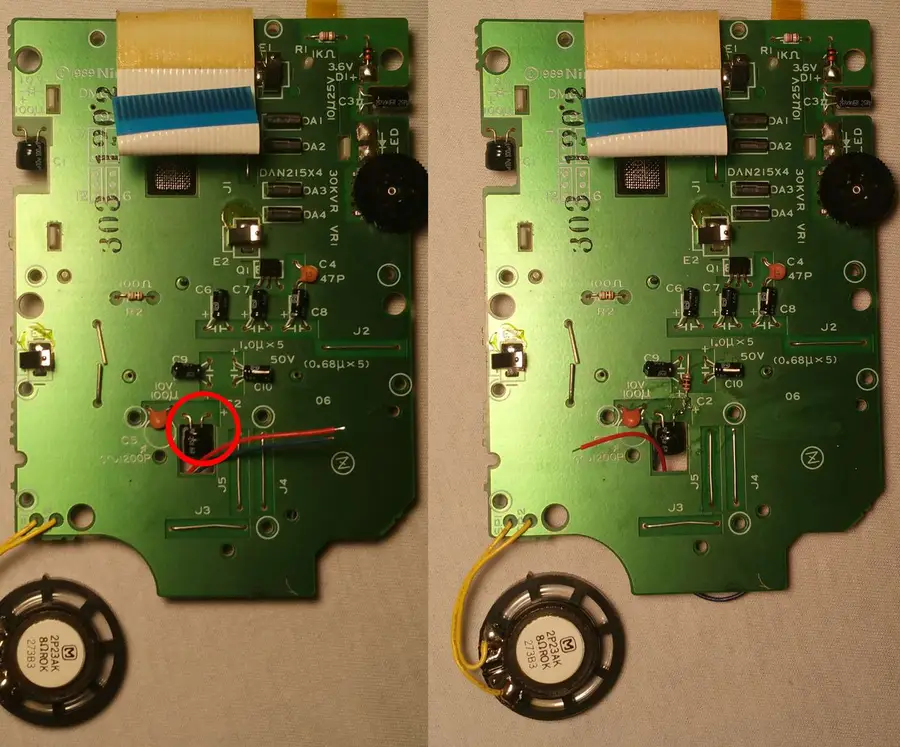
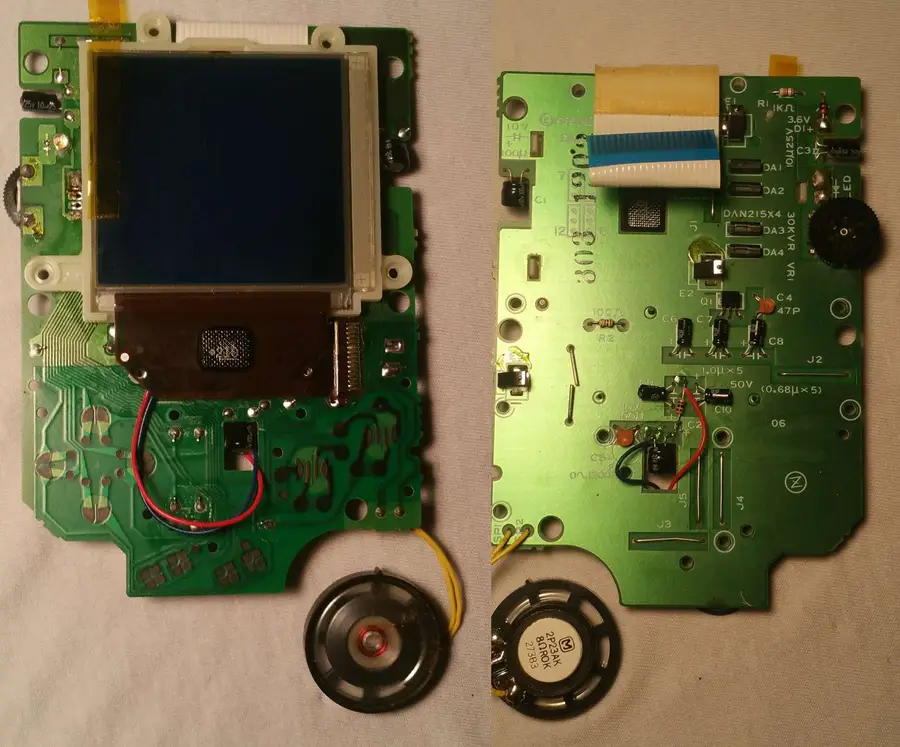
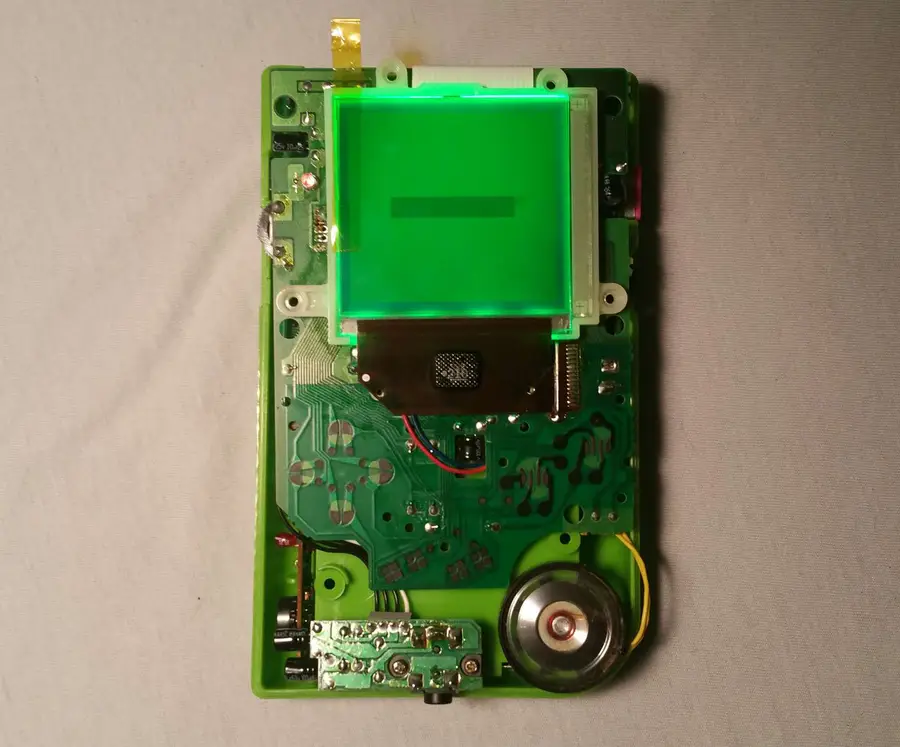
Today I’ll be installing a green backlight in my Gameboy. To get started, we will need a few things…
1 – Examine the Game Boy
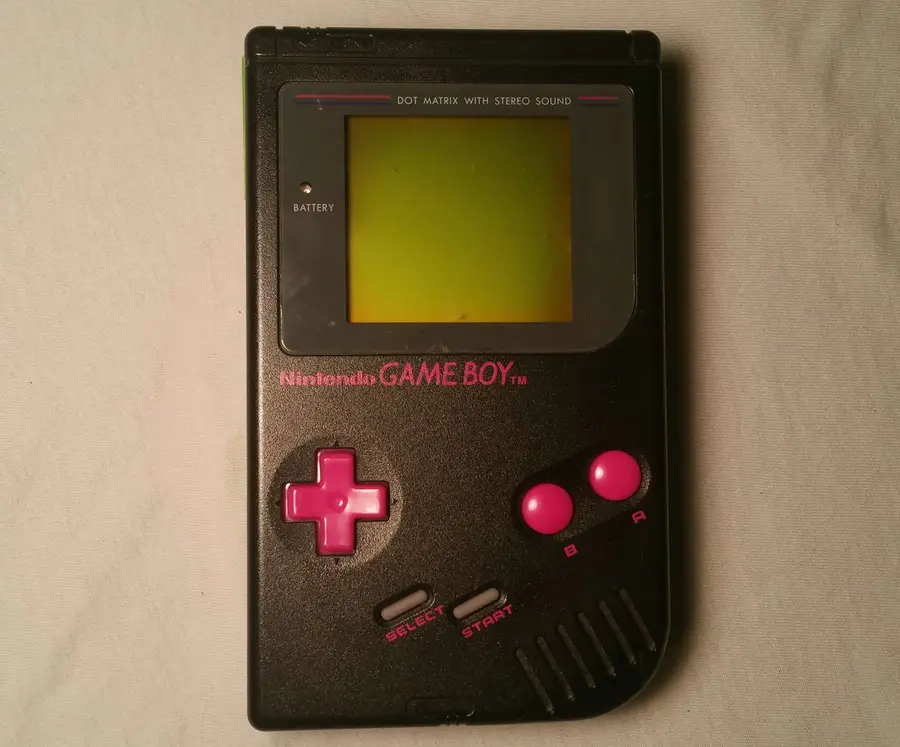
First we’ll need to turn the Game Boy off for a physical examination.
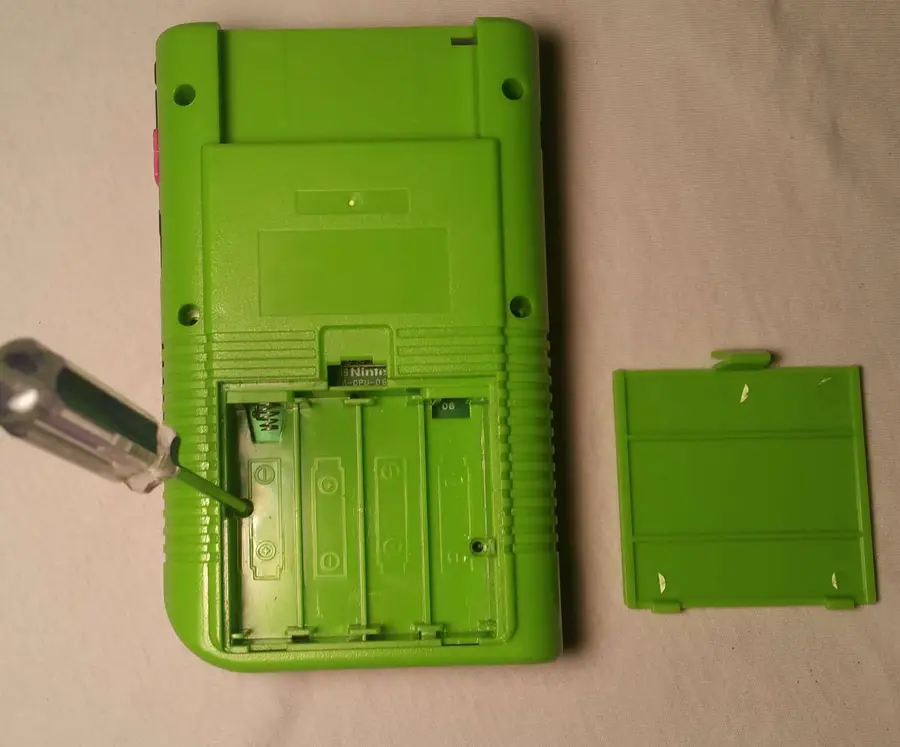
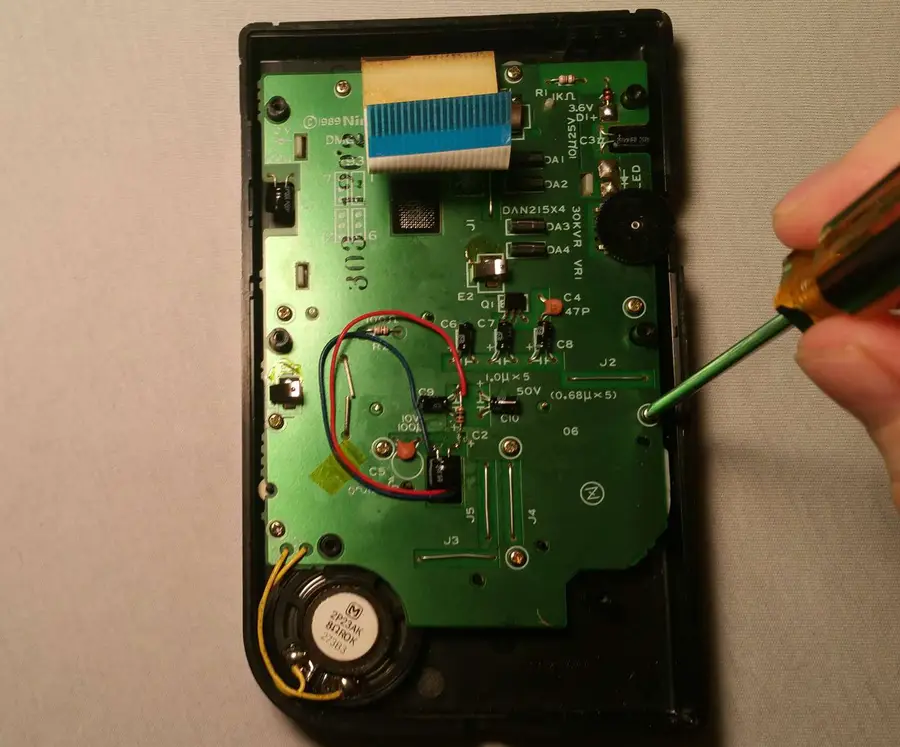
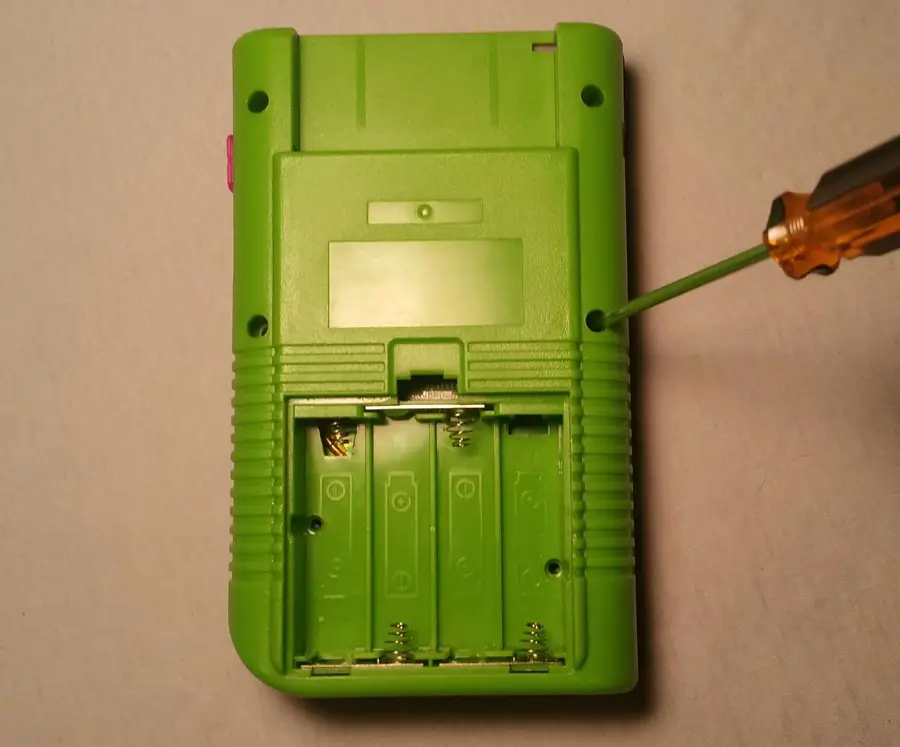
The Game Boy is held together with 6 screws—take note of any that may be missing. Most Game Boys use tri-wing screws to hold the outer shell. Occasionally you’ll find an older model held together with Phillips screws.
Identify the best screwdriver to use and remove the screws from the back of the Game Boy. The battery cover and batteries will need to be removed to expose the final 2 screws. You will need to account for 6 screws total.
Gently separate the halves. There will be a delicate ribbon cable connecting the two halves together. We need to unplug this cable from the back motherboard. This ribbon cable is very sensitive and bending the wires may render the screen irreparable. Be extra cautious when disconnecting this ribbon cable.
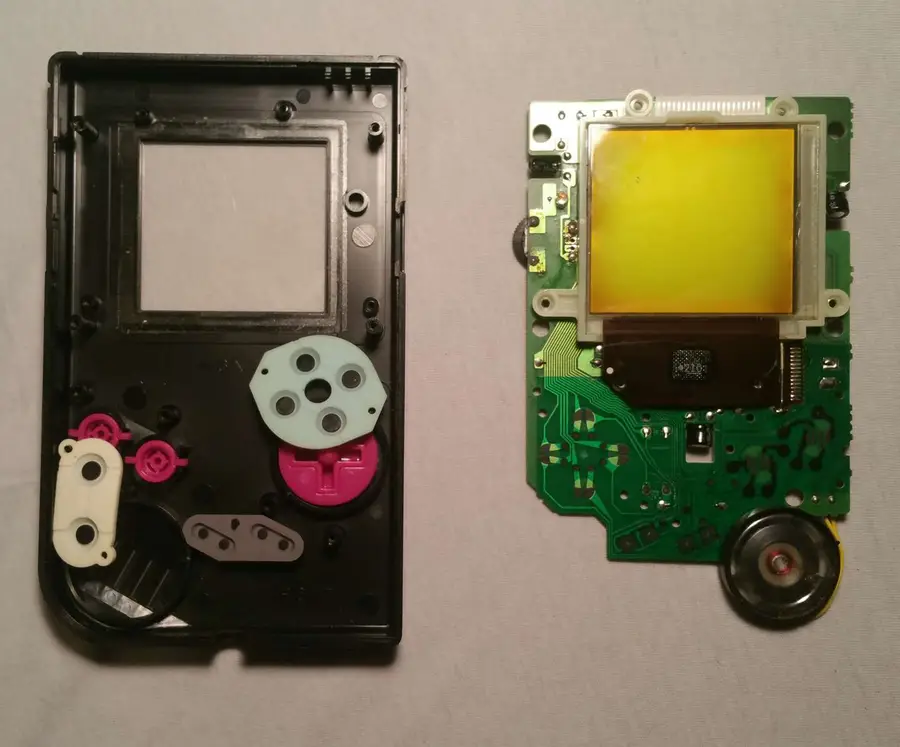
3 – Remove the front motherboard
The front motherboard needs to be removed with a Phillips number 1 screwdriver. You will need to account for 10 screws total.
Without using too much force, remove the motherboard from the front shell. There will be several components to account for.
A Button
B Button
A/B Buttons Silicone Pad
D-Pad Button
D-Pad Button Silicone Pad
Start/Select Buttons (One Piece)
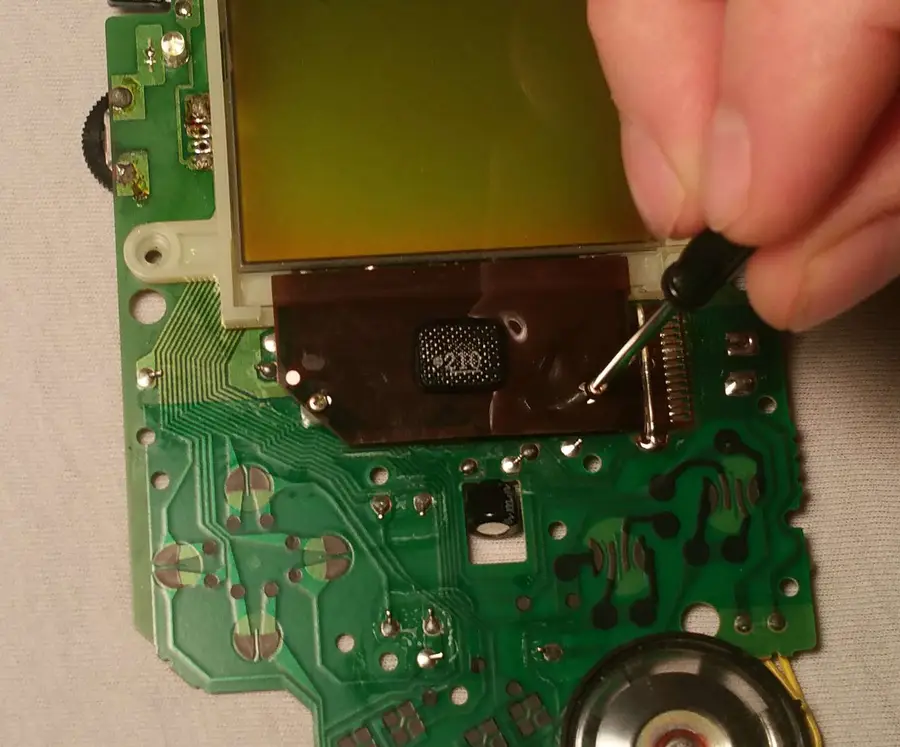
4 – Unscrew the LCD
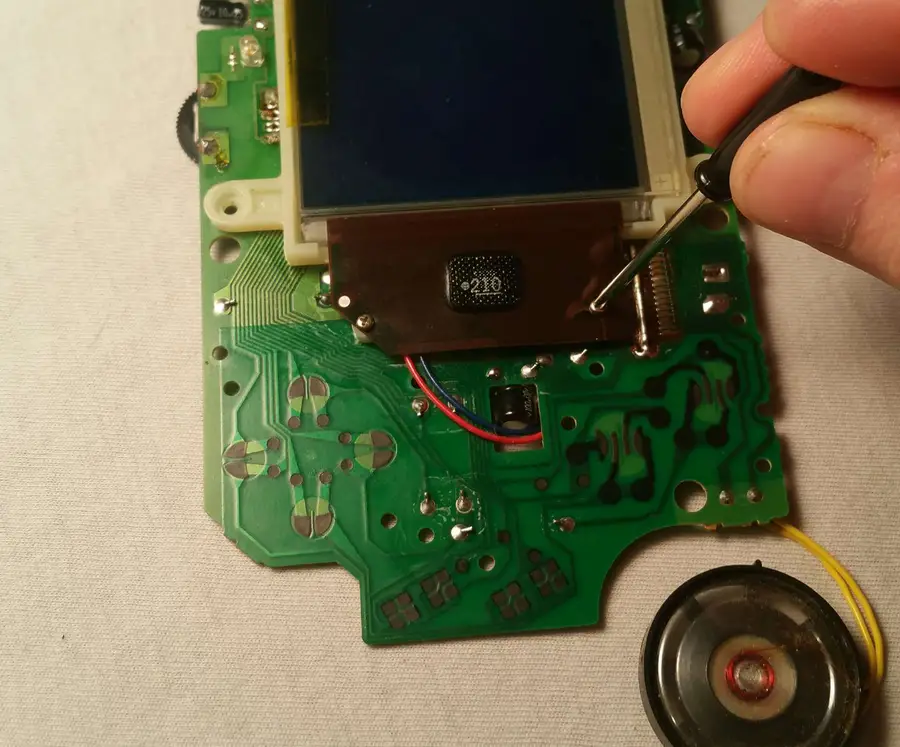
Using a Phillips screwdriver number 0, remove the two screws below the LCD screen.
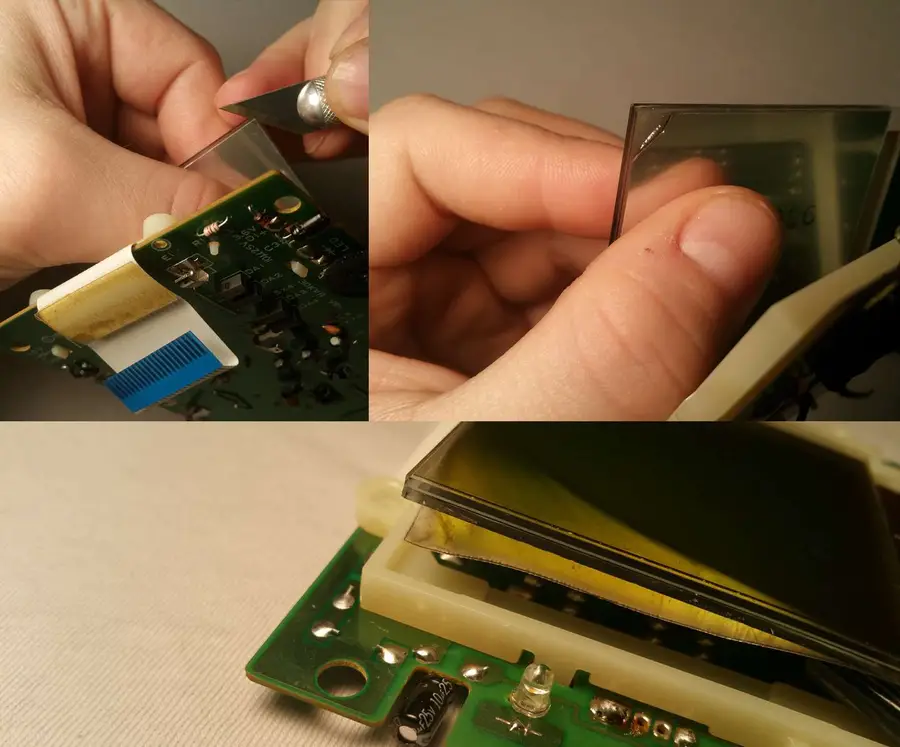
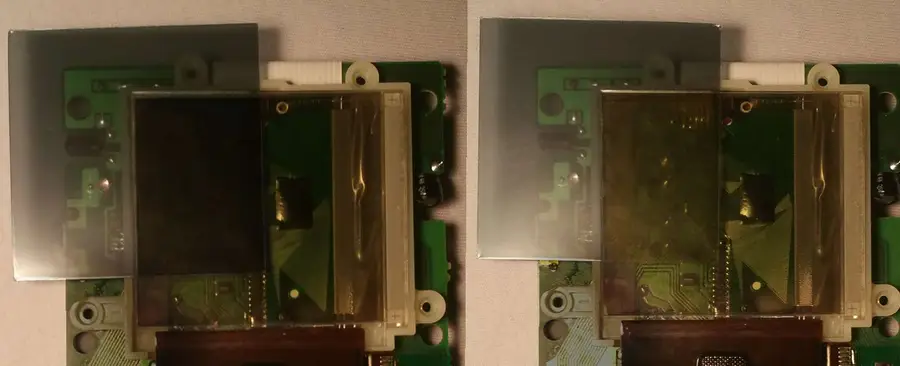
5 – Carefully remove the polarizing film
This step is very critical and can damage the Game Boy screen permanently. Exercise extreme caution!
The Game Boy screen uses a polarizing film which needs to be removed. It will be replaced with a new polarizing film from the backlight kit.
Lift the screen from the board. The polarizing film is under a reflective layer. Both need to be removed. Using an x-acto knife, start peeling the corner of the polarizing film. Be sure you have both layers peeling, not just the reflective layer.
Carefully work with the film to remove it from the screen. Be mindful of how you are holding the screen.
DO NOT APPLY PRESSURE to the screen.
DO NOT SQUEEZE the screen.
DO NOT USE EXCESS FORCE to remove the polarizing film.
You may need to clean remaining glue using an alcohol soaked cotton swab.
6 – Prepare the new polarizing film
Open the new kit to retrieve the replacement polarizing film.
Place the new film behind the Game Boy screen. The polarizing film will appear darker or lighter when rotated 90°. We will need to choose the right orientation for our backlight mod.
If the Game Boy will be using a bivert chip, the polarizing screen needs to be tilted 90° until it appears dark.
If you will not be installing a bivert chip, the polarizing screen needs to be tilted 90° until it appears clear.
Be aware of the two protective stickers covering each side of the polarizing film. It’s best to leave these in place until the backlight is slid into place.
7 – Solder the wires to the backlight
The backlight comes with two wires. They will need to be soldered to the backlight.
Using a soldering iron, carefully solder the wires to the backlight terminal. One wire will need to be soldered to the positive side, the other negative. In my example, I’ve soldered the red wire to the positive terminal. Keep track of which color you’re using for each terminal!
8 – Place the backlight
This is the best opportunity to clear the screen of potential debris. Using a microfiber cloth, clean every side of each new layer. This includes the LCD, the polarizing film, and backlight.
You may need to pry the screen up using an x-acto knife. Be careful not to chip the screen. There is a small groove above the display that should give a little bit of leverage.
Remove the two white foam rectangles from behind the screen and discard them. Place the new backlight behind the LCD screen. Now is the best time to remove the protective stickers from the polarizing film. Holding the sides of the polarizing film, carefully place it between the backlight and LCD. Be mindful of the orientation you need from step 7.
You may choose to use a piece of kapton tape to prevent the backlight from falling out during installation, as seen in the example.
9 – Install the resistor (if applicable)
Older backlight kits require a resistor to properly regulate voltage in the Game Boy. Your kit may not have a resistor, in which case you can skip ahead to the next step.
Holding the LCD in place, flip the motherboard over. The resistor will need to be trimmed and soldered to the positive leg of the capacitor circled above.
10 – Solder the backlight
Feed the wires through the hole shown above. These wires can easily work themselves under the buttons if not properly managed.
Once the wires are tucked away, solder the positive wire to the resistor.
Solder the negative wire to the negative leg of the capacitor.
For a professional finish, apply flux before soldering and seal your new connections with liquid electrical tape.
11 – Screw the LCD into place
Using a Phillips screwdriver number 0, screw the tiny LCD screws into place.
12 – Quick test
Before you sew up your 8-bit patient, it’s best to pop in a few batteries and test out the operation.
Reconnect the motherboards by carefully plugging the ribbon cable into place. Insert 4 AA batteries and power it up! If everything worked, you should see magnificent glow of an LED screen gleaming behind your pixels.
NOTE: If the backlight is not illuminated, double check the Game Boy is receiving power. If it is, turn off the Game Boy and remove the batteries. You will need to revisit your soldering connections to ensure the backlight is properly installed. Vertical lines may appear and are often repairable with a soldering iron.
If you used a piece of kapton tape to hold the screen in place, now is the time to remove it. Place the buttons, silicone button pads, speaker, and motherboard into the front shell. Each component will be guided into place with a small notch.
You may need to feed the backlight wires through the hole further to make room for the buttons. Make sure the wires are not blocking any crucial screw holes.
Using a Phillips number 1 screwdriver, screw the front motherboard into place. There will be 10 screws used for this step.
14 – Seal the Game Boy together
Carefully place both halves together. Using an appropriate screwdriver, screw the shell together. There will be 6 screws used for this step.
15 – Final test run
It’s time to give it one more test to make sure everything works.
Congratulations! You should now have a working, backlit Game Boy on your hands.
Next: The backlight mod can sometimes cause your speaker to generate a whining noise. If you have that issue, read my guide on fixing this speaker noise.
The orientation of the polarizing film in your new backlight Game Boy can adversely affect its pixel quality; it’s common practice to install a bivert chip to essentially invert the screen twice, improving display quality drastically. 🙂 Check out my guide on this!
You’ve put so much work into setting up RetroPie or EmulationStation. You load it up with legally obtained ROMs only to find that custom theme you installed—you remember, the one from my RetroPie themes guide—has a big blank spot for box art! The Best RetroPie Themes (And How to Install Them)You deserve some personal flair! RetroPie: Build Your
Introducing Howchoo, an enigmatic author whose unique pen name reflects their boundless curiosity and limitless creativity. Mysterious and multifaceted, Howchoo has emerged as a captivating storyteller, leaving readers mesmerized by the uncharted realms they craft with their words.
With an insatiable appetite for knowledge and a love for exploration, Howchoo’s writing transcends conventional genres, blurring the lines between fantasy, science fiction, and the surreal. Their narratives are a kaleidoscope of ideas, weaving together intricate plots, unforgettable characters, and thought-provoking themes that challenge the boundaries of imagination.
I grew up playing games like Cribbage with my dad. Despite a dive into D&D in his 20s, he never really went deep with the variety of board games that would eventually become such a passion for me, but his love of the classics was strong. My Mom, too, loved card games, and I have plenty of fond memories of playing cards with both my parents.
What I love most about card games is the complexity made possible in such an elegant form, so as a gamer I mostly tend toward themed card-management games, where players take on the management of various resources on the path to victory. But every once and a while I love tapping into the classic nostalgia of my youth for a card game that never grows old.
As a geeky guy, card games have long infused my psyche through the media I’ve explored. Heck, even the crew of the starship U.S.S Enterprise played Poker! If it’s still around in Star Trek’s 24th century, it’s gotta be good, right?
Well, I’ve assembled a list that includes a few classics like Poker, as well as some childhood favorites (Uno, anyone?). But I’ve also gone to some lengths to “build a deck” of hot options for those of you who want to go even farther with what card games have to offer. A couple of these do use boards, but even then the true game is taking place in the decks, not with the pieces on the board. I think that even old hats at the card game scene might find something new here to tickle their fancy.
30 – Sweet Existence: A Strange Planet Card Game
I absolutely adore the Strange Planet becoming by Nathan W. Pyle, and I own a number of the comic book collections. They’re so wonderful, strange, and always delightfully poignant, that I don’t think anyone could help but love them. The game takes the comic characters and their weird-life experiences and gamifies it in an extremely simple way, allowing players to experience the cartoon in a new way.
This one’s for fans of the comics
I can’t say I recommend this for people who are not already fans of the comic because of how simple the game is (the game isn’t scaled very well for difficulty and the outcome is heavily dependent on chance), but since the comics are all unique to the game it makes for a really fun gift for someone who loves Strange Planet and wants to own another delightful little piece of that world.
The first time that I encountered this one, I was on a trip with my sister to Joshua Tree Park in California, and we spent a couple of late nights in our cabin playing through the trivia cards and sometimes arguing about which of us knew more than the other.
What play looks like
Trivia games are always fun, but those that don’t rely upon having a digital device out are really swell in my book. The Worst-Case Scenario Survival Card Game: Travel Edition is actually intended as an expansion to the board game of the same name, but provides an extremely simple trivia game all on its own.
Hardly a “game” really, it’s a fun way to pass the time, and I could see it being especially useful for a situation like a long car ride, where playing a more traditional game could be difficult.
28 – No Thanks!
No Thanks is really simple, with just a deck of cards and a pile of chips. The cards of the deck have numbers on them ranging from 3 to 35. On a player’s turn, the top card of the deck is turned over, and if they don’t want it they put a chip on it. Then the players continue around until someone does take the card.
What play looks like
Since the goal of the game is to get the lowest score at the end of the game, the strategies involved can be quite complex, but the basic premise and rules are so delightfully simple that literally anyone can jump in and start playing right away. For a pure card game without a theme, this really is the tops in my opinion, because it manages to capture a lot of fast and fun decisions with a fair amount of decision-making and depth — all for a game that takes ten minutes to play.
27 – Arboretum
This is a game about planting trees and maintaining the best possible path through your garden for visiting sightseers. Comprised of an 80-card deck featuring ten different color suits of eight cards each. I’m a bit of an aesthetic fan, so it’s the artwork the really makes it for me, turning this into a visually gorgeous card experience, with the colors literally bursting to life as the game expands. There’s a lot of potential card strategy here, making it a good choice for anyone who loves learning a new mechanically demanding game.
What play looks like
The goal is to create paths by linking suits of cards in descending order. In many ways, this is highly reminiscent of more traditional card games, so if you’re one of those players who really love classic card games, this is a perfect option due to its familiar concepts and play style.
26 – Storyteller’s Card Game (2020)
This game was developed hand-in-hand with childhood literacy experts, with the goal of making vocabulary memorization fun for kids. It accomplishes this wonderfully, providing a deck of 500 cards that are a mix of descriptive word cards and story prompt cards that, together, allow players to create simple stories (with great cartoon artwork on the reverse side of the word cards that helps to provide a visual aid for understanding the word).
What play looks like
Yes, it’s a game for kids, but what it does it does really, really well. The game is played more or less the same as Apples to Apples. After a story card is drawn by the “storyteller,” the other players all take turns submitting a card that they think has a word that best fits the story. Then the storyteller picks the card they think matches the story the best, and the player who played that card gets to keep the card (and, at five cards, wins the game!)
Because the word cards have a full description of the meaning of the word, the words that that word can pair with, and a cartoon graphic of the word in action, this game really helps provide the tools for expanding basic vocabulary quickly, with a gamified option that’s simple to learn.
Note: some of the cards are “funny” in a very modern cartoonish way and therefore lack a certain reverence that parents might wish to impart. It’s best to go through and pull out ones like “teacher’s sweaty armpits” lest the kids pick up on bad habits. For the most part, however, the game is a great way to help kids learn their vocab!
25 – Battle of Golems: The Algorithmic Card Game
So, I don’t speak or read Russian Cyrillic, which is sadly the only version of the game I’ve been able to find, but even so, this one astounded me. Computer programming is such an important part of the world today that it really does need to become part of the basic education for kids, and finding ways to make that learning process both fun and analog can be quite difficult. I’m not a proponent of education paradigms that just drop kids in front of a screen all day, but how else are they suppose to learn something like programming?
What play looks like
Enter Battle of Golems, where the goal is to take ten rounds to program a magical golem with special commands and send it off to fight another player’s golem in the arena. It’s a cute game premise, and I’d actually say that it’s great for teaching the fundamentals of programming to people of any age, not just kids. I’m just hoping that they release an English version soon because so far I’ve just taped my own words over the Cyrillic on the cards.
24 – Battle Line
Battle Line is a radical little game designed by a gaming company that normally creates dense wargames. Their foray into the world of card games, however, has been a massive success. Players vie to control one of several “flags” on the table (which can be anything from the included red pawns to pennies).
What play looks like
Players put down one to three cards and compare them, trying to beat each other based on the number printed on the card. Cards in different combinations, cards of the same color, and cards of the highest possible total number are all potential ways to defeat the opponent. There are also a few “tactics” cards that can further add strategic depth to the play.
I love this game for its simplicity and ease of play — anyone can learn it in short order, and the combinations are easy to look up in the rules. Since the ultimate goal of the game is just to get more flags than your opponent, it all comes down to trying to play the right cards in the right order to beat your opponent — while trying to guess what cards they’re going to put down next.
23 – Bohnanza
Boy, have I “bean” waiting to show you this one! Bohnanza is a real classic of the card game genre, all about planting, harvesting, and trading… beans.
What play looks like
Two to seven players work their way through a deck of bean cards and bean field cards. Growing different beans, in different groups, awards players with increasing amounts of “gold” or points with which they win the game
Setting up the game is really easy, and understanding the principles of play is easy — just plant beans by playing them from your hand, trade beans that you flip over with other players, and harvest collections of cards. The strategies of the game can be varied and the game allows for a lot of maneuvering between players, especially during the trade phase, which opens up a whole realm of replay value and tactical decision-making to what is otherwise a relatively simple system.
There are some fun expansions for this game, too, which add new mechanics that expand the strategic possibilities.
22 – Bridge
Bridge is an old classic card game, and one of the more intense competitive team-based card games around. It’s not an easy game to learn, but the learning curve to actually playing well is even steeper still.
What play looks like
Bridge is, in a sense, less about reading the cards and more about reading your partner in the game: it’s a social card game that relies on players being highly focused and aware — and woe to the player who “zones out” and misses a cue!
Players all play cards one at a time, and the player who plays the highest-ranking card will win. There are a number of key phrases that the players then use to bid, and, depending on which cards a player puts on the board, the player’s companion will be clued in on what to play next. In this way, it’s all about making sure that you’re playing cards that are helpful to your team-mate, will simultaneously outbidding the competing duo.
21 – Uno
Ah, Uno. I remember all of my friends having a deck of Uno hanging around when I was a kid, and for good reason. It’s extremely simple and makes for a great party game (with up to ten players supported).
What play looks like
The whole goal of the game is to get rid of all the cards in your hand, making it sort of a fun upside-down approach to gaming (where collecting more cards is frequently the sought-after goal).
Uno takes almost no effort to learn, making it great for even really young kids (and might be a great way of helping young kids learn the basics of math and critical thinking). It plays pretty swiftly, too, so there’s enough time to grab a fresh slice of pizza in between rounds.
20 – Exploding Kittens
Exploding KittensHave you ever read Matthew Inman’s hilarious comic The Oatmeal? If not, you really need to. You may only be familiar with his work through his more lewd and crude work (farting cats and the like) but his long-form comics have often been some of the most memorable, moving, and emotionally stirring pieces I’ve ever encountered (to say nothing of frequently hilarious).
What play looks like
In Exploding Kittens, players are essentially just playing Russian Roulette, drawing cards until someone draws the exploding kitten card and loses the game. The complications all come in the form of using abilities on cards that you draw to rearrange the deck and avoid the exploding kitten… while passing on the likelihood of your opponents drawing it instead! Since this game takes about fifteen minutes to play at its longest, it’s a great game for those with short time (or just short attention spans).
19 – Caylus Magna Carta
Caylus Magna Carta draws from the same themes and systems as the earlier Caylus board game but forgoes the board in favor of relying on cards and counter pieces alone. This makes the game way more portable, and the updated rules of this version make for a more streamlined and exciting play as well. For lovers of strategy and resource management, Caylus Magna Carta is really the tops, and I also cannot recommend it enough for those who like to travel with a board game handy, since its portability-to-complexity ratio trumps just about anything else I know.
What play looks like
In this game of prestige and management, players take on the role of many master architects who have been tasked with building up Caylus castle and town. There are different resources to manage, not just coin, and a huge number of buildings and systems in place to add depth and complexity. Over the course of the game, the players literally build up the town around the castle, moving back and forth taking turns to complete more objectives than others.
18 – Imperial Settlers
I’m one of those nerds who gets totally addicted to civilization-building games and seeing that style of game, which is so often found in the PC-gaming world, placed onto the tabletop is always a treat.
What play looks like
In Imperial Settlers, players take on the role of a faction that will vie against other factions for dominance of a wild frontier! The game does technically have a board component, but the whole mechanical aspect of the game is handled by the cards, with the aid of different counters. There’s a lot of great resource management in the game, providing a lot of replay value through complexity.
Each player has their own deck and a common deck, and the main focus of the game are those cards that comprise the faction deck. The different civilizations all have their own special cards and abilities, creating widely different play styles. The game plays with up to four players, and it actually works really well with its solo version, which isn’t always the case with board games.
17 – Cinelinx: A Card Game For People Who Love Movies (2014)
Trivia games are always so-so for me, and I’ve never been a fan of shows like Jeopardy, but I am a huge film nerd. What caught my eye with Cinelinx, though, wasn’t that it was just yet another film trivia game, but that it actually had a really cool game mechanic component that elevated it way above its peers.
What play looks like
In Cinelinx, players are actually linking cards together on the table, connecting them based on a number of factors (such as if two actors appeared in the same film, or if two films were made in the same year). It means that even players with less film knowledge can have fun and that those with a hoard of random cinema trivia in their brains can really get it out (finally, so it stops haunting their dreams!).
I don’t often see trivia games that have such a cool component to them, so this one landed a surefire spot in my collection, to be pulled out whenever I have friends over for a movie marathon party.
16 – Love Letter
Attempting to woo the Princess and win her hand in marriage is not an easy task, especially when she’s locked herself in the palace and is only accepting correspondence through her servants. Only the best love letters will stand a chance of showing her that you have what it takes to be her husband and sit by her side. The catch? You’re by no means the only person sending letters to the princess.
I was extremely surprised to learn that this little game is a grand total of eighteen cards. For a game that has as few cards as this, the game is incredibly fun and is easily something you’ll want to play again as soon as you finish your first game.
What play looks like
Each player starts with just one card. When they play a card, they activate the ability on that card, and players go through a round playing cards one at a time like this. Each time a player wins a round, they get marked by a little cube, and the players with the most cubes at the end wins (representing the number of love letters that made it to the princess).
It’s a really cool concept, and just one in a line of similar games by the same company, all of which come together to form a thematic experience of love and intrigue!
15 – Poker
I’ll admit that I’ve never been a big player of Poker, but I did like watching the crew of Star Trek: The Next Generation play it from time to time on the show, so it did manage to get at least a little way into my subconscious. Anyway, it’s one of those classic card games that offer a ton of variations and can end up getting pretty intense (even if all you’re playing for are chips or hose chores).
What play looks like
Basic Poker comes in a couple of flavors, Stud and Draw.
In Stud, players are dealt five cards, and then assess the strength of their hand and wager chips based on that strength. The player who bids the most chips wins (with players matching each other’s bets). Finally, the two remaining players will compare hands and the best hand wins the pot.
In Draw Poker, the players are dealt five cards. A betting round follows, after which players who remain may attempt to improve their hands by trading up to three cards between their hand and the deck (players with an Ace may trade in all four of their other cards).
The betting rounds are:
Raise (where a player may increase the wager),
Fold (where the player(s) who don’t think they have a chance of winning may lay down their cards and avoid losing more chips.
Call (where, after the stakes have been raised, a player decides to match the amount wagered by the player who just raised)
Check (where, if nobody has increased the wager, a player may pass on his option to bet, effectively skipping their turn)
Because these basic rules are so simple, it makes a great pick-up game with nothing but a deck of normal playing cards.
14 – Boss Monster
What happens when you cross classic 8-bit video games with card-game nerds? Boss Monster, that’s what! Boss Monster takes the 8-bit aesthetic and runs with it, with the object being to create the best side-scrolling dungeon of them all.
What play looks like
Players try to create the best dungeon, lure in adventurers, and then destroy them, using hoards of monsters (including the boss). This game is so much fun that I once played it halfway through the night with friends before even realizing that the sun had set.
Boss Monster is all about trying to lure in adventurers faster than your opponent boss monsters (players), while also trying to defeat those adventurers before they can get far enough through your dungeon to attack your boss monster. Each turn, players build a room to their dungeon, trying to balance attractiveness with deadliness to find just the right mix to lure adventurers without being overrun by those mighty heroes to whom all dungeons are but playthings!
13 – San Juan
San Juan is all about role-selection and tableaux building, where players take on a role that allows them to construct different types of buildings (which all have different effects, including directly affecting the gameplay itself).
What play looks like
In San Juan, roles are shifted between rounds, and each role is vital for different reasons, allowing players to handle different aspects of their construction empire. Set up for the game is extremely simple, and the game plays really swiftly and easily — though there are also some great expansions that build on the basic mechanics to add additional complexity and variability to the system.
I really like how easy this one is to learn, while still managing to feel like a really complex city-building experience. Finding a mechanic set that allows for this sense of depth and this ease of play isn’t easy, and San Juan does it really, really well.
12 – Plantopia: The Card Game (2020)
This strange and adorable game was kickstarted with almost 180,000 dollars so clearly, it hooked people from the very beginning. It calls itself a “gardening game” but what it most reminds me of is Pokemon (without the combat aspect).
What play looks like
Players are rival gardeners who must synergize their plant combinations, as well as utilize weather cards and rival gardens to get their plants to grow (and evolve — hence the Pokemon similarity). It also has a quirky Japanese-cartoon aesthetic which I love.
The game is based on the webcomic Life of a Potato which is very zany and fun. I like several elements about the game, from the cute artwork to the mild competitive aspect, to the cool interconnect ways that players can make their gardens succeed.
11 – Sentinels of the Multiverse
Cooperative games are literally my favorite (you can read my list of the best co-op board games here), and it’s really exciting to see a co-op card game out that manages to pack in so many options in such a straightforward way. The thing I love about this even more than its co-op component is the delightful artwork that it features, which captures a stylized comic book experience and feels really well-linked by theme. I’d happily read a comic book series featuring these characters.
Players take on the role of different heroes fighting against villains within different environments. The villains and environments are connected in interesting ways, too, and can come up in different combinations, meaning that fighting a villain in one location can be harder or easier than fighting them elsewhere. This mechanic adds a ton of tactical and replay depth.
The whole aesthetic of the game is really lovely, actually, with high-quality components that show a lot of care on the part of the designers. Since it’s easy to learn and play, too, this game is massively accessible, meaning that it can be played by game novices and kids without any hassle. The only catch is that it plays best with four players, even though it does work for as few as one or as many as five, so this really is a game to play if you’re having a couple of friends over for dinner.
10 – 7 Wonders
7 Wonders is an awesome civilization-building game utilizing cards. Players work through different ages of their civilization, represented by three different piles of cards, and players take turns playing through each of the three decks until their unique civilization is complete. It’s a remarkably simple game that manages to create a hugely fun experience with very few components.
What play looks like
One of the coolest aspects of the game is how it can scale for the number of players in the game (from 3-7) by removing specific cards from the deck. This makes it a fun party game with a lot of variation, as well as a great intimate family game with a great historical aesthetic.
Players try to build the best city and defend it, between ages, through military conflicts, so for a very small footprint this game offers a lot of value. It does have a bit of a learning curve, but once the rules have been internalized play is swift and fun.
9 – Spades
One of the easiest card games there is, Spades, is also extremely popular, played by people around the world, and beloved by parents who want to start teaching their kids a simple card game. Developed in the 1930s as a fast-paced alternative to popular games like Bridge, Spades is extremely simple to learn and easy to play and is playable by groups of two to five (but played best with four).
What play looks like
The goal of the game is to get more tricks, or hands, than other players which is pretty standard for basic card games, but, in Spades, as befits the name, spades always trump the cards of any other suit.
In its standard 4-player incarnation, Spades is a team-based game, with players across from each other working together just like in Bridge. Since it’s so much easier to learn and play than with Bridge, however, the game tends to be more popular with players looking for a casual gaming session.
8 – Haiku Warrior
An entire roleplaying game told through haiku! This one is a blast for me (after all, I’m a huge fan of this poetic form, I even wrote my own collection of haiku a while back), so I naturally needed to grab a copy. Plus, I love some good RPG fun.
What play looks like
Haiku Warrior is delightfully silly, pitting players against the Order of the One Extra Syllable who are sowing discord throughout the land. Players select a hero and then spend coin earned during the game to add gear before venturing off on various quests (determined by quest cards).
Characters don’t interact directly in the game but instead fight various haiku monsters on their way through the quest decks, meaning that the game can technically even be played solo. The “winner” is the player who defeated the most Haiku monsters and collected the most souls during play. Simple, silly, and totally a blast.
7 – Magic: The Gathering
Magic: The Gathering has been called one of the most potentially complex games in existence and manages to be a great social experience at the same time, all while being incredibly simple to learn. Since there are well over 20,000 cards in existence, there are massive possibilities for new decks, and since the game is based around trading cards with other players, the aspect of trading can, itself, become an addicting aspect to the game.
What play looks like
The basics of the game are very simple: players have Land cards that generate “mana”. Mana is used to play other cards, with all cards having different numbers and combinations of mana costs. Creature cards are the most common variety of cards after lands and are put into play in front of the player to provide various offensive and defensive aspects.
Players win the game by dealing damage to the other player, which is accomplished by finding ways through or around the creatures their opponent has in play. Since there is a huge range of possible tactical choices, from the basic ones inherent in the primary mechanics of the game to those created by the effects printed on certain cards, there’s a massive potential in Magic for replay, even when using just the same deck over and over again.
6 – Munchkin
The ultimate game of silly backstabbery, where the goal is to trick your friends and triumph over their ruination! Thanks to the sheer hilariousness of the game this competitive aspect is rendered fun, and especially so for groups of at least four players (when all of the rules and back-stabbing can be taken advantage of fully).
What play looks like
The game is a satirical RPG based on cliches of the RPG genre and geekdom in general. Players start as a “generic” character and gain cards to upgrade their gear, race, and class during play. Monster cards are drawn from one deck and can be fought to increase a character’s level and gain new gear — and there are a whole host of ways to use items and abilities to stab your friends in the back and rush on to take the lead.
Some of my most memorable moments with this game involve having to team up one minute to take down an extremely powerful monster, and having to defend myself wildly from a clever onslaught by my erstwhile partner the next!
5 – Herbaceous
Herbaceous fast became one of my favorite light card games, in part because of how simple it is, as well as because of the gorgeous artwork on the cards in the deck. The premise is wonderfully simple, too, with each of the players taking on the role of a competing gardener trying to create the best herb garden of them all. It has some hilarious components, too, like nicking stuff from the community garden to plant at home.
What play looks like
The mechanics are simple, with the goal being to collect a number of the same herb cards, with points being awarded at the end of the game depending on what combinations of cards have been collected. It’s a great game for kids, too, because it only takes about fifteen minutes to play, and teaches some fun math fundamentals as part of the tactical process.
There are some cool expansions for the base game, too, which add additional cards and complexity, making it a great option for a game with replay value.
4 – Race for the Galaxy
Race for the Galaxy is a really wonderful game in the same mechanics arena as San Juan — you’re trying to build a grand space empire, represented by building tableaux on the table out of cards from the deck.
What play looks like
One of the coolest aspects of this game is that it does away with some of the external counters found in games of this type and pulls in the whole complexity of the economics aspect through the cards themselves — that’s right, the money used in the game is actually just the cards themselves. This means that managing the cards in your hand becomes extremely important, adding a massive layer of complexity to the possibilities of play, but all without adding complexity to the actual pieces in play.
Notoriously difficult to learn and with a somewhat opaque instruction guide, the game is actually pretty simple to learn — I’d just recommend searching out one of the many overview videos available on the net rather than trying to make a go of it on the rulebook alone.
3 – Mythotopia
Deck-building games are seriously awesome, and Mythotopia takes that mechanic and applies it to a seriously delightful medieval fantasy aesthetic that I found totally delightful. The basic premise of the game is to build up a unique deck of cards during play, finding your optimal strategy as you go.
Now, Mythotopia is a board-game based card game, so it’s a bit less portable than others on this list, but it is functionally a card game first and a board game second: the strategy is all about building the right deck to combat your opponents and gain as my victory points as possible. There’s also a resource management component, which is something I love seeing in a game.
What play looks like
Each player takes on the role of a competing medieval fantasy nation, with everything from massive army battles, to infrastructure construction, to heavy-handed tactical considerations. Sometimes, the best way forward in this game is actually to retreat, too, which adds a lot of strategic complexity on its own. Despite all that complexity, the game is pretty streamlined and easy to play, and players are unlikely to find their hands getting bogged down with unnecessary cards.
2 – Board Game: Cribbage
Ah… Cribbage, one of the old classics. My dad loved this game, so I’ve been playing it for a really long time. Though I’m most familiar with the two-player variety, it can be played with up to four players, providing a range of options for groups of friends.
What play looks like
Players look through their hands and decide what to keep and what to put into the crib, then draw more cards. The point of the game is to win points based on different card combinations, and these points are then translated into slots moved around the cribbage board by the player’s little colored peg.
In a sense, the game is really two games played at the same time, with the pegging round concentrating on moving the pegs forward based on different point combinations. Then the counting round enters, with players using both the cards in their hand and (for the dealer of the round) the crib, to try and get points to move their peg further around the board.
With four players, the play becomes team-based, with the players sitting across from one another working together.
1 – Dominion
One of my favorites, Dominion is a great deck-building game where players take on the task of vying for dominion of a kingdom. It’s a seminal game for the deck-building genre and is darn near addicting in its levels of fun. During the COVID-19 pandemic, my friends and I played this game weekly online, and I credit it with helping to keep all of us sane.
What play looks like
Players take turns playing action cards, buying cards from the main spread in the center of the table, cleaning up by putting everything into their personal discard pile, and then drawing new cards from their personal deck. What’s so fun about this mechanic is that even with the same cards in play to choose from, vastly different strategies can emerge depending on which cards a player decides to actually buy and put into their own deck.
There are a bunch of expansions for Dominion, and a great online version that I recommend everyone check out to get a feel for how the game functions. The only downside I’ve ever found to Dominion is its limit to four players, which is difficult for anything but small dinners with friends, but in terms of which game is my favorite of all time, this one comes pretty darn near to the top of the list.
The longer you play Minecraft, the more you realize that early-game tools just won’t cut it. Exploring the enchantment feature of Minecraft can be exciting, but also intimidating. Rather than worry about researching enchantments, below are the best enchantments in Minecraft! To learn how to enchant items, check out this guide! In this guide, you’ll see
Introducing Howchoo, an enigmatic author whose unique pen name reflects their boundless curiosity and limitless creativity. Mysterious and multifaceted, Howchoo has emerged as a captivating storyteller, leaving readers mesmerized by the uncharted realms they craft with their words.
With an insatiable appetite for knowledge and a love for exploration, Howchoo’s writing transcends conventional genres, blurring the lines between fantasy, science fiction, and the surreal. Their narratives are a kaleidoscope of ideas, weaving together intricate plots, unforgettable characters, and thought-provoking themes that challenge the boundaries of imagination.